
Aravalli mountain range is the oldest hill range of India. According to scientists and environmental experts, this range not only protects North India from the Thar Desert, but also plays an important role in maintaining climate balance, saving underground water and maintaining balance in biodiversity i.e. animals and plants.
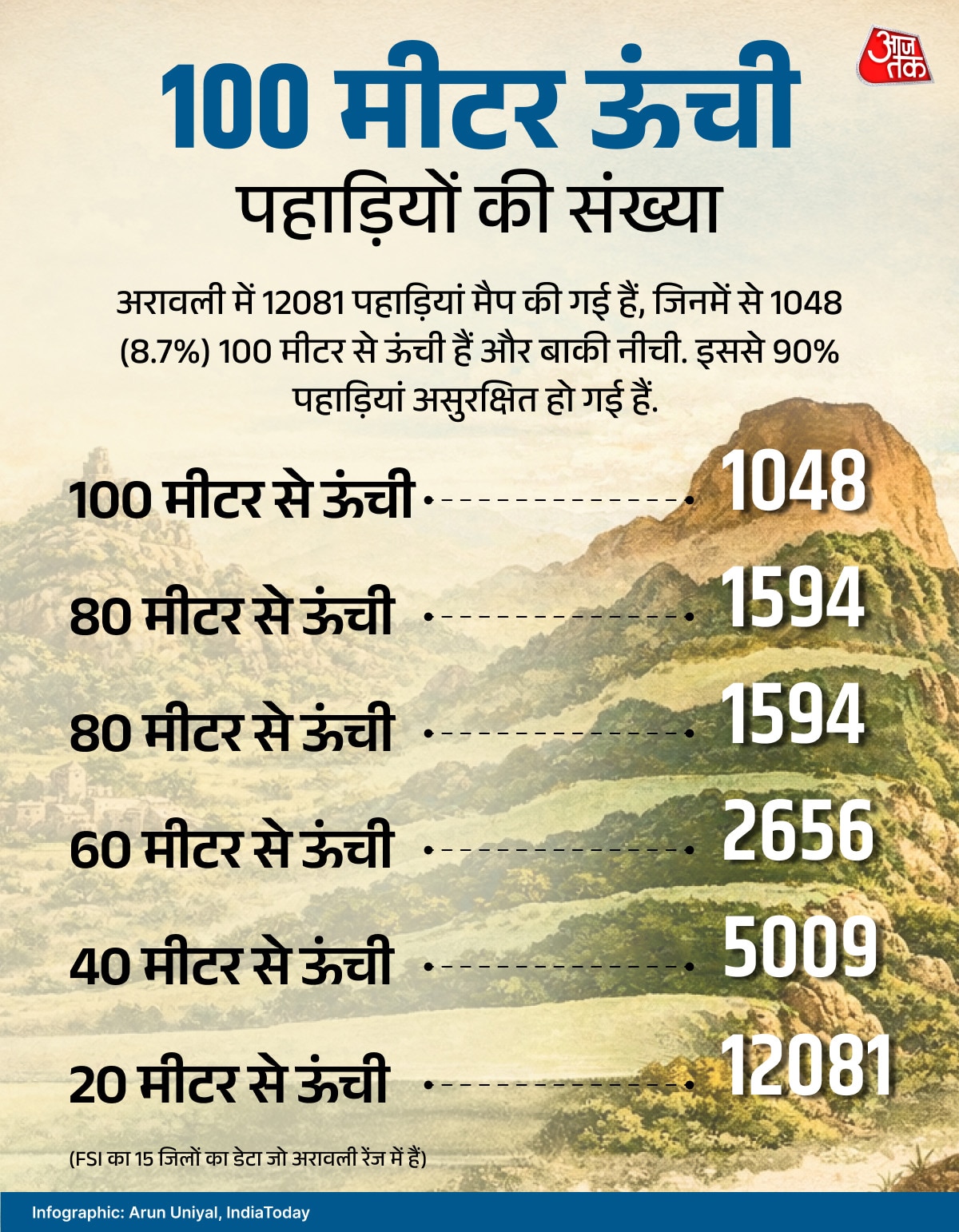
Recently the Supreme Court decision Aravali But it created controversy. It was said that only hills higher than 100 meters will be considered Aravali. Due to this, more than 90% of the hills are in danger. The government is giving clarification on this matter. Even Union Environment Minister Bhupendra Yadav had to come forward and give clarification. But the question of Aravalli has not ended with cleanliness.
Also read: Aravalli: History older than today’s India, now existence in danger
In the second part of this series, we will discuss about the population, animals, trees and plants around Aravalli, districts, employment, economic benefits, Delhi-Will talk in detail about security of NCR, impact on weather etc.
What would have happened if Aravali had not existed?
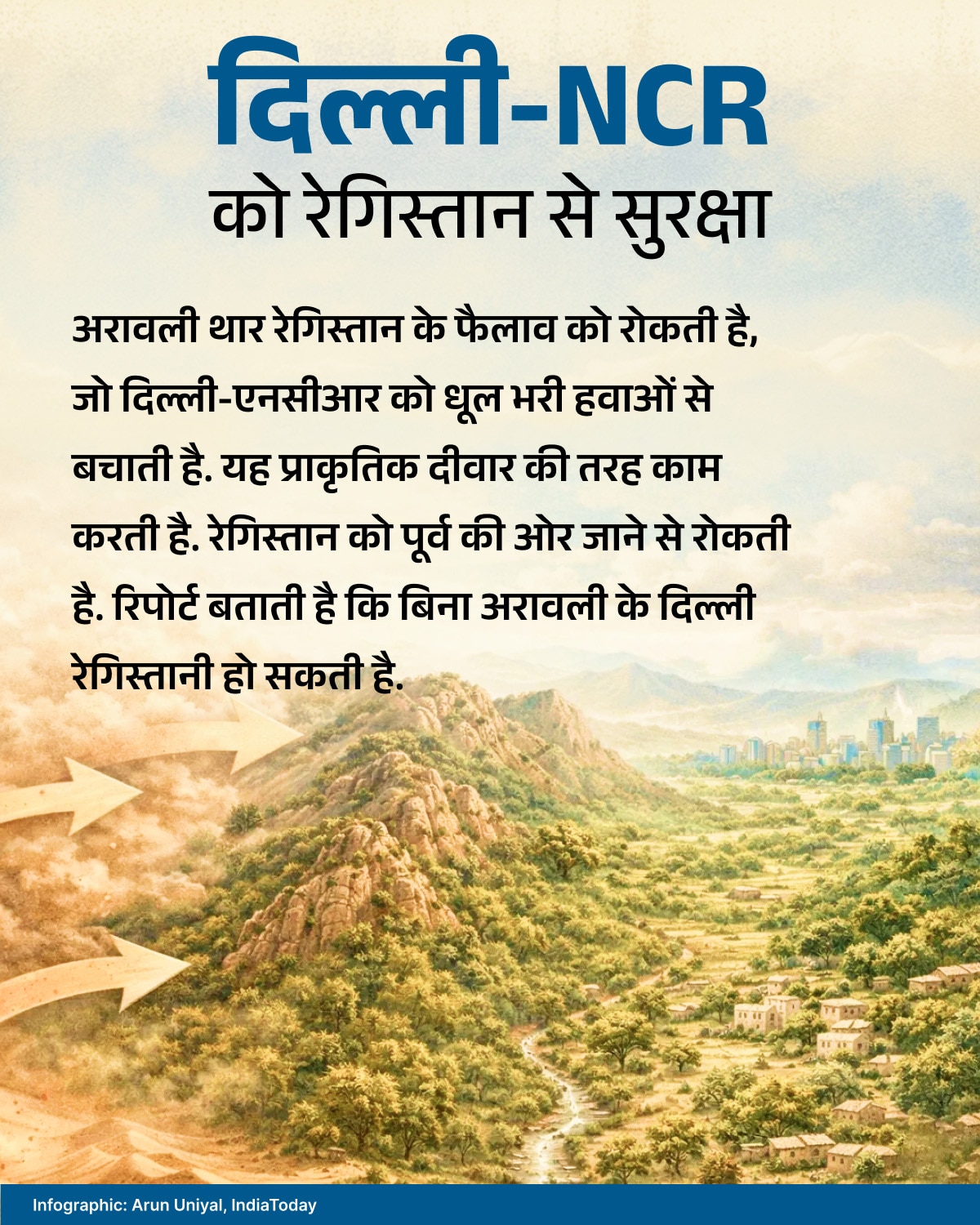
Monsoon winds move towards the east without stopping, causing Rajasthan The rain would have subsided. The Thar Desert spreads towards the east. Without hills, winds would have passed without causing rain, causing drought in North India. If Aravali is completely destroyed then the weather of North India will change.
Monsoon winds would pass without stopping, resulting in 20-30% less rainfall in Rajasthan-Delhi. Overall the drought would increase. Today Aravali is in danger from illegal mining and urbanization. The Supreme Court recently changed the definition of Aravali, in which only hills higher than 100 meters will be protected. Scientists warn that if this continues, there will be a climate crisis in North India in 10-20 years.
Aravali spread… 4 states and 29 districts
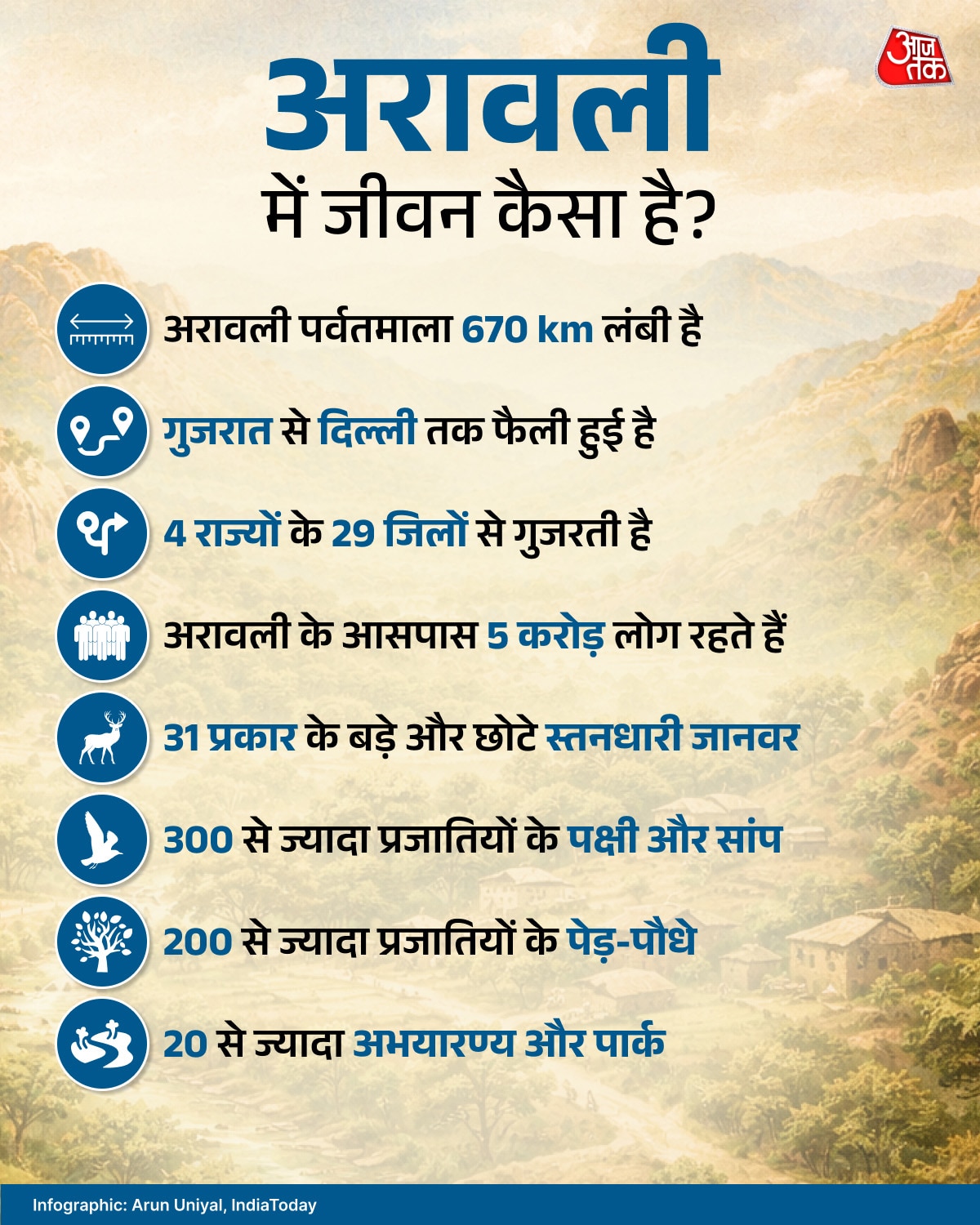
The Aravalli range is approximately 670 kilometers long. It is about 250 crore years old. It protects North India from the expansion of the Thar Desert. Controls climate. Causes rain. Aravali is spread in 29 districts of 4 states. Gujarat It includes Aravalli district, Udaipur, Rajsamand, Alwar, Jaipur in Rajasthan, Gurugram, Faridabad, Bhiwani, Mahendragarh, Rewari and Delhi in Haryana.
Also read: ‘Environment not ignored’, Bhupendra Yadav’s clarification on Aravalli dispute
Had Aravali not been there, there would have been more drought and dust storms in North India. Ground water is recharged by rain water. Prevents soil erosion. Aravali forests work as carbon sinks, that is, they absorb carbon from the atmosphere. This helps in fighting climate change.
Population of 5 crores around Aravali
About 5 crore people live around Aravali. This population of Rajasthan, Haryanaspread over Gujarat and Delhi. Both rural and urban population in these areas are dependent on Aravali. According to the 2011 census, more than 10 lakh people live in Aravalli district (Gujarat), of which 12% are urban. Due to Aravali, these people enjoy clean air and water, but health problems are increasing due to illegal mining.
31 types of mammals, 300 bird-snake species
31 types of large and small mammalian animals are found in the Central Aravali. Like leopard, sloth bear, bluebird, jackal and mongoose. There are 15 types of mammals in the Aravali of Delhi and Haryana. There are more than 300 bird species and many reptiles. 47 species of Coleoptera (beetles) are also here. If the hills continue to be eroded, these animals may become extinct or may move towards cities and villages.
There are more than 200 species of trees and plants in these hills.
There are dry deciduous forests in the Aravali forests i.e. deciduous forests. Like- Dhok, Acacia, Neem. There are more than 200 species here, of which Poaceae (34 species), Fabaceae (28) and Asteraceae (23) are prominent. Aravali Bio-Diversity Park has more than 240 medicinal plants, such as Brahmi, Guggul and Hadjod. These plants bind the soil.
People also get employment and economic benefits from this.
Aravalli provides employment through mining, tourism and forest products. Earlier 38.8% people in Faridabad were associated with mining but now mining is stopped due to it being illegal. Lakhs of people get employment from tourism. The total economic contribution from minerals and tourism is in thousands of crores.
More than 20 national parks and sanctuaries
There are many forests in Aravali, such as Sariska Tiger Reserve, Asola Bhatti Wildlife Sanctuary, Ranthambore National Park, Kaila Devi Sanctuary and Phulwari ki Naal. There are a total of more than 20 sanctuaries and parks.
If the hills are cut, where will the animals go?
If 100 meter high hills are cut, the animals’ habitat will be destroyed. They will come to urban areas, which will increase conflict between humans and animals.
Stops monsoon… causes orographic rains
Aravali affects the climate of North-West India. During monsoon, these hills gradually send clouds towards the east i.e. Delhi. Aravali helps in carrying the clouds to the lower part of the Himalayas. India’s south-west monsoon lasts from June to September, bringing moisture from the Arabian Sea and the Bay of Bengal. The Aravalli hills block the monsoon winds. This causes ‘orographic rain’ i.e. when the winds rise above the mountains after hitting them, they cool down. It rains again.
Aravalli divides Rajasthan into two parts according to rainfall.
Western part (Thar Desert) and Eastern part. Rainfall is less in the western part because the Aravali form a rain shadow. But Aravali moves the clouds towards the east, due to which rainfall is spread evenly over Delhi, Haryana and western Uttar Pradesh.
In the next report we will tell you what are the questions being raised on Aravalli? And what kind of challenges are there?
—- End —-
Source link
[ad_3]

