
In India, breathing is no longer just a means of survival. This is gradually causing death. An important research by Sweden’s Karolinska Institute has presented shocking figures. Between 2009 and 2019, 38 lakh people died in India due to air pollution. The main reason for these deaths was that the amount of PM 2.5 in the air was much more than the national standard of 40 micrograms per cubic meter.
The standards of the World Health Organization (WHO) are much stricter than this. According to WHO, only a quantity up to 5 micrograms per cubic meter is considered safe. If counted on this strict scale, the number of deaths increases to 1.66 crores. This accounts for approximately 25 percent of the total deaths during the entire study period. That means one out of every four deaths may be related to polluted air.
Also read: India bluntly attacks America’s double standards, makes deal worth Rs 5700 crore on F-16
PM 2.5 are very fine particles whose diameter is 2.5 micrometers or less. Easy comparisons can be made to understand these. Most bacteria are less than 5 microns wide. The diameter of a red blood cell is about 6 microns while the thickness of a hair is about 70 microns.
One full stop mark can hold thousands of PM 2.5 particles. These particles are so small that they reach the deepest part of the lungs with the breath and then dissolve in the blood and can spread throughout the body. Research by Karolinska Institutet found that for every 10 microgram per cubic meter increase in PM 2.5, there was an 8.6 percent increase in deaths. This effect was seen in 655 districts of India.
The most worrying thing is that the entire population of India lives in areas where the level of PM 2.5 is higher than WHO standards. These particles can travel hundreds of kilometers away. so pollution It is not just a problem of one city but spreads to large areas.
Small cities are becoming new hotspots
First air pollution It was considered mainly a problem of big cities. But now the picture is changing. Burnihat, a small industrial town located on the Assam-Meghalaya border, has now become the most polluted place in India. Here the annual PM 2.5 level was recorded at 133.4 micrograms per cubic meter. This is 3.3 times more than the national standard and more than Delhi’s 104.9 micrograms per cubic metre.
Also read: 3307 cases of stubble burning in Punjab, fine of Rs 60.60 lakh
In Delhi too, there has been an increase of four percent as compared to 101 in 2024. According to the report of Central Pollution Control Board and Accuair, 91.7 microgram per cubic meter level was recorded in Gurugram, 87.2 in Sriganganagar, 84.7 in Faridabad, 83.6 in Greater Noida and 83.4 microgram per cubic meter in Muzaffarnagar.
These figures clearly show that industrial areas and small towns with rapid urbanization have now become the new centers of crisis. To bring places like Burnihat to safe levels, pollution will have to be reduced by 70 percent. This change shows that the problem of pollution is no longer limited to metro cities only.
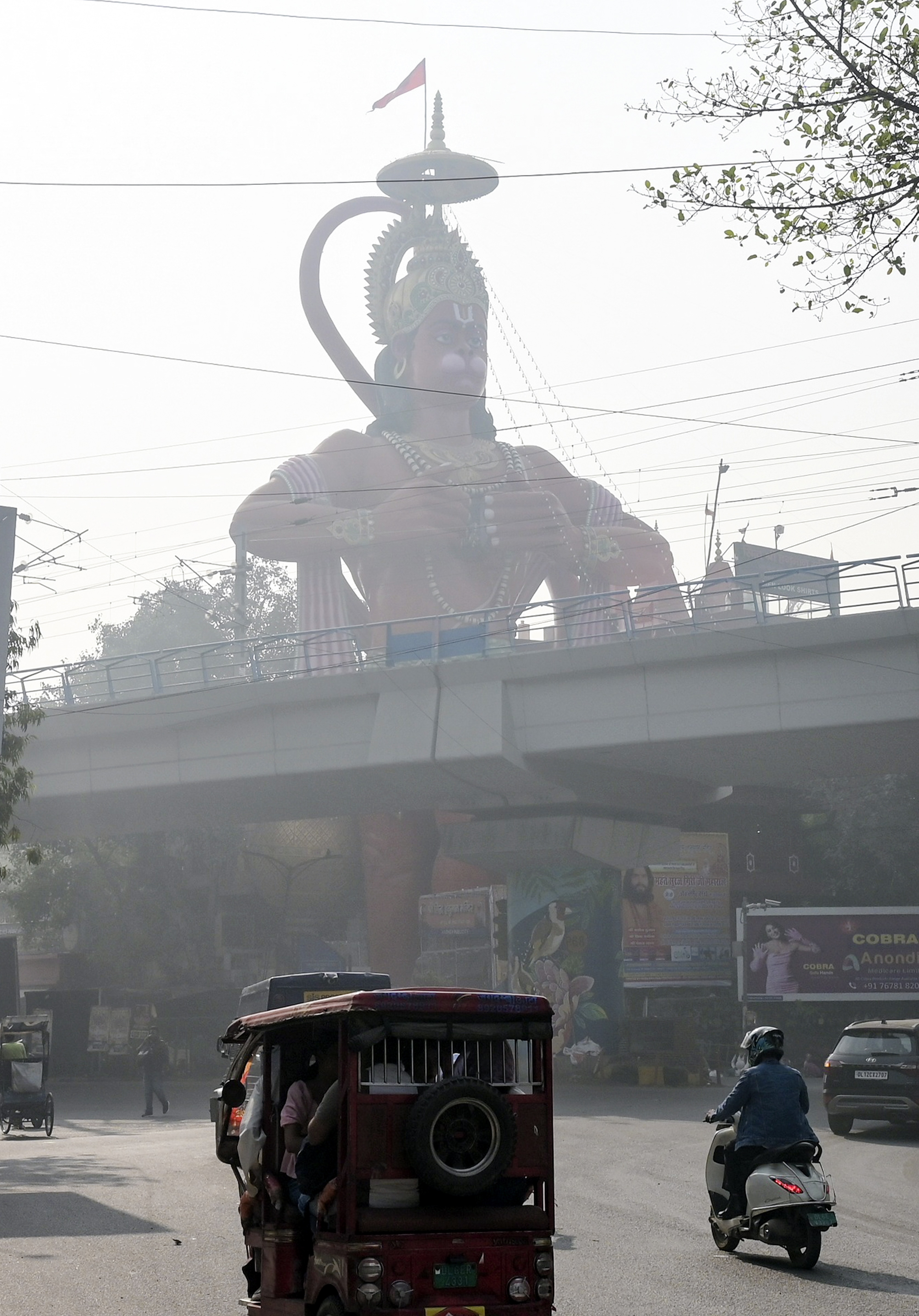
Increasing burden of winter in metros
According to the report of the Center for Science and Environment, PM 2.5 levels will worsen in all the metropolitan cities of Delhi, Mumbai, Kolkata, Bengaluru, Hyderabad and Chennai in the winter of 2024-25. Delhi remained the most polluted while Kolkata was at second place. Delhi’s air becomes the most poisonous due to its location in the Indo-Gangetic plains and seasonal conditions. But in cities where natural ventilation was considered better like Mumbai, Chennai, Hyderabad and Bengaluru, the average level also increased.
In a four-year study by Respir Living Sciences, PM 10 levels in 11 metros remained consistently above the national standard of 60 micrograms per cubic metre. The PM 10 level reached 313.8 in Delhi’s Anand Vihar and 237.7 in Patna’s Samanpura. No city met the safety standards in the entire four years. Experts say that this is not an occasional pollution but a continuous exposure throughout the year due to which the urban population remains exposed to dangerous particles for a long time.
Also read: Country’s company will make QRSAM, Sudarshan Chakra will be more lethal… approval will be given soon
These figures are not just numbers but reflect the huge burden on the health of crores of people. Respiratory diseases, cardiovascular problems and premature deaths are on the rise. Pollution is now spreading with the same intensity in small cities and industrial areas also. Areas often ignored in the national debate are now being affected the most. The root of the problem are persistent sources of emissions whether they are vehicles, industries or other activities.
Research is clearly warning that without concrete and long-term steps, this crisis will deepen further. Coordinated efforts are needed at all levels to improve air quality so that breathing can become safe again.
—- End —-
Source link
[ad_3]

