
32 minutes ago
- copy link
Russian Foreign Minister Sergei Lavrov addressed the UN General Assembly in New York on Saturday.
Russian Foreign Minister Sergei Lavrov supported India’s permanent membership in the United Nations Security Council (UNSC). Lavrov said that the representation of Asia, Africa and Latin America should increase in the Security Council. He said, we support the permanent membership candidatures of Brazil and India.
He opposed additional seats for Western countries in the Security Council. Lavrov specifically named Germany and Japan and accused them of “moving towards militarism and revenge.”
However, Lavrov said that during the reform of the UNSC, the rights and powers of the existing permanent members should not be reduced.
Total 15 members in UNSC, 5 permanent members
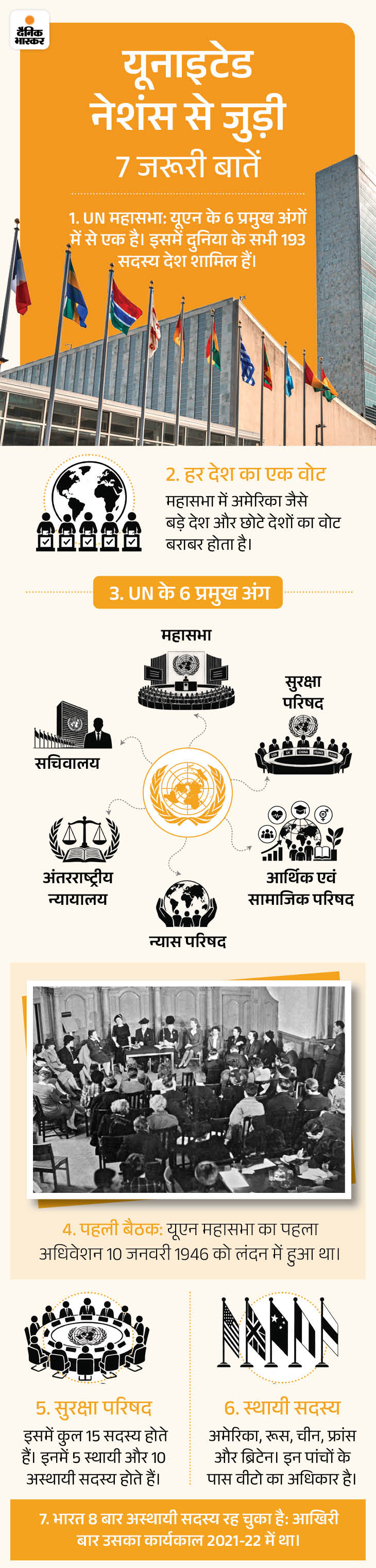
There are a total of 15 members in the Security Council. There are 5 permanent members – China, France, Russia, Britain and America, who have veto power. Apart from this, there are 10 non-permanent members, who are elected for a tenure of 2 years.
Changes to the UN Charter require a two-thirds majority in the General Assembly and formal approval of two-thirds of the member states. It also requires the approval of all five existing permanent members.
India’s demand for permanent membership continues since 1990
India’s demand for permanent membership of UNSC has been rising since the 1990s. Formal talks on Security Council reform began in the UN in 2008. In 2010, India put forward its demand for a permanent seat by forming the G4 grouping with Brazil, Germany and Japan. Talks are still going on regarding reforms in 2026, but no consensus has been reached on the new structure of UNSC among the member countries.
5 problems regarding permanent membership…
1. China’s stance China’s stance on India’s permanent membership is considered one of the most significant obstacles. China itself is among the five permanent members and also has regional and strategic differences with India.
2. Objections of other countries against G4 India, Japan, Germany and Brazil support the expansion of permanent seats. But a proposal from groups like Uniting for Consensus (UfC) is to increase non-permanent seats in the UNSC instead of new permanent members.
3. Consent on seats for African countries The demands of African countries are also a major part of UNSC reform. Talks are also ongoing on how many seats there will be and what their structure will be.
4. Question of veto One of the most complex issues is whether the new permanent members will get veto power. The current five permanent members insist on maintaining their rights, while the G4 talks about the real rights of permanent membership.
5. Amendment of UN Charter To change the structure of UNSC, the UN Charter will have to be amended. This requires a two-thirds majority in the General Assembly and two-thirds confirmation by member states, which also requires the approval of all five existing permanent members.
———————————
Read this news also…
75 countries boycotted Netanyahu in UN: stood silent for 3 minutes when booed
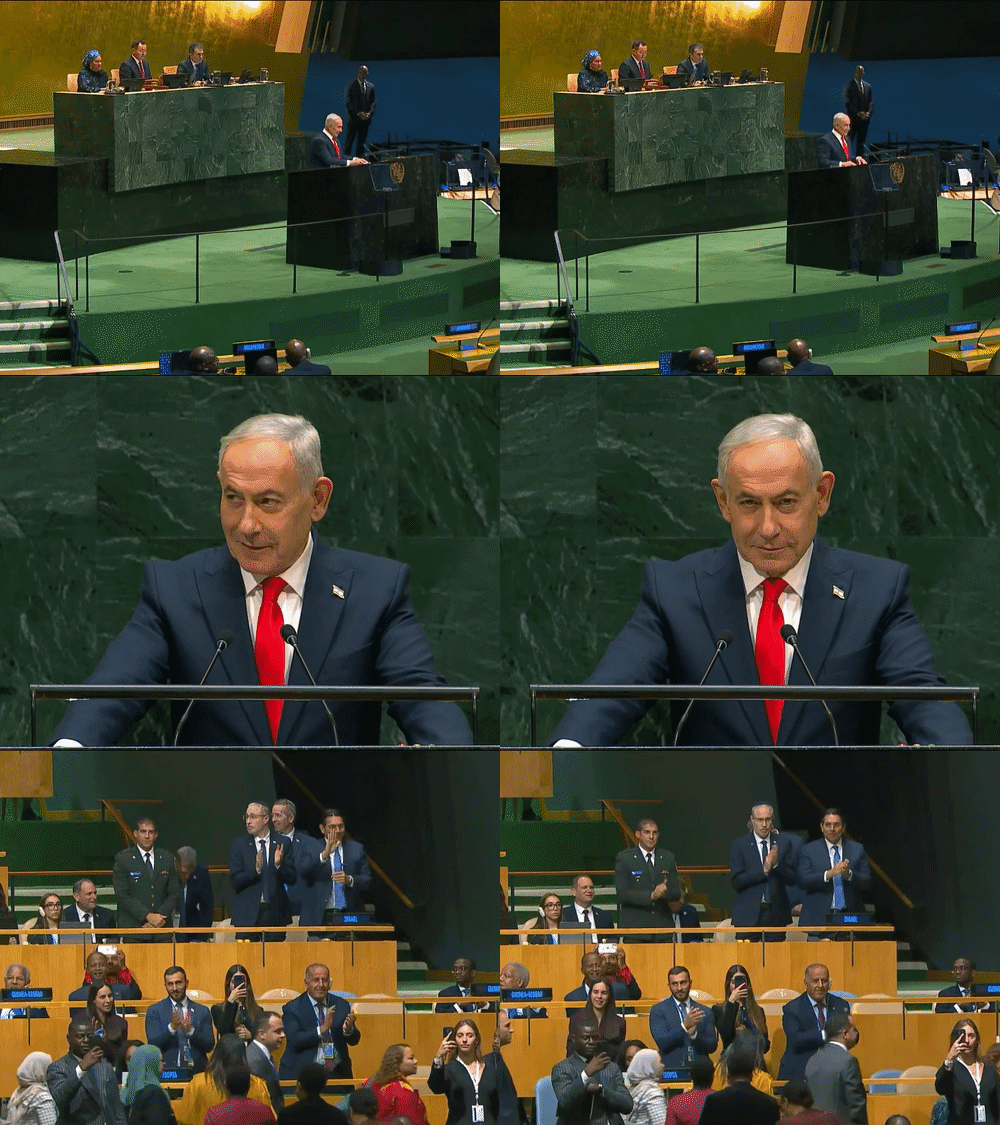
Israeli Prime Minister Benjamin Netanyahu delivered a speech at the United Nations General Assembly on Thursday. As soon as he came on stage, representatives of 75 countries protested by hooting and then walked out. After this incident, Netanyahu stood silently for about 3 minutes. Read the full news…

Source link
[ad_3]

