
Such pictures of territorial fight often appear in Ranthambore Tiger Reserve. (file photo)
Now the ‘home’ for tigers is becoming small in Ranthambore Tiger Reserve of Rajasthan. In the competition to establish their territory, the tigers are becoming thirsty for each other’s blood. The situation is that in the last 9 years, 9 tigers have lost their lives due to mutual conflict. National Tiger
.
Got National Park status in 1980 Tiger Project was started in the country in the year 1973. In the same year Ranthambore became the first tiger reserve of Rajasthan. In the year 1980, Ranthambore Tiger Reserve got the status of National Park.
Tigers are now running out of space for territory in Ranthambore Tiger Reserve. This has increased the conflict between them. (file photo)
Tigers more than capacity, as clan grew, area shrank According to a 2015-16 report by the Wildlife Institute of India, the area and grassland of Ranthambore is suitable for a maximum of 45 to 55 tigers. Presently 77 tigers, tigresses and cubs are present here. With the increase in numbers, every corner of the forest has been filled with tigers, leading to frequent incidents of conflict.
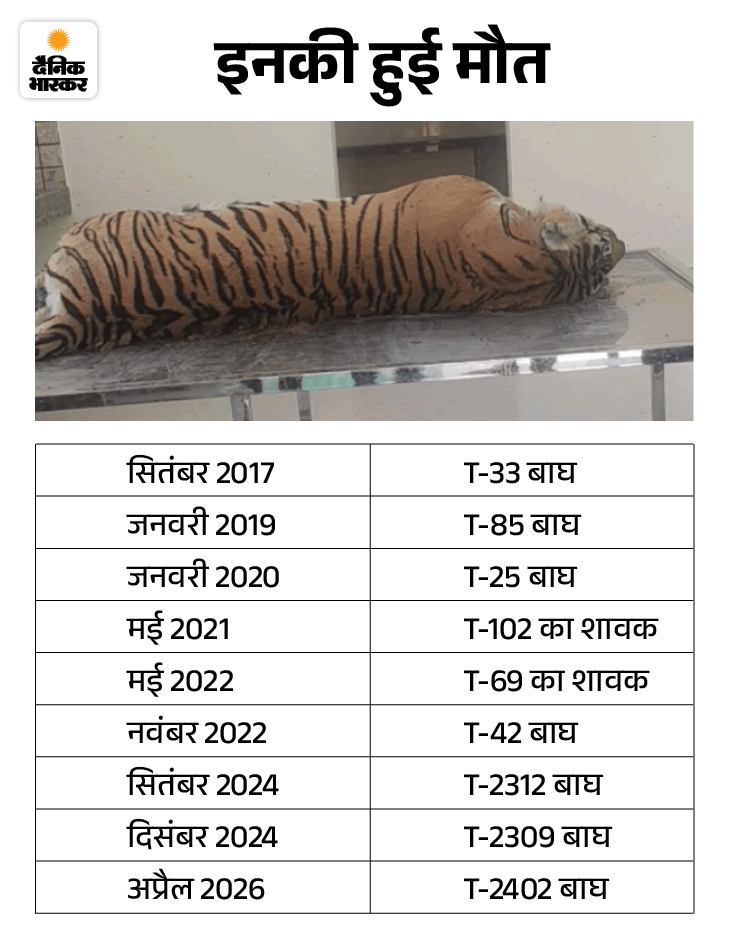
Mathematics of territory… only 22 km instead of 40 NTCA guidelines say that a tiger needs an area of 40 to 50 square km. In Ranthambore, only 22 square km area is being allotted to one tiger. The territory of each tiger has reduced by an average of 18 to 28 km.

The race to death begins as soon as you leave your mother. According to wildlife experts, the cubs stay with their mother till the age of 2 years. After this the struggle to find one’s land begins. During this period, young tigers often attack older tigers. Powerful young tigers take over the old territory and the older tigers either have to flee the forest or die in this bloody conflict.
Ranthambore Tiger Reserve of Sawai Madhopur is divided into two parts. Its total area is about 1700 square kilometers.
DFO said – tigers are more than capacity Manas Singh, DFO of Ranthambore (Division First) says – Currently there are about 21 tigers, 20 tigresses and more than 16 cubs in Ranthambore. There are more than 10 tigers and cubs in the second division of Ranthambore also. Due to the number of tigers exceeding their capacity, they are now moving out of the forest boundaries in search of new areas. Most of the tigers live in Zone 1 to 5, which remains the main center of mutual conflict. Unless concrete work is done on corridors or shifting for safe movement of tigers, it is difficult to stop this conflict.

————–
Also read these news related to the death of tigers…
Tigress collided with tiger in Sariska forest, death: Big wounds found on the body of 5 year old tigress
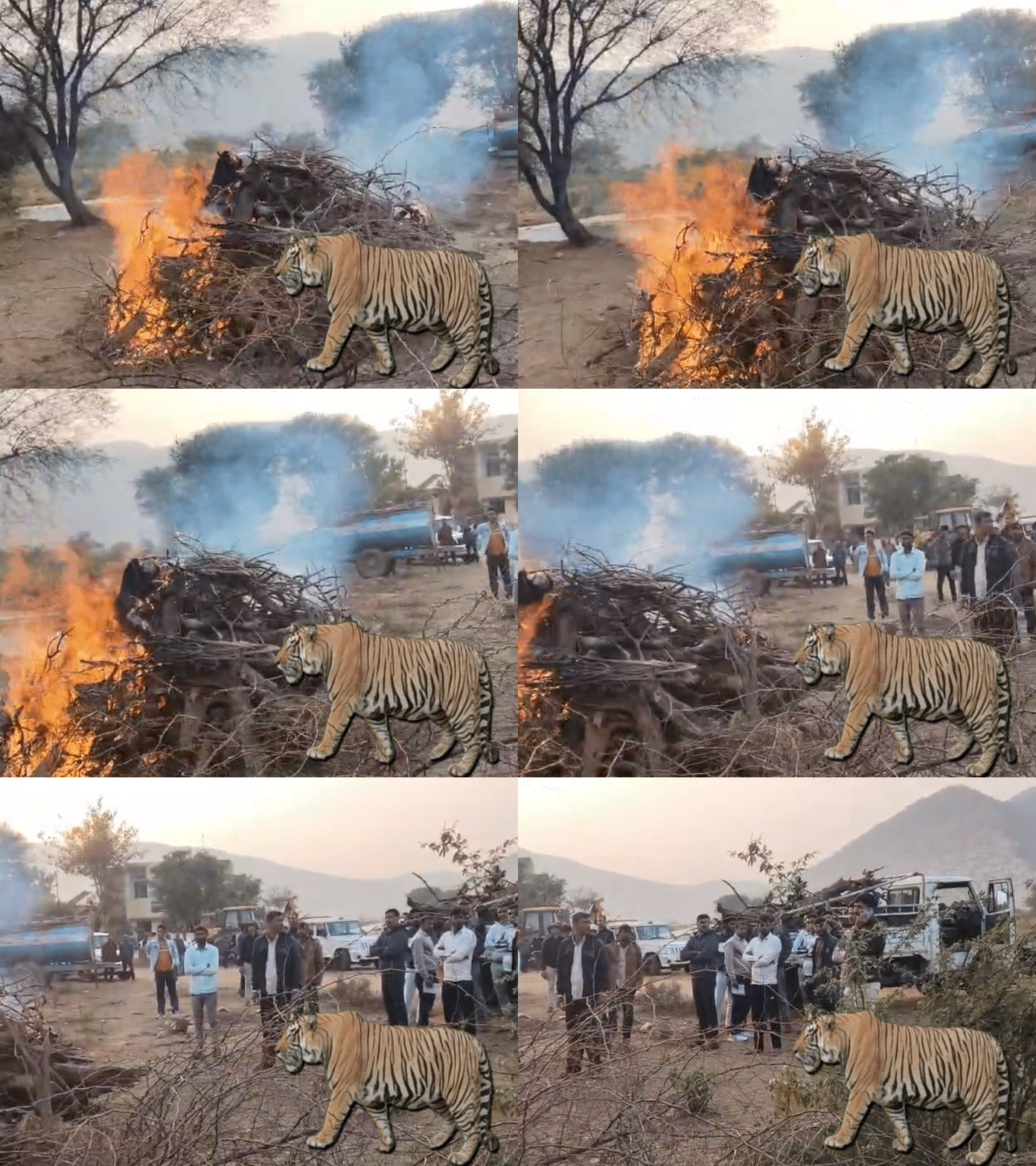
There was a fight between a tiger and a tigress over territory in the Sariska forest. Tigress ST-28 died in this. When the villagers saw the 24-hour old dead body of the tigress, they informed. (Read full news)
Tigress who hunted crocodile dies, ‘Arrowhead’ had brain tumor; Daughter ‘Kanakati’ shifted to Mukandra, has killed 2 people
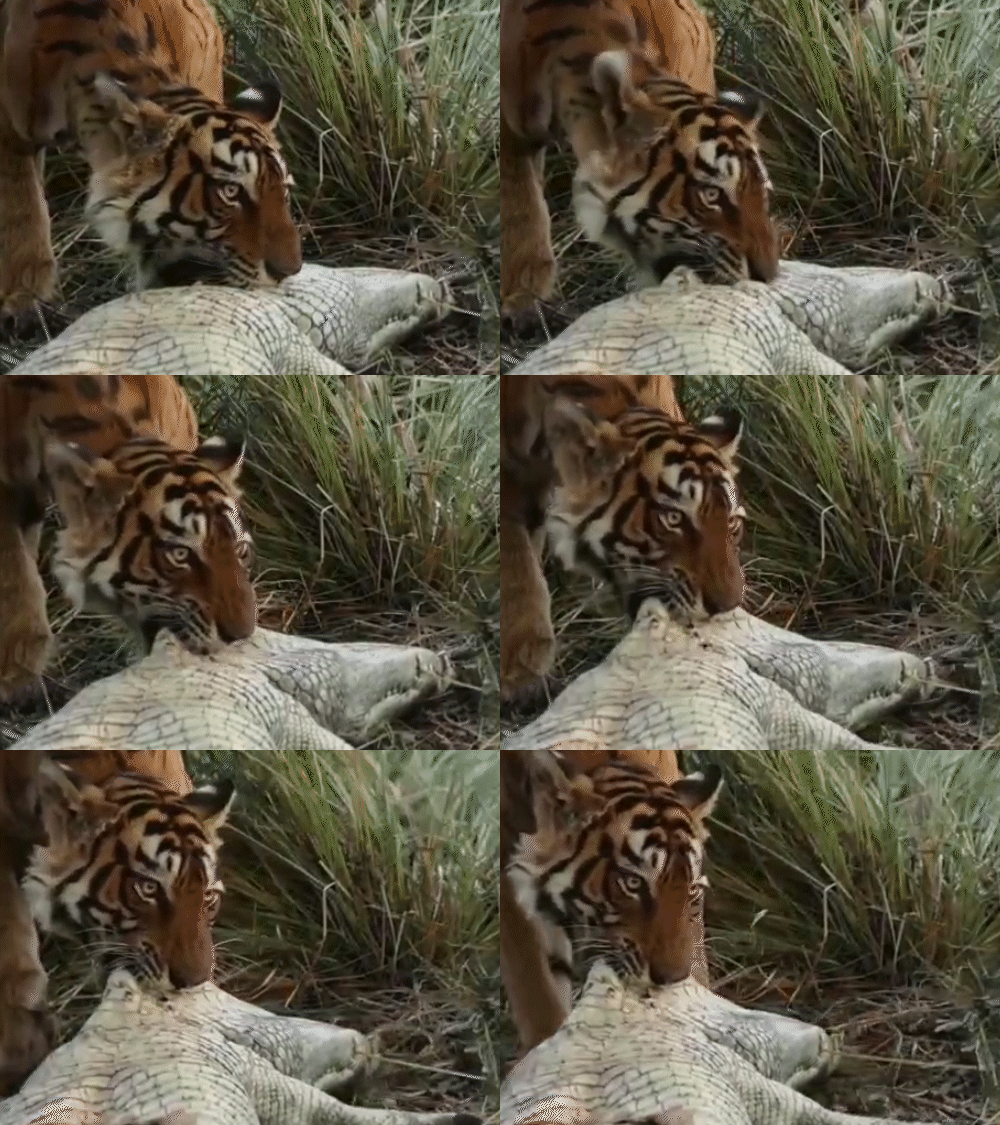
Tigress Arrowhead died in Ranthambore National Park, Sawai Madhopur. He had a brain tumor. Arrowhead in the past(T-84) He had hunted a crocodile in the pond, the video of which had also surfaced. (Read full news)
Source link
[ad_3]

