
The most important question before the election results is whether the sitting MLAs will be able to save their seats this time too or the wave of anti-incumbency will sweep them away. The figures of West Bengal, Kerala, Tamil Nadu and Assam make this debate more interesting. Exit poll indications have already intensified the political stir.
There is a possibility of major upheaval in states like Kerala, Tamil Nadu and West Bengal. Many pollsters have given an edge to BJP in Bengal, while a change of power is also being predicted in Kerala. However, sitting MLAs in Assam and Tamil Nadu are expected to retain their seats.
In such a situation, the question arises that what effect will this possible upheaval have on the prospects of the sitting MLAs. If we look at the data of the last three assembly level elections, an interesting picture emerges. Contrary to popular belief, sitting MLAs have a clear edge in many cases.
Even though their governments have faced challenges, their position has remained strong. However, this benefit is not the same in every state. Talking about West Bengal, anti-incumbency definitely exists here, but it has not been completely decisive. In the 2011 elections, 42 percent MLAs were successful in saving seats.
In the year 2016, this figure increased to 72 percent, while in the year 2021 it decreased slightly to 63 percent. If we take these three elections together, on an average 61 percent of the sitting MLAs were successful in saving their seats. The trend of Kerala looks completely different from this. The success rate of the sitting MLAs here has been consistently high.
In the year 2011, 78 percent MLAs, 76 percent in the year 2016 and in the year 2021, 84 percent MLAs came back victorious. In this way, the average success rate is 79 percent, which is the highest among these four states. The special thing is that in Kerala there is a change of government every five years. Despite this, the hold of the MLAs remains strong.
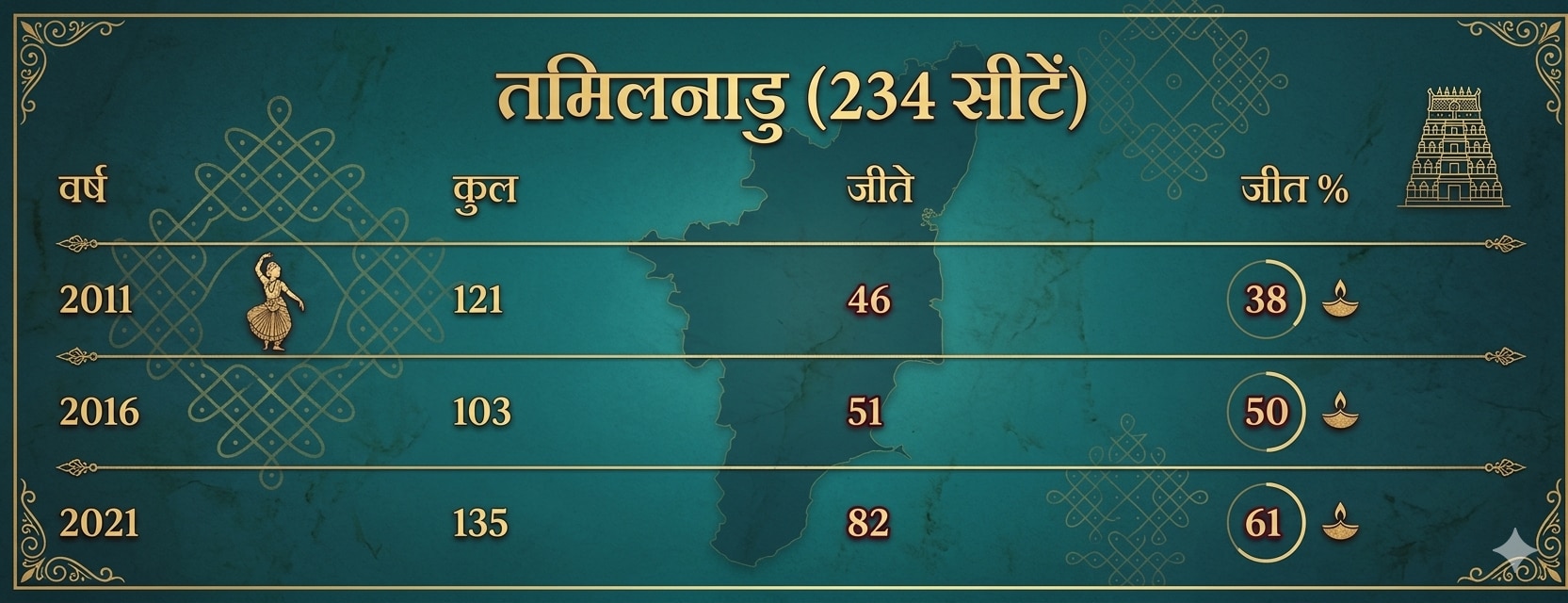
The contest appears more balanced in Tamil Nadu. In 2011, only 38 percent of sitting MLAs could retain their seats, which was a sign of strong anti-incumbency. In the year 2016, this figure increased to 50 percent and in the year 2021 it reached 61 percent. However, the overall picture remained balanced.
 In the last three elections, 179 sitting MLAs won and 180 lost. That means a success rate of about 50 percent. This makes it clear that holding the current position here neither gives a big advantage nor a disadvantage, rather the results depend on larger political trends. There has been a big change in the behavior of voters in Assam with time.
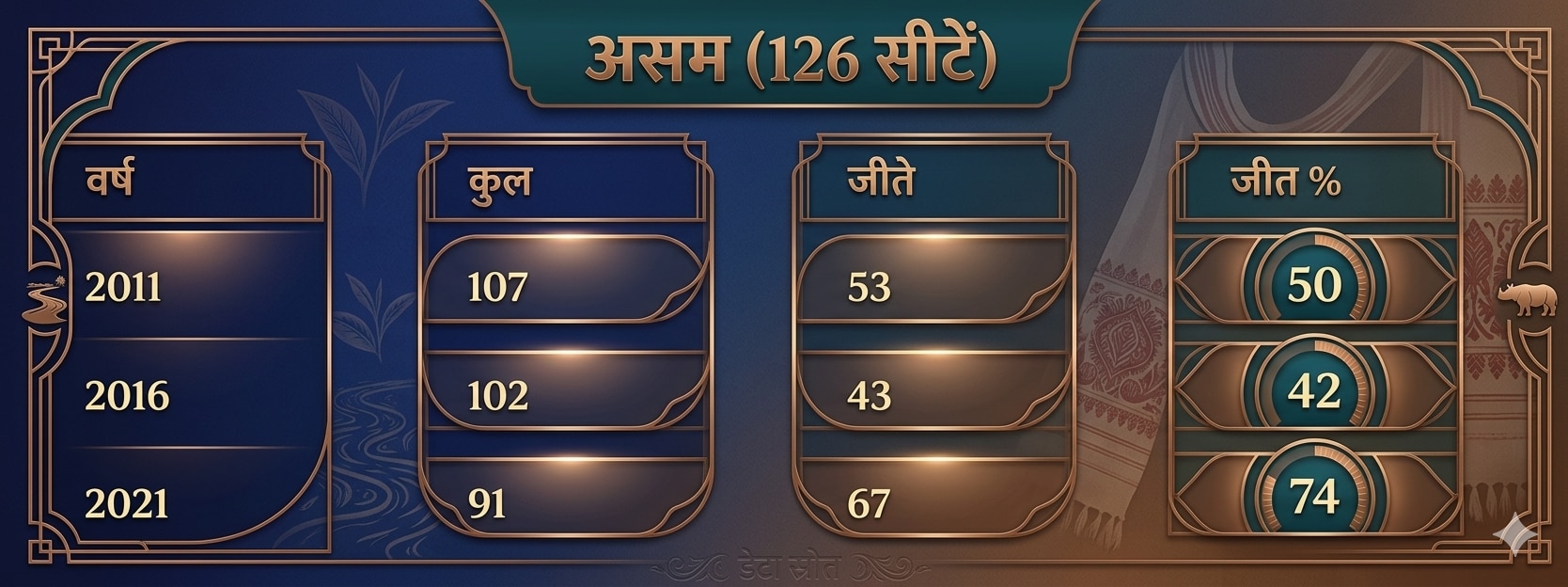
In the year 2011, about half the MLAs were successful in saving their seats. In 2016, the figure fell to 42 percent. But there was a surge in 2021 and 74 percent of the MLAs won again. Overall, the average success rate of 54 percent in the 3 elections shows that the sitting MLAs have been getting a moderate advantage.

Now the biggest question amidst these figures is whether the same trend will be repeated in 2026 or whether the exit poll indications will prove to be correct. The results coming on May 4 will lift the curtain on this suspense and it will become clear how heavy the burden of incumbency was this time.
—- End —-
Source link
[ad_3]

