
sports desk2 hours ago
- copy link
After the league stage of IPL 2026, Royal Challengers Bangalore, Gujarat Titans, Sunrisers Hyderabad and Rajasthan Royals made it to the playoffs. Qualifier-1 will be played between Bengaluru and Gujarat on 26th May, while Hyderabad and Rajasthan will clash in the eliminator on 27th May.
The journey of all four teams was different, but many common factors were visible in the performance. The story contains an analysis of the common factors of the four teams that reached the playoffs. For this, 4 parameters have been fixed…
1. Performance of top batsmen
2. Performance of top bowlers
3. Which team scored 200+ how many times?
4. Winning and losing streak of teams
1. Average of top-3 batsmen of Gujarat-Hyderabad is 576 runs per batsman.
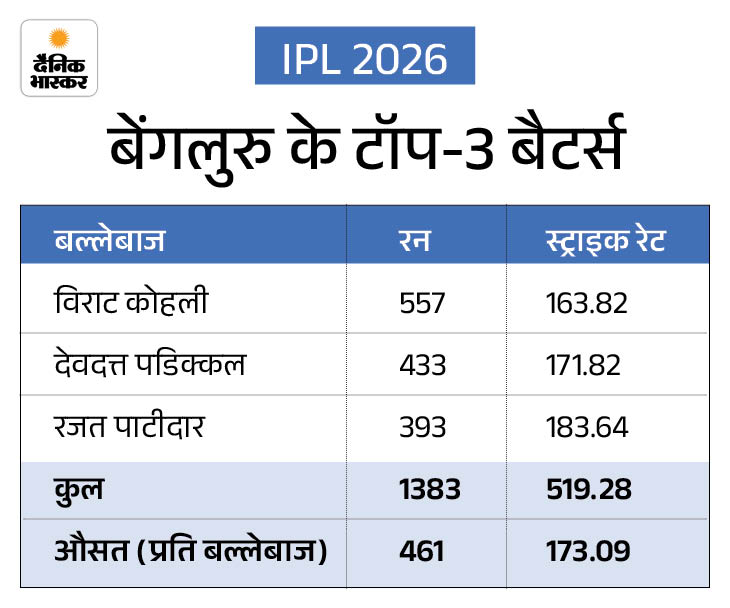
The biggest strength of the teams that reached the playoffs was the top order. Bangalore’s Virat Kohli (557), Devdutt Padikkal (433) and Rajat Patidar (393) together scored 1383 runs.
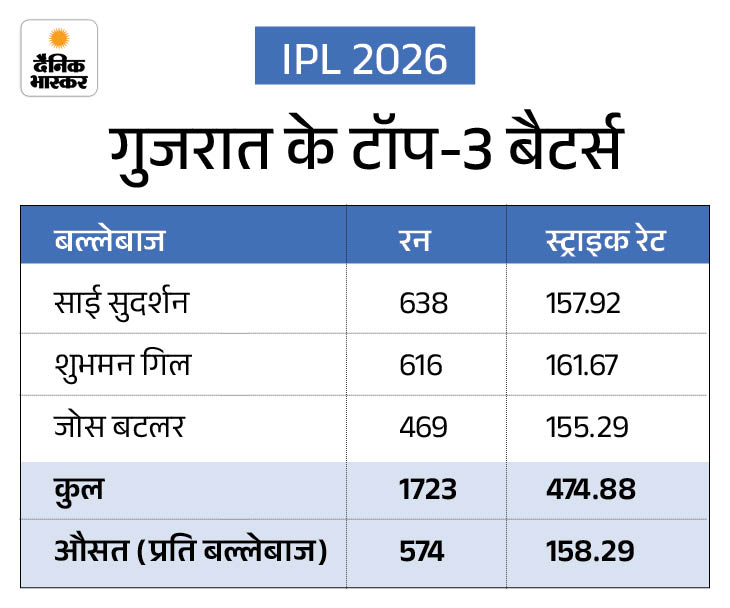
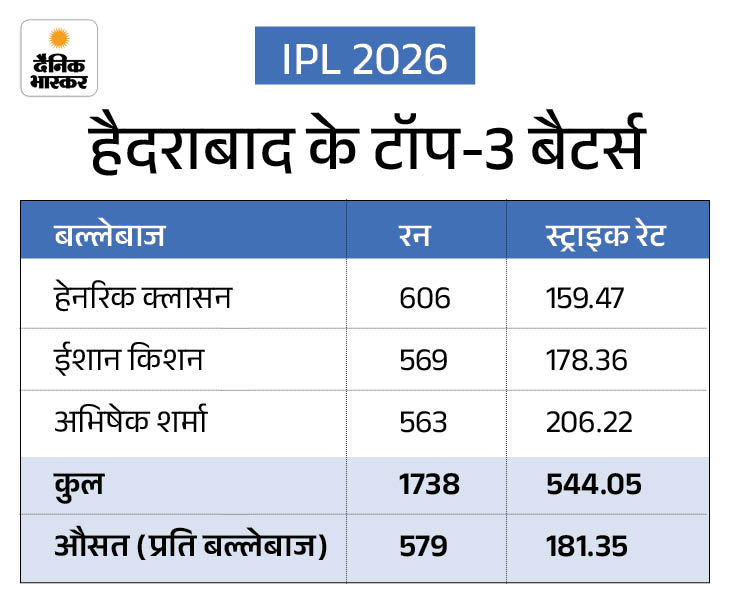
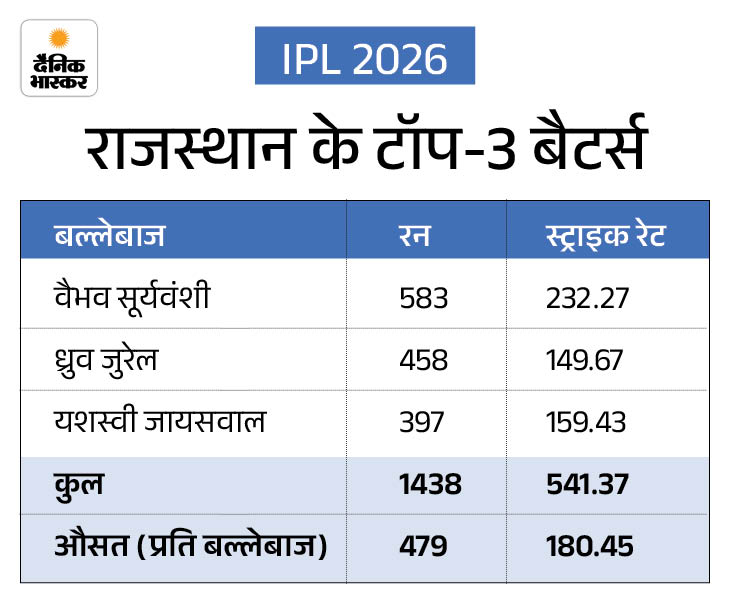
Gujarat’s Sai Sudarshan (638), Shubhman Gill (616) and Jos Buttler (469) added 1723 runs. Hyderabad’s Heinrich Klaasen (606), Ishan Kishan (569) and Abhishek Sharma (563) scored 1738 runs. Rajasthan’s Vaibhav Suryavanshi (583), Dhruv Jurel (458) and Yashasvi Jaiswal (397) scored 1438 runs.
The top-3 batsmen of all four playoff teams together scored 6282 runs. The average of top-3 batsmen per team was 1570.5 runs. The average contribution of the top-3 batsmen of Gujarat and Hyderabad was 576 runs per batsman.
Rajasthan’s Suryavanshi gave a fast start to the team with a strike rate of 232.27. Kohli of Bengaluru scored 1 century and 4 fifties. Hyderabad’s Abhishek Sharma batted at a strike rate of 206.22. Gujarat openers Sai Sudarshan and Shubman Gill together scored 1254 runs.
2. Bengaluru bowlers took 50 wickets
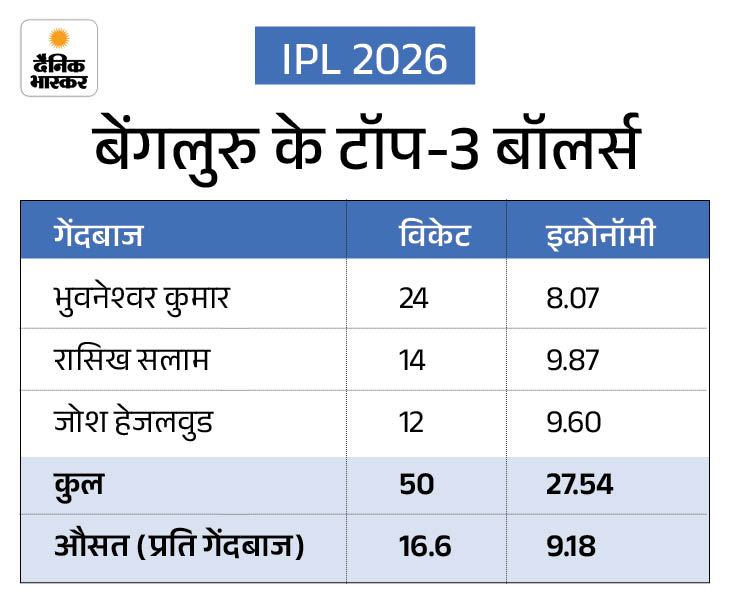
The bowlers of the playoff teams changed the course of the matches by taking wickets continuously throughout the season. Bengaluru’s Bhuvneshwar Kumar (24), Rasikh Salam (14) and Josh Hazlewood (12) took 50 wickets.
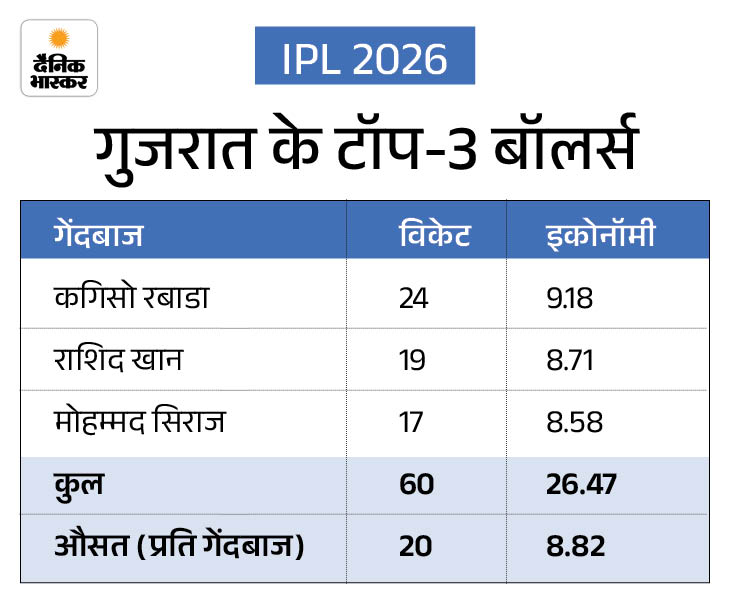
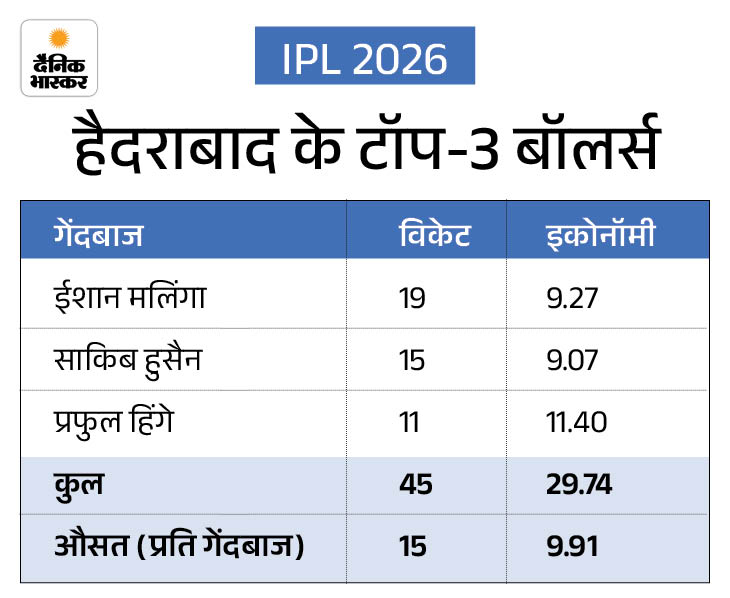
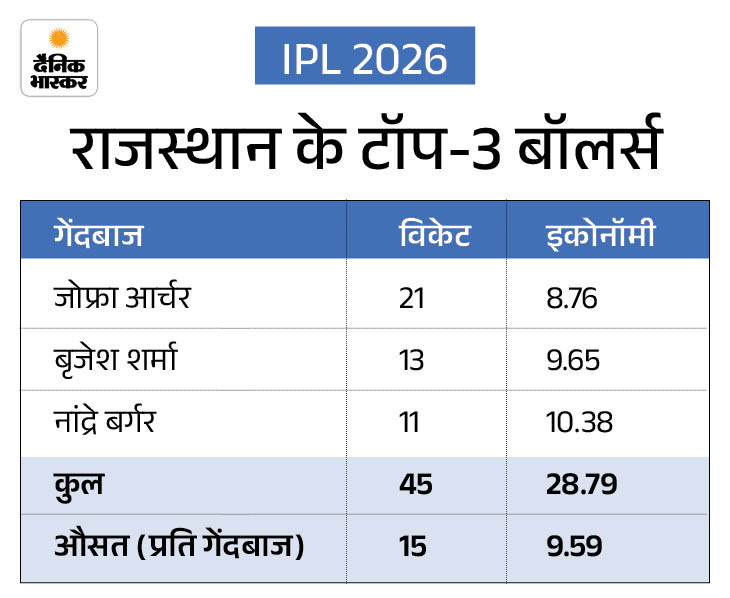
Gujarat’s Kagiso Rabada (24), Rashid Khan (19) and Mohammed Siraj (17) took 60 wickets. Hyderabad’s Ishan Malinga (19), Saqib Hussain (15) and Praful Hinge (11) took 45 wickets. Rajasthan’s Joffra Archer (21), Brijesh Sharma (13) and Nandre Berger (11) took 45 wickets.
The top-3 bowlers of the playoff teams took 50+ wickets on an average. The top bowlers of Bengaluru and Gujarat together took 110 wickets. On an average each bowler took 18.33 wickets.
Bhuvneshwar and Rabada led the bowling attack of their teams by taking 24 wickets each. Rashid Khan and Siraj made an impact in the middle and death overs. Archer for Rajasthan and Malinga of Hyderabad took consecutive wickets with the new ball.
3. If you score 200+ then victory is certain.
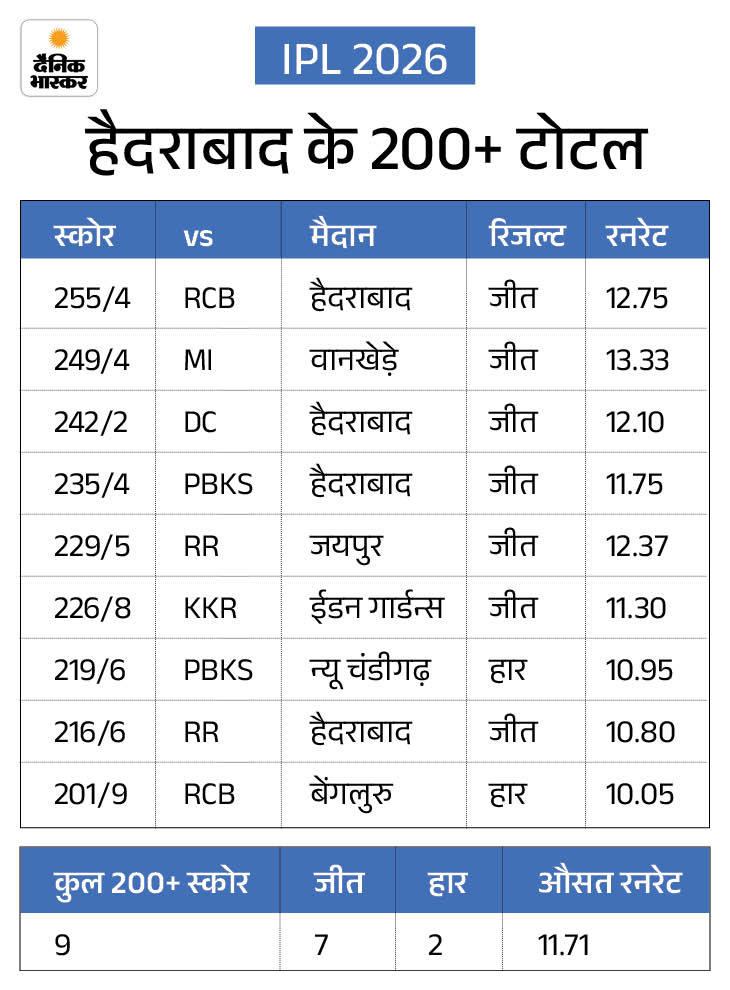
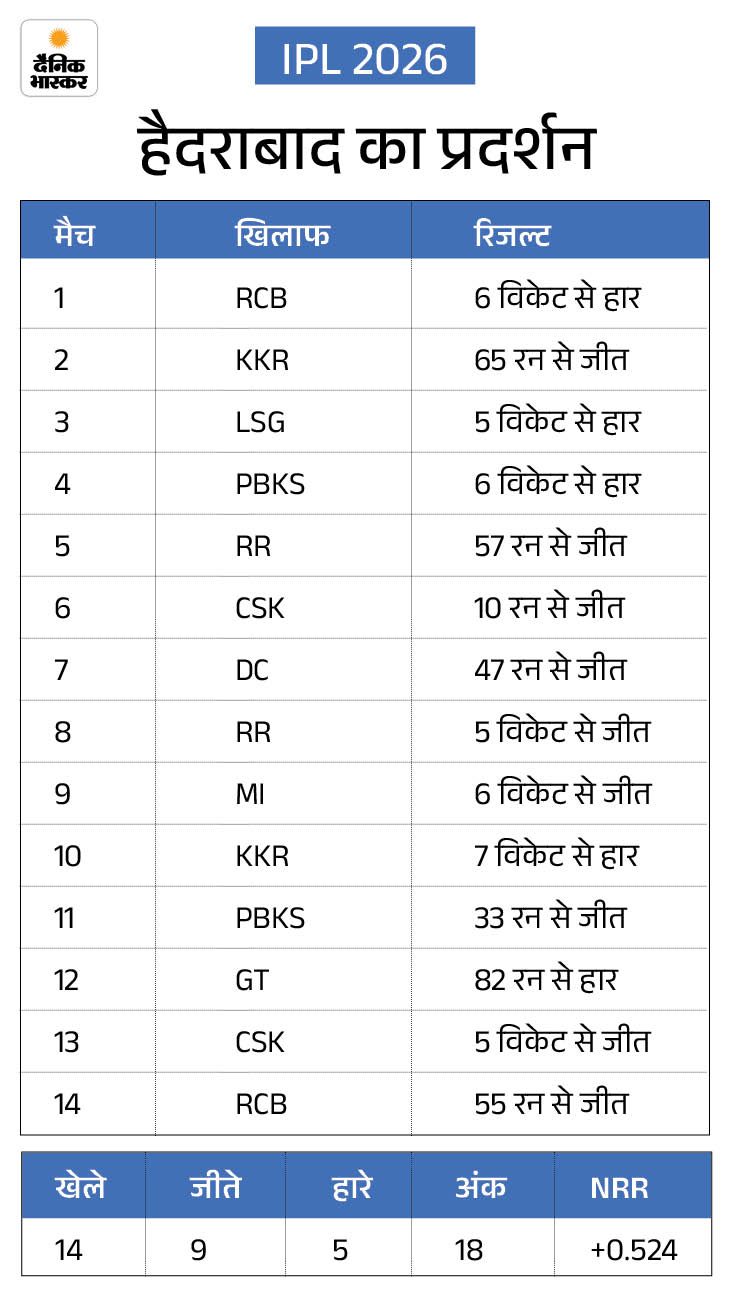
Hyderabad scored the highest score of 200+ among the four teams of the playoff. The team scored 200+ runs 9 times, winning 7 matches and losing 2. Made big scores like 255/4 against Bengaluru, 249/4 against Mumbai, 242/2 against Delhi and 235/4 against Punjab. Hyderabad’s run rate was 10.66, which was the highest among the four playoff teams.
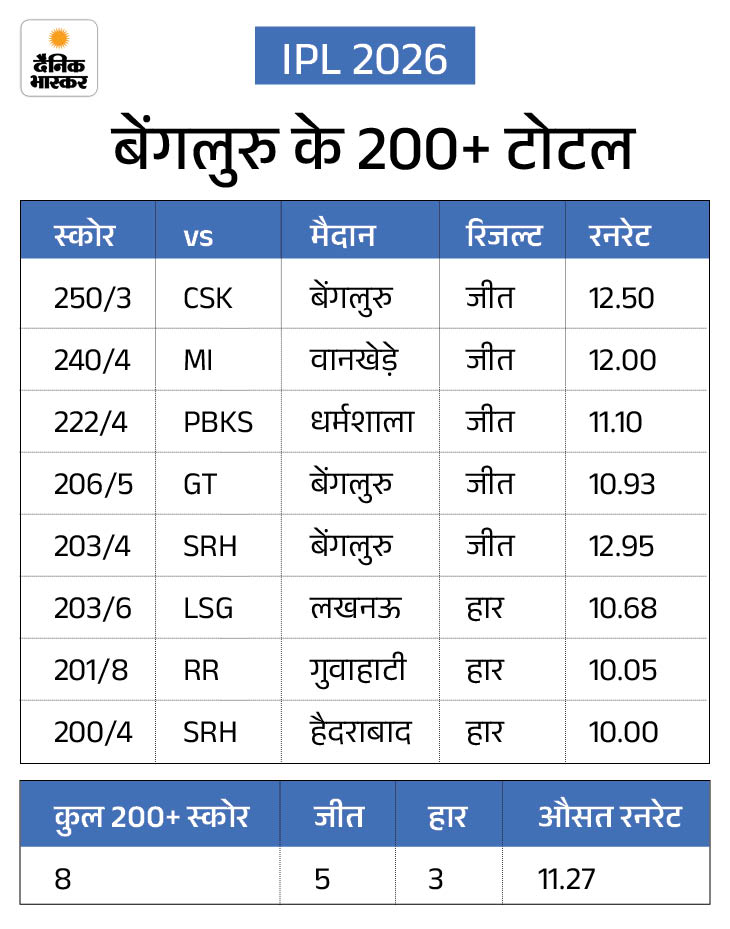
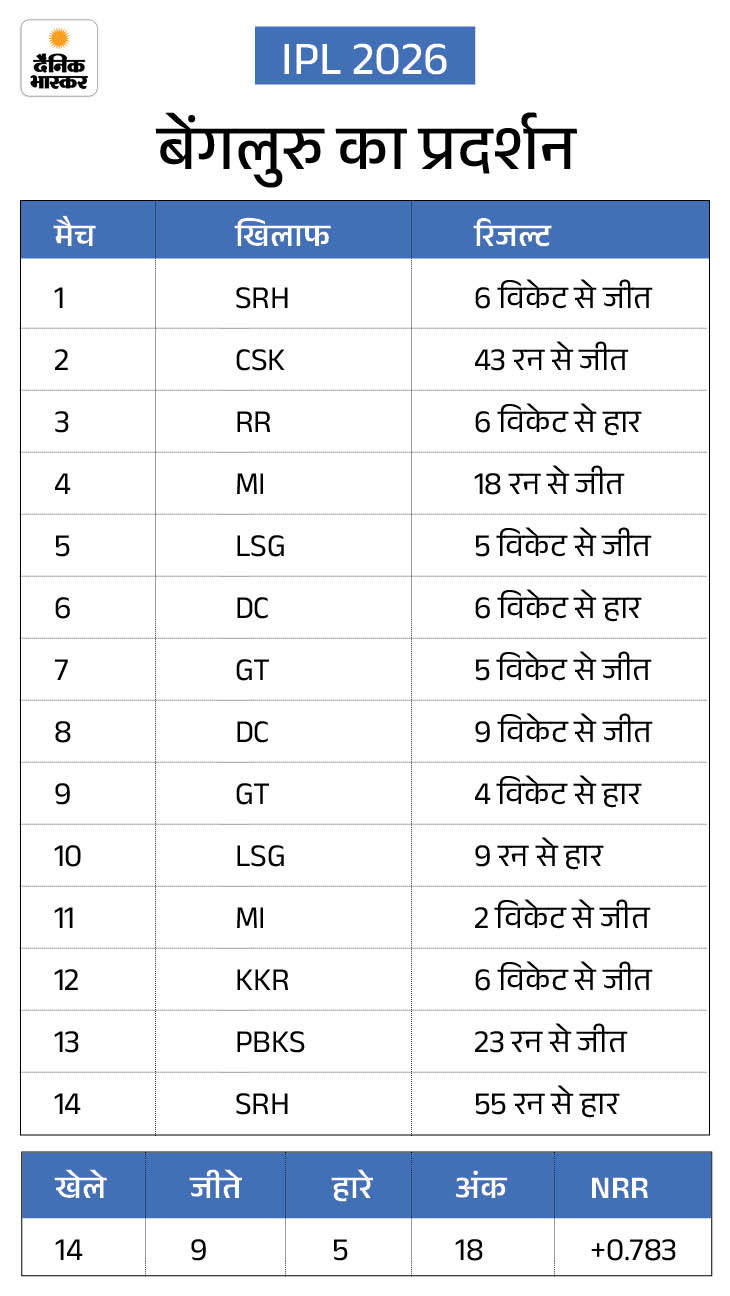
Bengaluru scored 200+ scores 8 times. The team won 5 matches and lost 3. Made big totals like 250/3 against Chennai, 240/4 against Mumbai and 222/4 against Punjab. The team’s run rate was 10.50. Due to this batting, Bengaluru’s net run rate was +0.783, which was the best among the playoff teams.
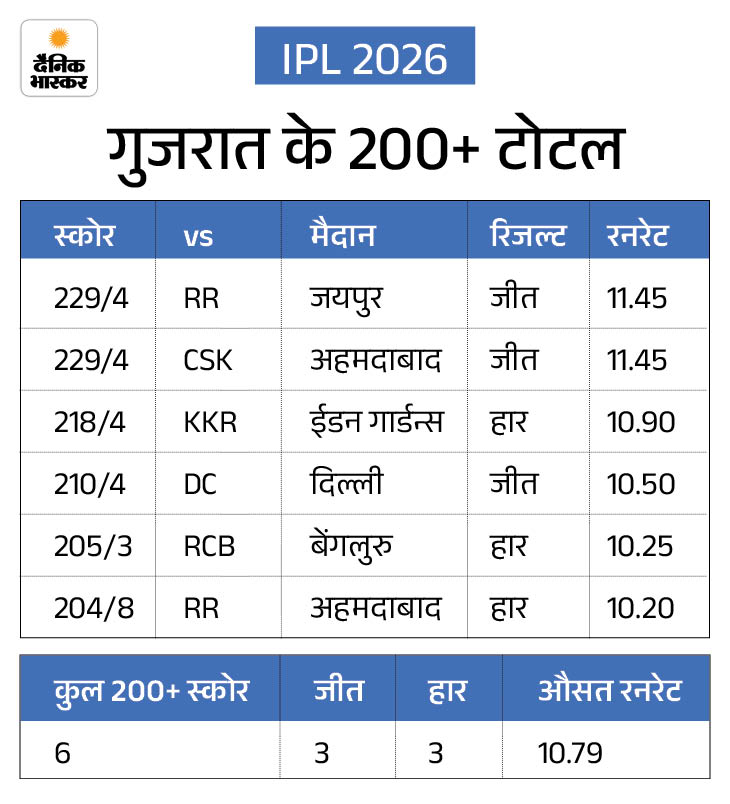
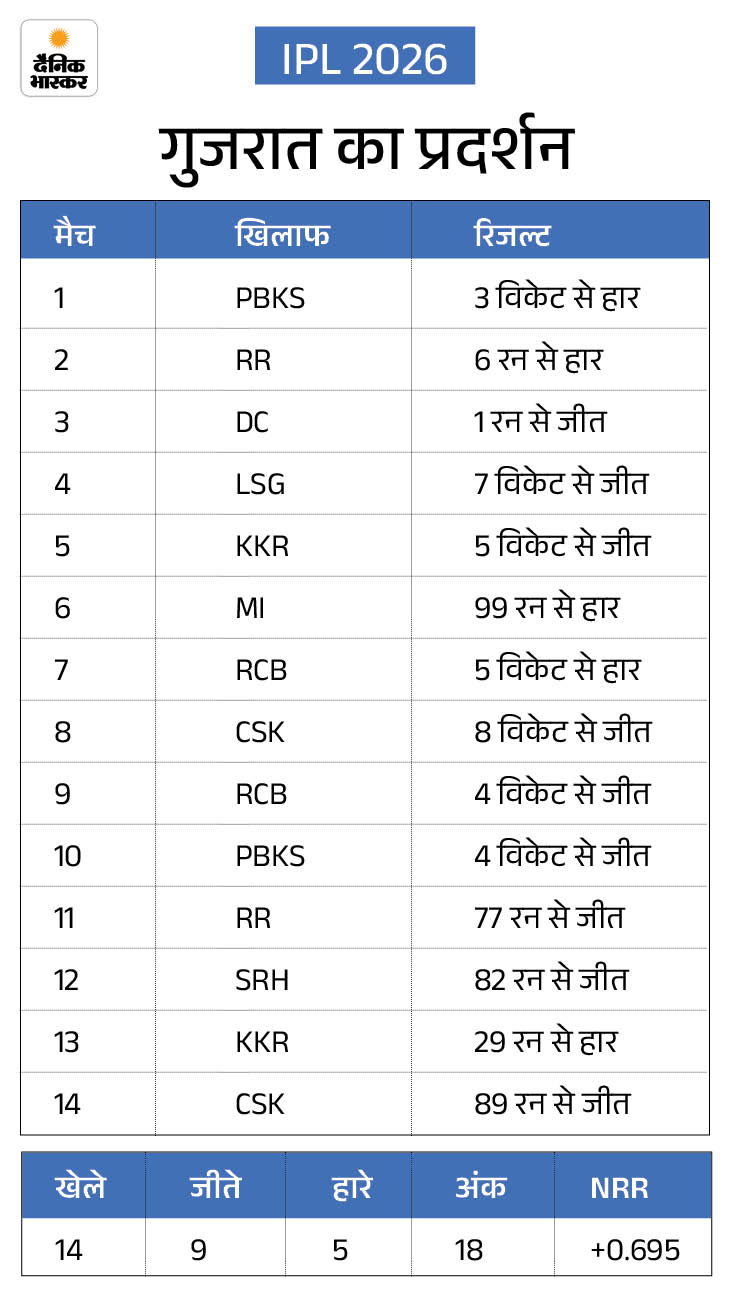
Gujarat scored 200+ scores 5 times. The team won 3 matches and lost 2. Scored 229-229 runs against Rajasthan and Chennai, while scored 210 runs against Delhi. The team’s run rate was 9.37 and net run rate was +0.695. This became the major reason for the top-2 finish.
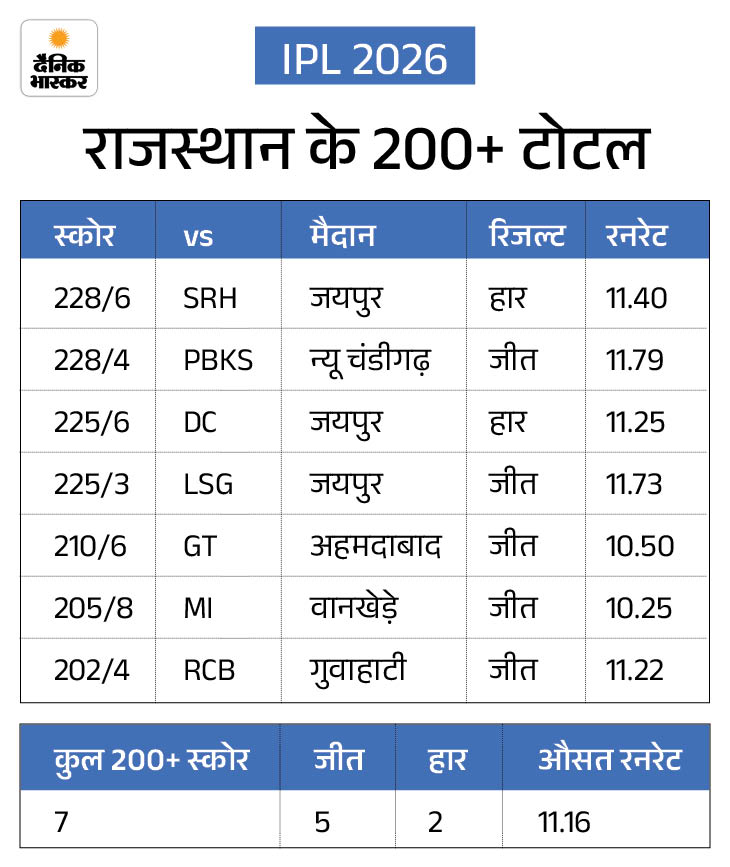
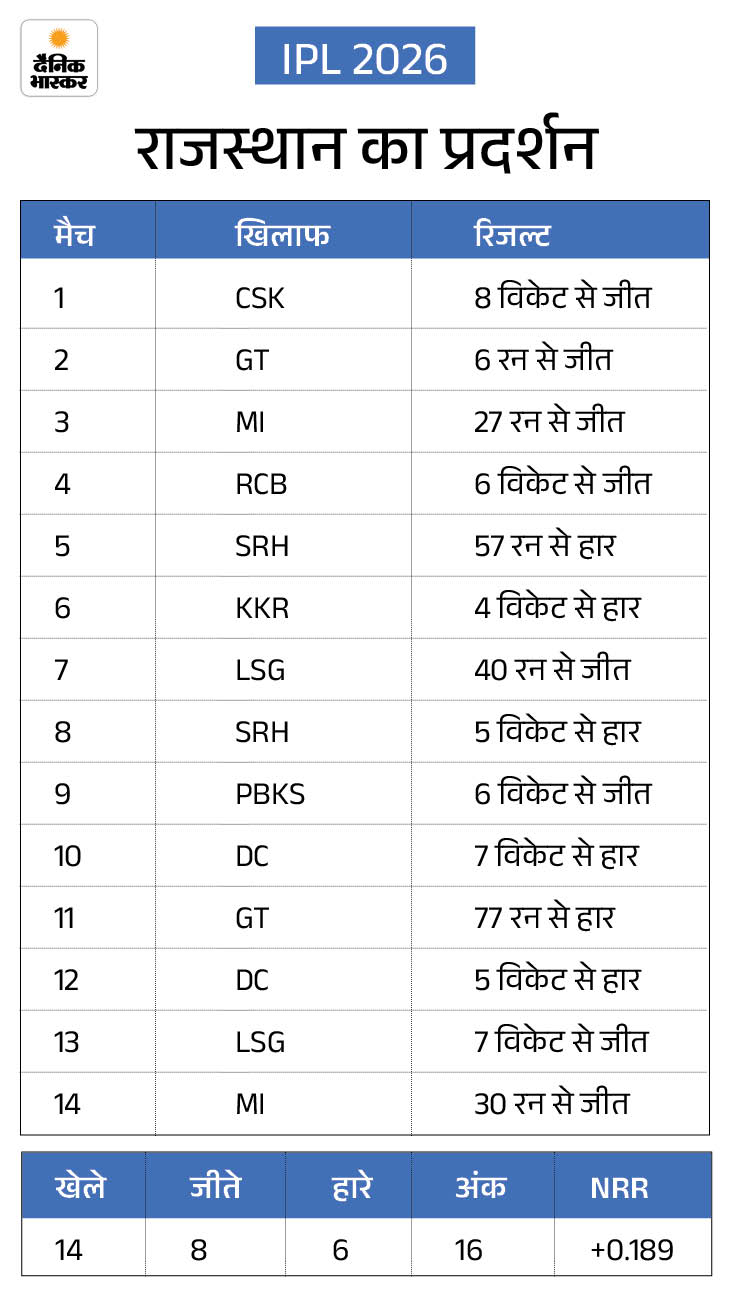
Rajasthan scored 200+ scores 7 times. The team got 5 wins and 2 losses. Scored 228/4 against Punjab, 225/3 against Lucknow and 210 against Gujarat. Rajasthan’s run rate was 10.24. The team finished fourth with a net runrate of +0.189.
4. No team has lost more than 3 consecutive matches
The big common factor of all four teams that reached the playoffs was their consistency. Bengaluru did not lose more than 2 consecutive matches throughout the season. Gujarat registered 3 consecutive wins after losing the first two matches.
Hyderabad suffered 2 consecutive defeats in the first week of April, but later bounced back by winning 5 consecutive matches. Rajasthan suffered 3 consecutive defeats in the season, but the team later bounced back by defeating Lucknow and Mumbai.
All four teams had at least one major winning streak in the season. Bengaluru registered 3 consecutive wins by defeating Mumbai, Kolkata and Punjab. Rajasthan started the season with 4 consecutive wins. The team took an early lead by defeating Chennai, Gujarat, Mumbai and Bengaluru.
Gujarat won 5 consecutive matches by defeating Chennai, Bengaluru, Punjab, Rajasthan and Hyderabad. Hyderabad won 5 consecutive matches against Rajasthan, Chennai, Delhi, Rajasthan and Mumbai.

Source link
[ad_3]
