
30 minutes agoAuthor: Manpreet Sandhu
- copy link
Water has started leaking from the lake built at the mouth of Ladakh’s largest Drung-Drug glacier. The lake has grown rapidly over the years.
In such a situation, scientists of Wadia Institute of Himalayan Geology are camping near the glacier in Zanskar and keeping a constant eye on it.
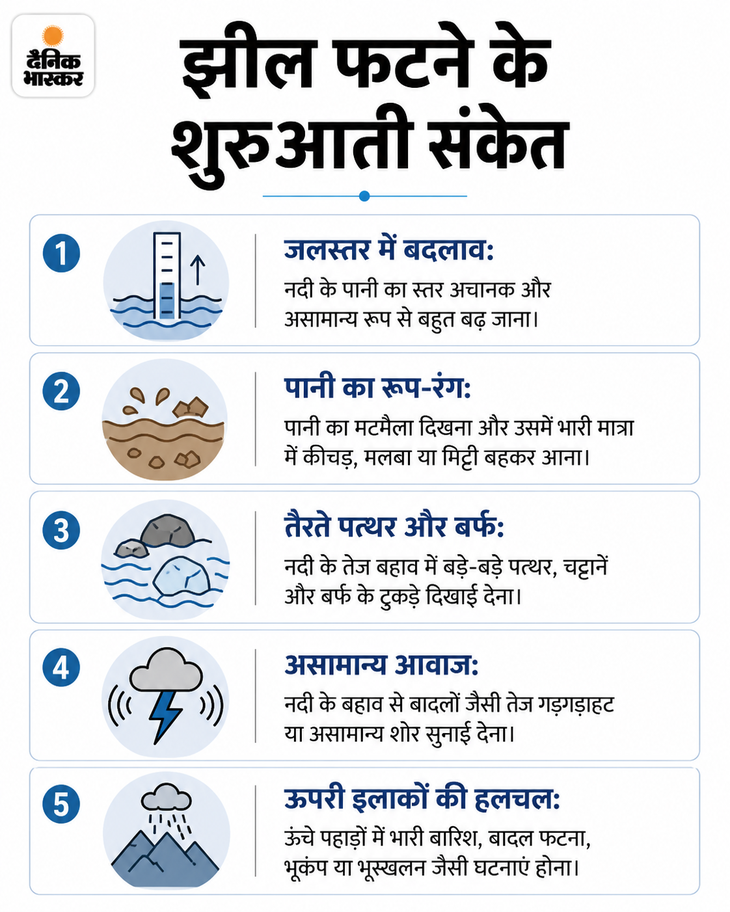
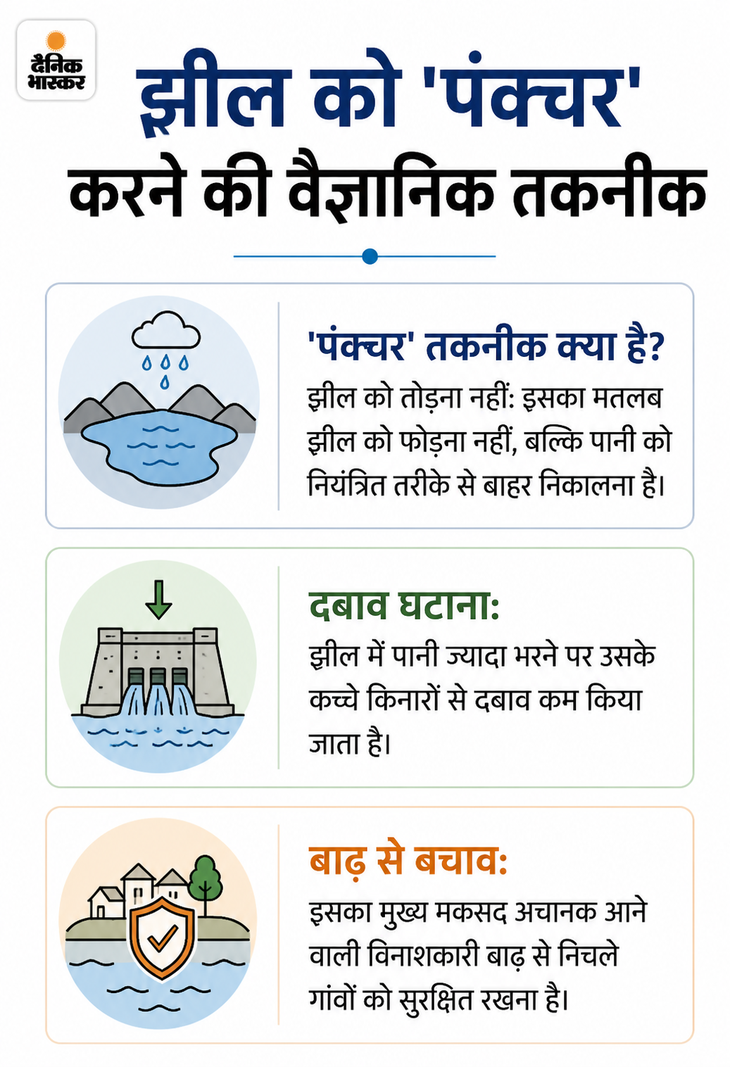
Scientists are monitoring the amount of water in the lake, its depth and the speed of melting of the glacier in real time. If the pressure on the lake reaches a dangerous level due to increase in water, then preparations are also made to drain out the excess water by puncturing it safely.
Monitoring of sensitive glacier lakes in the Himalayan region has been intensified following the recent disaster in Nepal.
Due to the retreat of the approximately 24 km long Drung-Drug Glacier, this pro-glacier lake has been formed at its mouth. In 2017, its area was about 16.62 hectares, which increased to 39.1 hectares in 2023.
Lake formed after 2010, glacier retreated…
According to studies, after 2010, water from melted snow started accumulating in the deep space created by the retreat of the glacier and a lake was formed. In the bathymetry survey of 2021, measurements were taken at more than 5 thousand points.
Then the water volume of the lake was found to be 1.8 lakh cubic meters. The average depth was 1.91 m and the maximum depth was 3.85 m. Between 1971 and 2017, the glacier receded 13.84% and the front retreated 925 metres.
Impact on Ladakh and Drung-Drug Glacier
Ladakh’s Drang-Drug glacier is shrinking rapidly, causing water to accumulate at its mouth and form a large unstable lake.
This lake is supported by weak stones and debris, due to which there is a constant fear of its breaking. Apart from this, the melting snow is also having a negative impact on the natural balance of the local river system and animals.
In a cold desert like Ladakh, the life of people is completely dependent on the melting water of the glacier.
At present, due to the rapid melting of snow, more water may be visible in the rivers, but after a few years when the snow reduces, there may be severe drought. This will lead to severe shortage of water for local agriculture, drinking water and power projects.
————————–
Read this news also….
Flood came…Flood came, people ran away again to save their lives: Devighat buried under debris in 30 seconds, 7 thousand people unaccounted for.
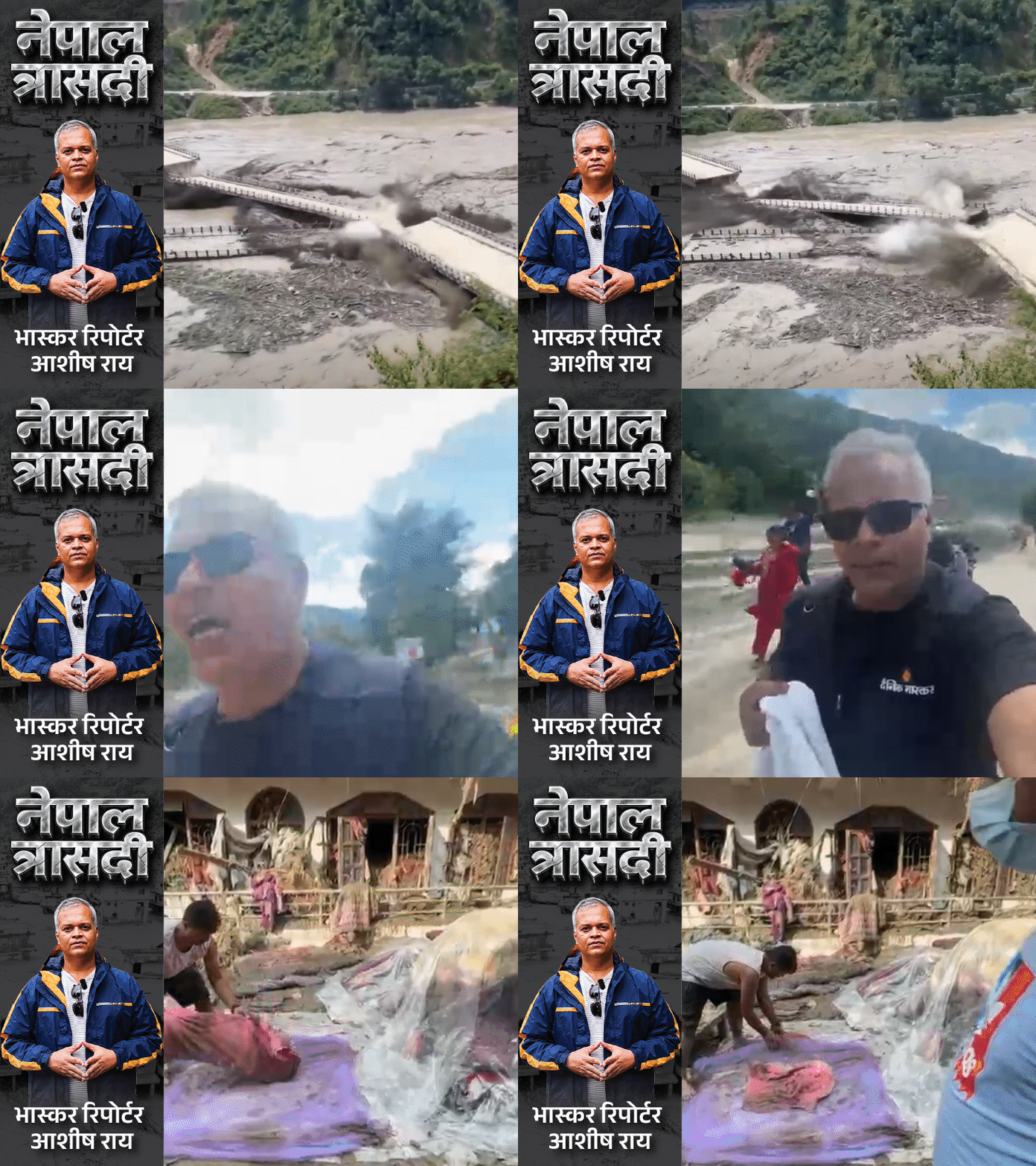
On the morning of 30th August we reached Devighat in Nepal. There was debris everywhere, in which people were found searching for belongings and loved ones. Read the full news…

Source link
[ad_3]

