
27 minutes ago
- copy link
Israel Defense Force has claimed that Hezbollah Chief Hassan Nasrallah has been killed in the airstrike.
Date- 25 May, Year- 2000. Israeli forces abandon their occupation of southern Lebanon. This was Hezbollah’s biggest victory so far in Lebanon.
The next day, Hezbollah Chief Hassan Nasrallah reached Bint Jabel, a small town in Lebanon. “Israel may have nuclear weapons, but it is still as weak as a spider’s web,” said Nasrallah, 39, dressed in brown clothes and a black turban.
Nearly 24 years later, on September 27, 2024, Israel dropped several tons of gunpowder on Hezbollah’s headquarters in Beirut.
Israeli PM gave speech to the public and reminded Nasrallah’s 24 year old statement. “Our enemies thought we were as weak as a spider’s web, but we have nerves of steel,” Netanyahu said.
Hours after Netanyahu’s statement, the Israeli army confirmed that Nasrallah had died. “Nasrallah will no longer be able to terrorize the world,” the Israeli military said.
After all, why was Nasrallah considered Israel’s biggest enemy? How did he become the biggest face of opposition to Israel in the last few years?
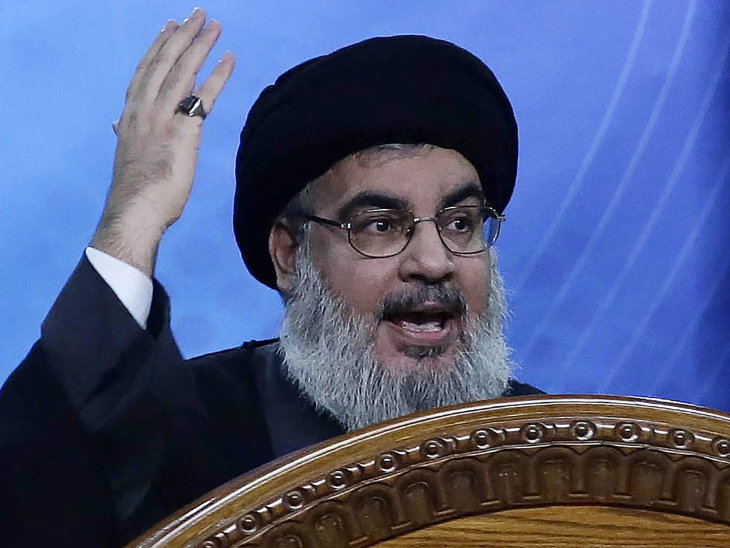
Hezbollah has also confirmed the death of Narsallah.
Born in a vegetable seller’s house, had an attachment to religion since childhood. Hassan Nasrallah was born on 31 August 1960 in a poor Shia family. He was the eldest among 9 siblings. His father lived in the Sharshabouk area of Beirut, the capital of Lebanon. He used to support his family by selling fruits and vegetables.
Nasrallah’s early education took place in a Christian area in Beirut. He was interested in religious things since childhood. He was greatly influenced by Imam Syed Musa Sadr of Iran.
Sadr started a movement in 1974 to empower Lebanon’s Shia community. In Lebanon it was known as ‘Amal’.
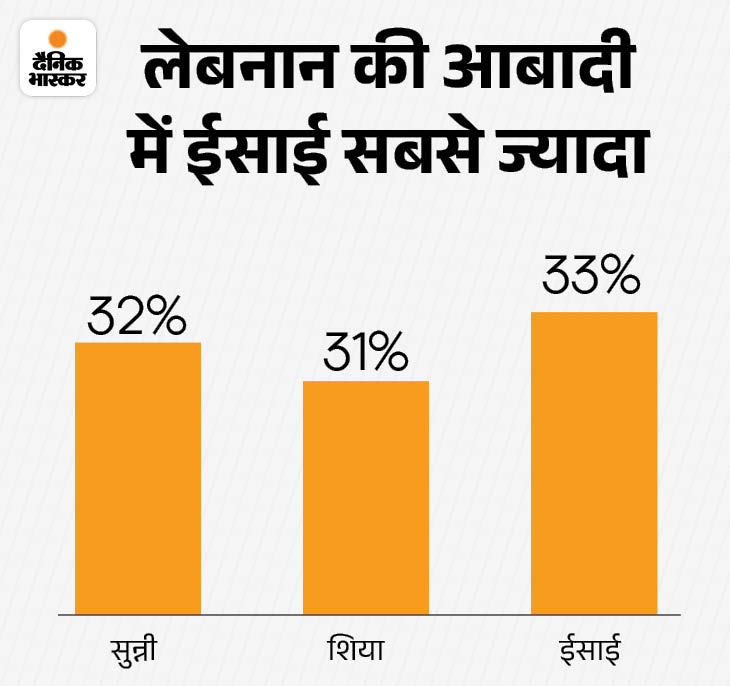
In fact, by 1974, civil war had broken out in Lebanon. Shias, Sunnis and Christians started fighting among themselves for a share in power. In such a situation, Amal was known to hold the rights of Shias.
Started fighting with Israel at the age of 15 After the outbreak of civil war in Lebanon, Sadr started the Armed Wing of Amal to protect southern Lebanon from Israeli incursions. Then 15 year old Nasrallah also joined Amal.
When the civil war raged, Nasrallah’s family moved to their native village Bajourieh. Here some people advised Nasrallah to study further. After this, in December 1976, he went to Najaf city of Iraq to study Islam.
There he met the Lebanese scholar Seyed Abbas Mousavi. Mousavi was once counted among the disciples of Musa Sadr in Lebanon. He was greatly influenced by Iran’s revolutionary leader Ayatollah Khomeini.
Nasrallah had been living in Najaf for only two years when Saddam Hussein ordered the expulsion of Lebanese Shia students from Iraqi madrassas. In 1978, as conflict between Shia and Sunni groups escalated in Iraq, Nasrallah and Abbas Mousavi returned to Lebanon.

Nasrallah (center), with Abbas Mousavi (right) during his stay in Iraq.
Formed Hezbollah at the age of 22, started guerrilla war against Israel After returning to Lebanon, Nasrallah and Mousavi took part in the Lebanese civil war. Nasrallah Abbas went to Mousavi’s native town where the majority of the population was Shia.
By this time, differences between Nasrallah and Lebanon’s Shia organization ‘Amal’ had started increasing. Nasrallah believed that Amal should be limited to working against Israel. Whereas Nabih Berri, who was leading Amal at that time, believed that he should get involved in Lebanese politics.
A year after Hassan Nasrallah’s return to Lebanon, a revolution broke out in Iran in 1979 and Ruhollah Khomeini came to power. This gave Iran’s support to Lebanon’s Shia community.
Hassan Nasrallah later met with the then leaders of Iran in Tehran and Khomeini made him his representative in Lebanon.
After this, Musavi and Nasrallah formed Hezbollah in 1982. Nasrallah was only 22 years old then. This organization got the support of Iran. Iran sent 1500 of its Islamic Revolutionary Guards to Lebanon.
After this, Hezbollah started a guerrilla war against Israel, which had occupied the southern part of Lebanon. Hezbollah did not have any army of its own. His fighters used to attack Israeli soldiers secretly. In addition to attacking military bases, Hezbollah also launched suicide attacks.
Hezbollah expels Israel from Lebanon In November 1982, a suicide attack took place on Israel’s military headquarters in the Lebanese city of Tyre. It resulted in the deaths of 75 Israelis and 20 others, most of whom were prisoners. Hezbollah did not stop here. In April 1983, a bomb exploded at the US Embassy in Lebanon. 17 Americans and 30 Lebanese died in this.
The American Embassy was shifted and after about a year, its new location was also attacked. Meanwhile, US Marine barracks and French military bases were also attacked in Beirut, in which more than 300 soldiers were killed. Hezbollah did not claim responsibility for the attacks but supported them.
Due to continuous attacks, Israeli forces withdrew from most of South Lebanon by 1985. However, it retained control of many areas near the border. Hezbollah continued attacking Israeli targets in the name of creating a security zone in Lebanon.
That same year, fighters from the Shia group in Lebanon hijacked TWA Flight 847 bound for San Diego and brought it to Beirut. During this, one passenger was killed, while in exchange for the release of the remaining 152 people, Israel had to free 700 Lebanese-Palestinian prisoners. Hezbollah once again did not claim responsibility for the plane hijacking, but it supported it.
Due to continuous attacks, the Israeli army had to retreat from most of South Lebanon by 1985. Nasrallah was currently at the number 2 position in Hezbollah.

Nasrallah became the chief of Hezbollah in just 31 years.
Took command of Hezbollah in 1992, also connected with politics In February 1992, Hezbollah chief Musavi was killed in an Israeli airstrike. After this Nasrallah took command of Hezbollah. Under Nasrallah’s leadership, Hezbollah acquired rockets capable of long-range attacks, which made it easier to attack Israel.
By the time Nasrallah took command of Hezbollah, the civil war in Lebanon was over. In the same year, under the leadership of Nasrallah, Hezbollah contested parliamentary elections for the first time and won 12 seats. Along with this, the organization also became politically active in Lebanon.
To gain a foothold in Lebanese politics, Nasrallah began the work of building Hezbollah’s image in the country. He got the support of the country’s largest Shia community. Nasrallah carried out many social welfare related works in the name of Hezbollah, which the Lebanese government could not do.

Hezbollah Chief Nasrallah had the support of Iran’s supreme religious leader Khamenei.
Nasrallah freed Palestinians, Lebanese and Arabs from Israeli captivity Under the leadership of Nasrallah, Hezbollah gave a tough competition to Israel. In May 2000, Israel was forced to withdraw from southern Lebanon.
In 2002, Hassan Nasrallah reached a prisoner exchange deal during talks with Israel. During this period, more than 400 Palestinian, Lebanese prisoners and citizens of other Arab countries were released.
Nasrallah further strengthened his image with this. Competing with him had become a bigger challenge for his rivals in Lebanese politics.
In July 2006, Hezbollah took two Israeli soldiers hostage during an encounter.
Then once again Israel attacked Lebanon. In this war that lasted for 33 days, Hezbollah emerged as the strongest military force in Lebanon, which could protect the citizens of the country.
By giving a tough challenge to Israel, the popularity of Hezbollah and Nasrallah increased significantly in Lebanon. However, he came on Israel’s radar. Due to this, he reduced giving speeches in public places to a great extent. Most of Nasrallah’s addresses were pre-recorded.

People are listening to Nasrallah’s recorded speech in Lebanon. The picture is from 2017.
Who is Hashem Saffieddin, who wears black turban like Nasrallah? Can he be his successor? According to the Times of Israel, Hashem Saffieddin, considered Nasrallah’s successor in Hezbollah, has survived. Safiuddin is Nasrallah’s cousin and owes him the black turban. America declared him a terrorist in 2017.

Source link
[ad_3]

