
4 hours ago
- copy link
After the ceasefire agreement with America, political conflict within Iran has come to the fore. President Massoud Pazhakian, Foreign Minister Abbas Araghchi and Parliament Speaker Mohammad Bagher Ghalibaf are now being accused by the radical factions of Iran of carrying out a ‘soft coup’ i.e. a coup without weapons.
Fundamentalists say that these leaders have compromised Iran’s principles by compromising with America. According to CNN report, this resentment was clearly visible during the funeral of Supreme Leader Ali Khamenei in Tehran last week.
As President Massoud Pazhakian walked with Khamenei’s coffin, some people dressed in black chanted slogans against the president. At some distance from the funeral site, stones were thrown at Foreign Minister Abbas Araghchi and he was called a traitor who sold the country. The situation became so bad that they had to flee from there.
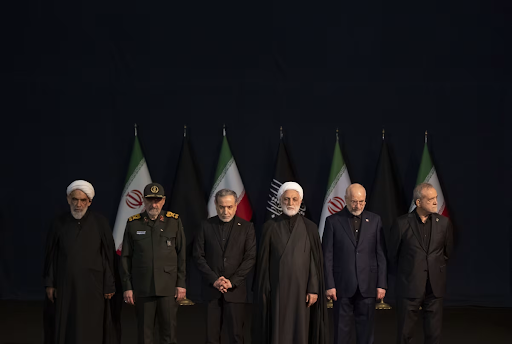
Senior Commander of the Revolutionary Guards (IRGC) General Mohsen Rezai, Foreign Minister Abbas Araghchi, Chief Justice Gholam-Hossein Mohseni AJEI, Iranian Parliament Speaker Mohammad Bagher Ghalibaf, President Massoud Pazhakian, all of whom are currently running the country together, arriving at an event in Tehran on July 3.
Fundamentalists’ allegation – Government bowed before America
According to CNN report, fundamentalist groups believe that instead of avenging the assassination of Ali Khamenei, the government bowed down to America and compromised. He says that this agreement was made against the orders of the new Supreme Leader Mujtaba Khamenei.
Mujtaba Khamenei has not yet appeared in public. He has neither addressed the country nor openly demonstrated his power, while the government is talking and running the country in his name.
Fundamentalists allege that the present government is trying to increase its power by taking advantage of Mujtaba’s absence. She claims that she wants to weaken the Parliament.
President Massoud Pazhakian, Parliament Speaker Mohammad Bagher Ghalibaf and Foreign Minister Abbas Araghchi have become the most prominent faces of post-war Iran, due to Mojtaba Khamenei’s frequent absences from public. This is a major reason for the anger of the fundamentalists.
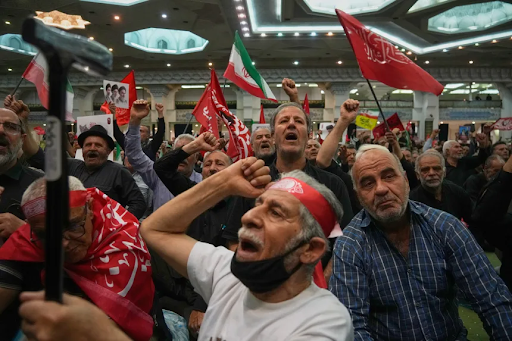
Mourners raise fists and shout slogans at a memorial service for late Supreme Leader Ali Khamenei held at the Imam Khomeini Mosque Grand Mosque in Tehran on July 14.
Message of war in funeral, ceasefire broken after few days
There were constant appeals to maintain national unity during the war in Iran, but the dominance of fundamentalist groups was clearly visible in the funeral of Ali Khamenei. According to the report, fundamentalist groups used this opportunity to demand re-launch of war against America and completely reject any agreement with the Trump government.
This wish of the fundamentalists seemed to be fulfilled after a few days. This week, the fragile ceasefire between Iran and America almost broke down. Iran’s Revolutionary Guards tried to show their control over this sea route by targeting ships in the Strait of Hormuz. In response, America launched retaliatory attacks.
The President was openly threatened to kill
Even before the war started again, fundamentalist leaders were continuously attacking officials who compromised with America. Religious singer Mohammad Ali Bakhshi, associated with the Iranian regime, openly threatened President Massoud Pazhakian during a program. He said-

Mr. President, if the conditions of the Supreme Leader are not met then we will have the sword and you will have the throat. We will make your life hell.
This threat to kill the President was widely criticized in Iran, but there was no information about any legal action against Bakshi.
Ghalibaf is also the target of fundamentalists
The President and the Foreign Minister are not the only targets of fundamentalists. Chief negotiator and Parliament Speaker Mohammad Bagher Ghalibaf, who negotiated with America, is also their target. Ghalibaf has previously been a commander in the Revolutionary Guards and has been active in Iranian politics for a long time.
Radical MP Kamran Ghazanfari alleged in a video message released in early July that the current leadership was weakening the role of the supreme leader and parliament.
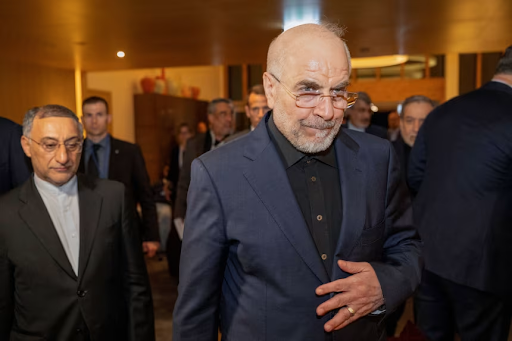
Parliament Speaker Bagher Ghalibaf was leading Iran in talks with the US.
Efforts to sideline fundamentalists intensified
After about four months, a special session of the Parliament was called in Iran on 14 July. In this, the power struggle came to the fore and two prominent fundamentalist MPs who opposed the agreement with America were removed from important parliamentary posts.
First of all, the radical MP Mahmoud Nabavian, who opposed the agreement with America the most, was removed from the National Security Commission of the Parliament. Apart from this, its spokesperson Ibrahim Rezai was also removed.
Nabavian had previously been part of the Iranian delegation to talks with the US, but later began opposing the talks. It is alleged that he had leaked the draft of the agreement to the media before it was signed last month, so that the agreement could be stopped.
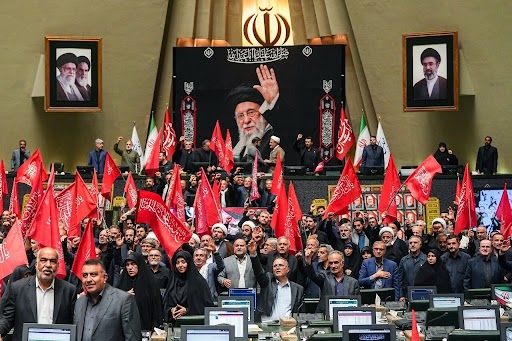
A special session of the Parliament was called in Iran on 14 July.
Experts said- Government wants to reduce the influence of radicals
Experts believe that the current government of Iran is now trying to reduce the influence of these fundamentalist groups. Hamidreza Azizi told CNN-
We are seeing that Ghalibaf is gradually sidelining these fundamentalist leaders. These people have now become a burden on the system and with the increase in instability in the country, they are also openly bringing out their mutual fights.
Although these fundamentalists are not in large numbers, they have a strong hold on many influential institutions like Parliament and government news agencies IRIB. It is not clear what their actual political power is.
Prominent leader of this faction and former national security chief Saeed Jalili had received more than 1.3 crore votes in the 2024 presidential elections. He stood second in the elections. The total population of Iran is about 93 million.
Trump had said- Iran is divided from within
During the war and diplomatic talks, US President Donald Trump has said many times that Iran’s leadership is struggling with serious internal differences and this is the biggest obstacle to any agreement.
Although experts say that there are differences between the government and the fundamentalists, but the priority of the entire regime is still the same. Their goal is to reach an agreement that ends the war, gives Iran relief from sanctions and maintains its influence over the Strait of Hormuz.
Fundamentalists want another war with America
According to CNN, Mojtaba Khamenei’s frequent absence from public, his limited support for the ceasefire, the growing influence of the Revolutionary Guards and the huge crowd gathered at Ali Khamenei’s funeral have boosted the morale of the hardliners. Now they are openly demanding continuation of the war against America and Israel.
Iran’s former foreign minister and radical leader Manouchehr Muttaki said in a TV interview on Wednesday,
I suggest we go to one of the US military bases in the area, where there are hundreds, perhaps thousands, of American soldiers. If we capture 100 of those soldiers and bring them to Iran, that will be enough.
This statement shows that despite the agreement with America, the power struggle within Iran has not ended. On one hand, the government is trying to get relief from sanctions and end the war through diplomatic means, while the fundamentalist factions are still adamant on the policy of confrontation against America and Israel. This could have a major impact on both Iran’s internal politics and foreign policy in the future.
—————————–
Also read this news related to Iran…
America attacks Iran for the seventh consecutive night: Attack on Indian-invested Chabahar Port; Iran fired missiles at Qatar-Kuwait
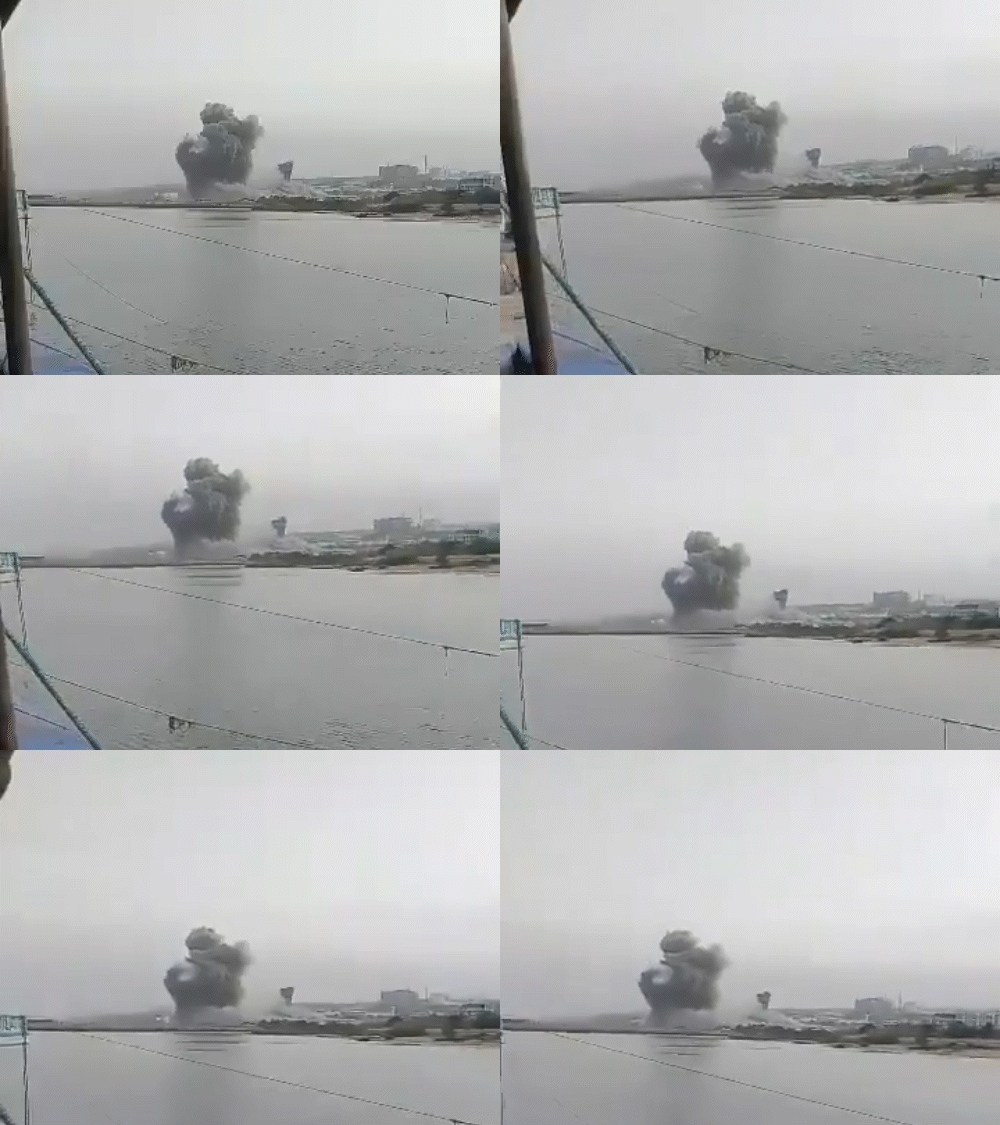
America carried out airstrike on Iran for the seventh consecutive night on Saturday. In these attacks, the bridge, energy infrastructure and a control (monitoring) tower of India’s invested Chabahar Port were targeted. In response, Iran fired missiles towards Qatar, Kuwait, Bahrain and Jordan. Read the full news here…

Source link
[ad_3]

