
Tokyo9 minutes ago
- Copy link
According to Japanese media NHK, Prime Minister Shigeru Ishiba has decided to resign. Ishiba has taken this step to avoid division within the ruling Liberal Democratic Party (LDP).
His coalition government lost to the upper Sadan (House of Councilors) elections held in July. Ishiba recently apologized for this and said that he would take a decision to resign.
After the election defeat, the ‘Remove Ishiba’ movement intensified within the LDP. Some party leaders and MPs questioned their leadership, which weakened their situation.
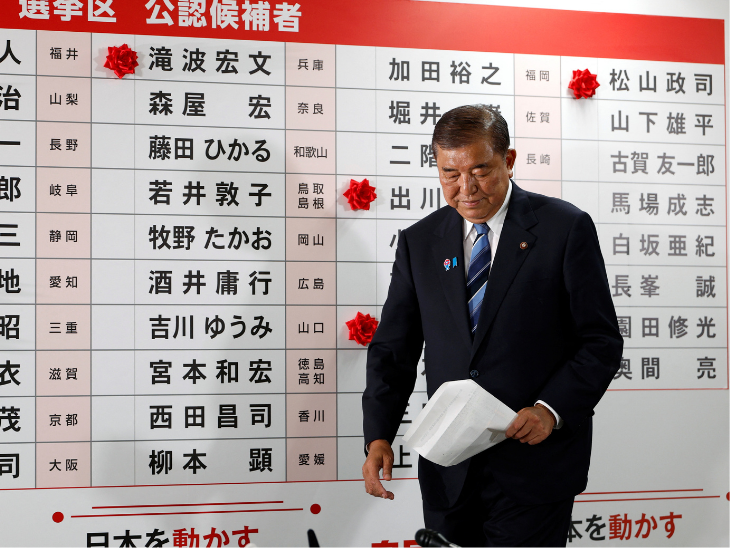
Japan’s PM Shigeru Ishiba appeared at the party headquarters during the counting of votes in July.
Ishiba’s party lost badly in the upper house
Ishiba’s Liberal Democratic Party (LDP) and its allies lost their majority in the upper house of the country in the July elections. However, at that time he said that he would not resign from the post of Prime Minister.
The Japanese Parliament has a total of 248 seats in the upper house. Ishiba already had 75 seats. To maintain a majority, she needed at least 50 new seats in this election, but she got only 47 seats. Of these, LDP got 39 seats.
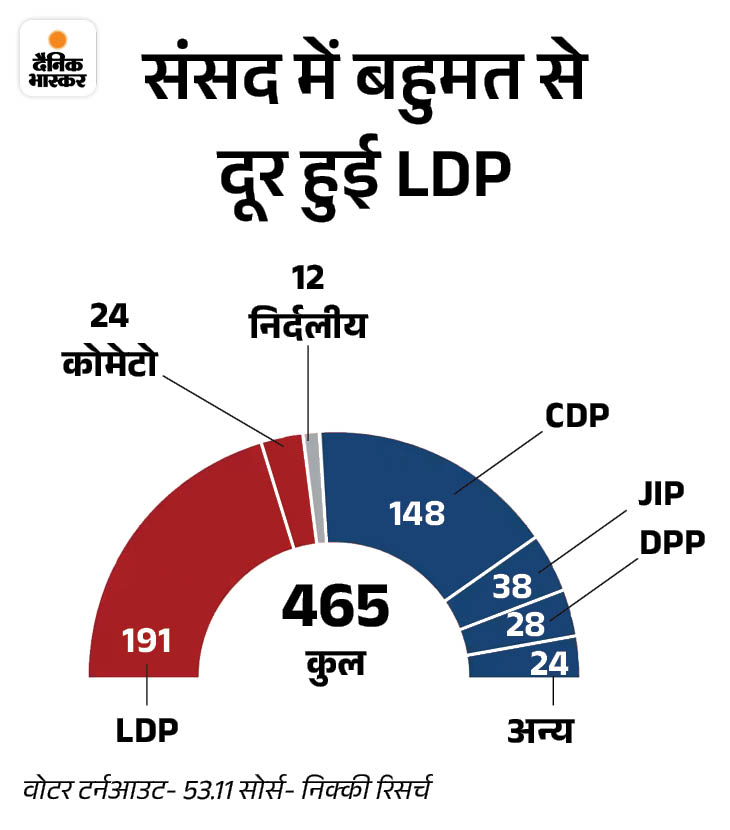
This defeat was the second major political failure for PM Ishiba. Earlier, after losing the election of the lower house in October, this alliance had now gone into a minority in both the houses. LDP was founded in 1955, and this is the first time it has lost a majority in both houses.
No majority in Japan, yet Ishiba became Prime Minister
In the October 2024 election in Japan, the LDP-Kometo alliance got only 215 seats out of 465 seats. There are 233 seats for majority here. LDP was the largest party. No other coalition was in a position to form a government.
The main opposition party CDPJ got 148 seats. The rest of the opposition parties are divided. The opposition wanted to bring no-confidence motion, but Ishiba warned that if this happens, they would dissolve Parliament and conduct elections again. Due to which the opposition retreated.
Now Ishiba is getting the bill passed by taking support on issues from small parties like DPP. In cases like budget, subsidy and tax reform, they have been able to make some opposition leaders in their favor. That is, the PM is now needing the support of the opposition to run the government and this is the biggest crisis.
Source link
[ad_3]

