
- Hindi News
- National
- Iran Crisis: Foreign, Shipping, Petroleum Ministries Brief On Oil, Gas Supply
New Delhi2 minutes ago
- copy link
The Ministry of External Affairs, Shipping, Petroleum, Information and Broadcasting of the Government of India held a joint press conference on Thursday regarding the shortage of crude oil and gas in the country. The government said that India imports about 60% of its LPG requirement, out of which about 90% of the supply comes from the Strait of Hormuz.
The government said- The situation in the country is challenging, but the government is making continuous efforts to ensure gas supply. About 50 lakh LPG cylinders are delivered daily in the country. Recently, due to panic, a manifold increase in cylinder booking has been seen.
The Center said that people have been appealed to avoid panic booking. Also, state governments have been asked to prepare a list of needy beneficiaries, so that supply of domestic and commercial cylinders can be ensured on priority basis.
Read what the ministries said in the joint press conference…
Petroleum Ministry: Sujata Sharma, Joint Secretary (Marketing and Oil Refinery) of the Ministry said-
The situation regarding availability of petrol, diesel and LPG in the country is quite comfortable and satisfactory. India uses about 55 lakh barrels of crude oil daily and being the fourth largest refiner in the world, there is confidence in the availability of products like petrol and diesel.
On March 9, the Petroleum Ministry had ordered all refineries to maximize LPG production under the Essential Commodities Act. After this, domestic production has increased and now it has increased from 25% to 28%.
About 1 lakh retail outlets i.e. petrol pumps are operating across the country, most of which belong to public sector oil marketing companies. There has been no fuel shortage or dry-out situation anywhere at these outlets.
The Government of India allocates kerosene to the states every quarter. Every three months, about 1 lakh kiloliter kerosene is supplied to the states. Under the new order issued today, additional 48 thousand kiloliters of kerosene will be issued to the state governments.
Shipping Ministry: Ministry official Rajesh Kumar Sinha said-
The number of Indian ships in the Persian Gulf area is currently 28 and this number remains the same as before. There are a total of 778 Indian sailors on board these ships. Of these 28 ships, 24 are in the western part of the Strait of Hormuz, on which 677 Indian sailors are present. There are four ships in the eastern part of Hormuz, on which 101 Indian sailors are aboard. The government is constantly monitoring the safety of all these ships and their crews.
Recently there have been maritime accidents involving Indian sailors on some foreign-flagged ships. A total of 78 Indian sailors were present on these ships. Of these, 70 sailors have emerged safely, while four sailors have been injured and their condition is stable. Three Indian sailors have died in these incidents, while one sailor is still reported missing.

2 reasons for supply crisis
1. Almost closure of the Strait of Hormuz
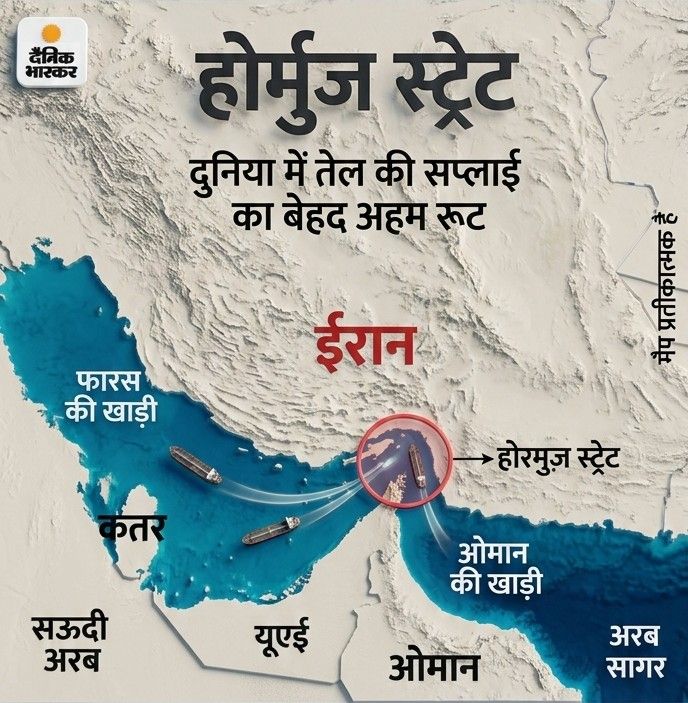
The biggest challenge for India is the closure of the Strait of Hormuz. This is about 167 km long waterway, which connects the Persian Gulf to the Arabian Sea. Due to Iran war this route is no longer safe. In view of the danger, no oil tanker is passing through there.
20% of the world’s total petroleum passes through here. Countries like Saudi Arabia, Iraq and Kuwait also depend on it for their exports. India sources 50% of its crude oil and 54% of its LNG requirement through this route. Iran itself exports through this route.
2.LNG production stopped due to drone attack on the plant
Last week America and Israel had struck Iran. In response, Iran has targeted American bases in countries like UAE, Qatar, Kuwait and Saudi.
After Iran’s drone attack, Qatar, the largest country supplying gas to India, has stopped the production of its LNG plant. Due to this the supply of gas in India has reduced. India imports 40% of its LNG requirement (about 27 million tonnes annually) from Qatar.
When will the situation improve?
Chief General Manager of Indian Oil (LPG) K.M. Thakur says that customers do not need to panic and do not book cylinders in panic. The government is now considering sourcing alternative cargo from countries like America.
At the same time, at the international level, G7 countries are discussing to release supply from their emergency oil reserves, so that the energy crisis in the global market can be reduced. Additional crude oil is also expected to come from Russia and Algeria.
——————————-
Also read these news related to LPG shortage… Sloganeering outside Parliament – Narendra is also missing, cylinder is also missing: Petroleum Minister will speak on LPG crisis; Rahul had said- big problem is going to come
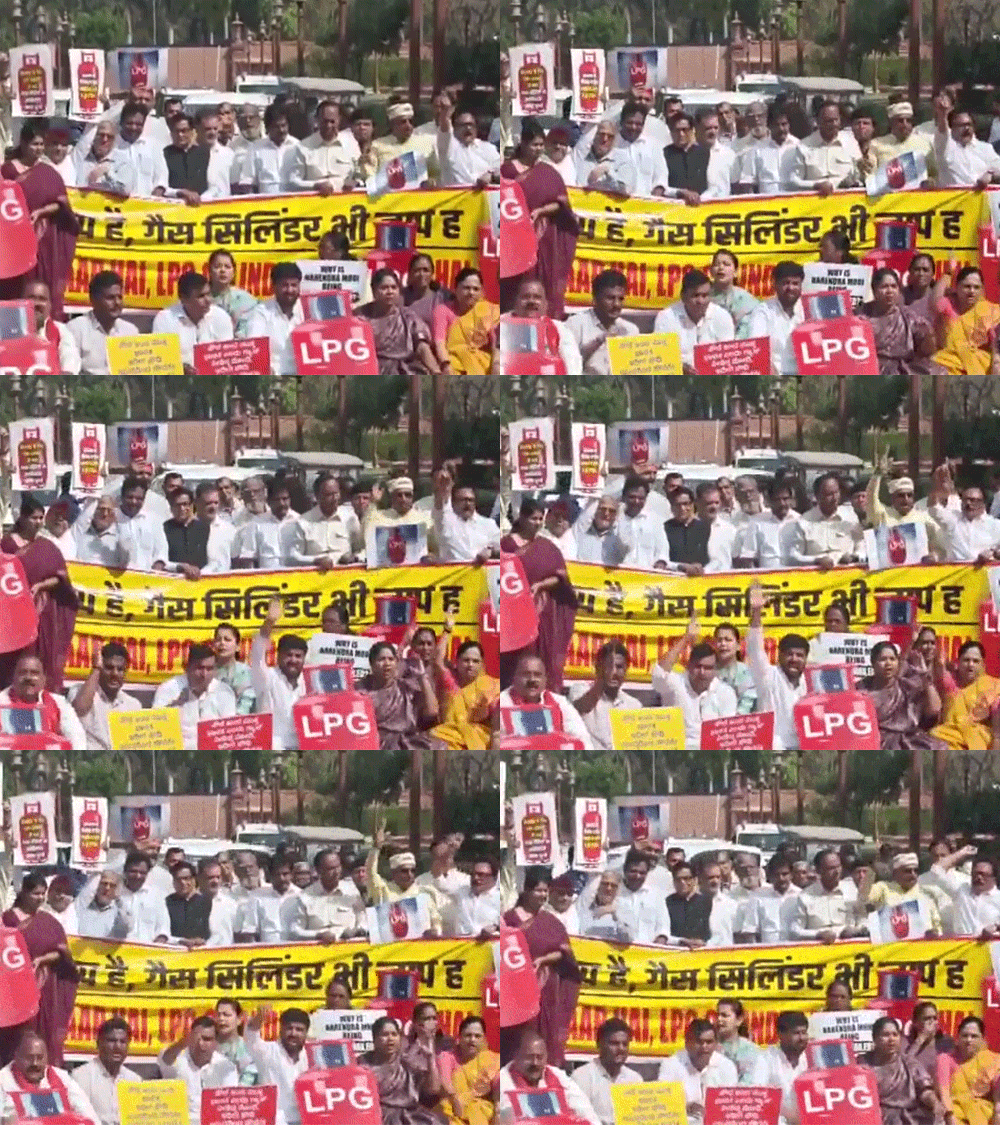
Opposition MPs created ruckus in the Lok Sabha on Thursday over the issue of cylinder crisis in the country. As soon as the proceedings started at 11 am, the MPs started raising slogans. Opposition MPs including Rahul demonstrated in the Parliament complex on the cylinder crisis. The MPs raised slogans ‘Narendra is also missing, cylinder is also missing’. Read the full news…
How many days of LPG is left with India, if the war continues for a long time, where will the government bring cooking gas from? what should you do
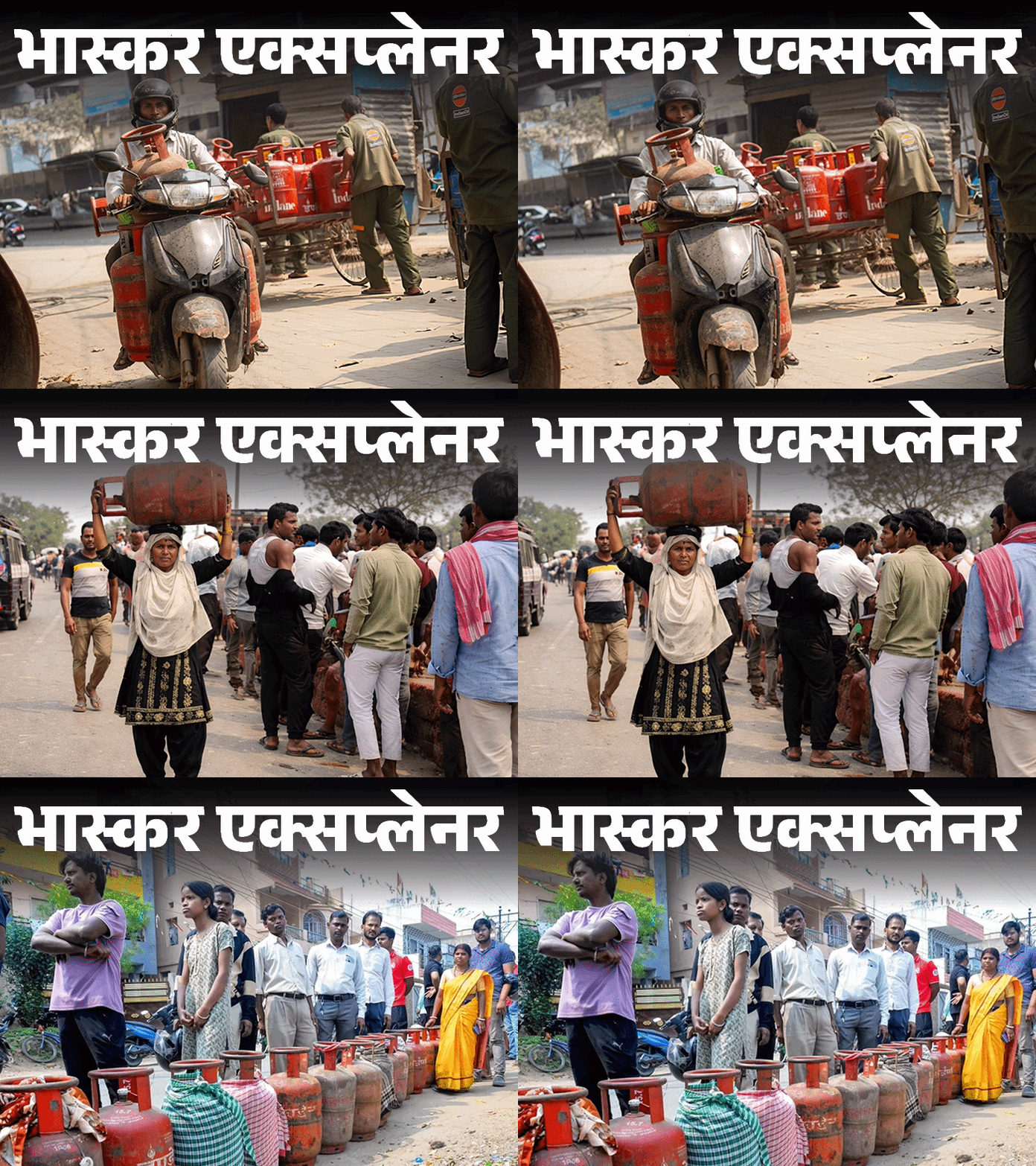
In response to the American attacks, Iran has targeted a dozen Gulf countries like UAE, Qatar, Kuwait, Saudi Arabia. Due to this, the production of the gas plant here stopped or was affected. India has 10 days of LPG buffer stock, which may run out soon. If the war drags on, where will the government bring cooking gas from? Answers to 6 such important questions in Bhaskar Explainer…

Source link
[ad_3]

