
Dhaka2 minutes ago
- copy link
Hilsa is at the forefront of fish production in Bangladesh. It provides about 70% of the global supply.
Army has been deployed in Bangladesh to protect Hilsa fish from illegal fishing. According to the report of news agency AFP, 17 war ships and patrol helicopters have been deployed for this.
These ships and patrol aircraft are keeping a 24-hour vigil to prevent domestic and foreign fishermen from intruding into the deep sea. Bangladeshi authorities have said that fishing in the Hilsa fish breeding area has been banned from October 4 to 25.
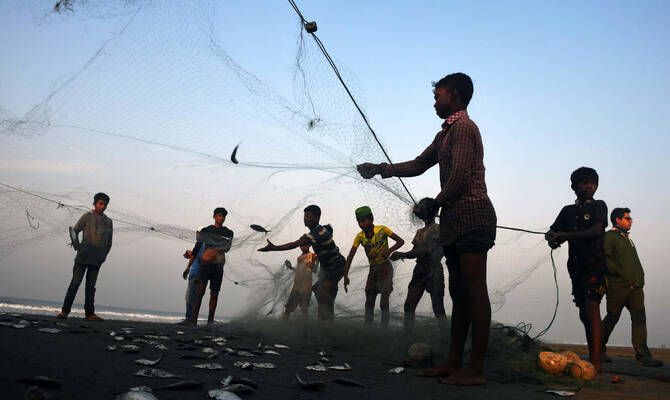
Fishermen catch fish in Shamlapur village in south-eastern Bangladesh last year.
Hilsa fish sold at Rs 2200 per kg
Hilsa is also called Ilish fish in Bangladesh. It is the national fish of Bangladesh and has been given the status of ‘mother’ there. Hilsa return from the sea (warm water) to rivers (cold water) every year to spawn.
Lakhs of people depend on Hilsa fish. At present its price in Dhaka is 2800 to 3000 taka (2050 to 2200 rupees) per kg. This fish is also very much liked in West Bengal of India and is sold at an expensive price.
Bangladesh sends Hilsa fish to India under ‘Hilsa Diplomacy’
Indian fishermen catch fish in the brackish waters of the Ganges River and its delta, catering to the needs of Kolkata and West Bengal. But overfishing can reduce the fish stock at the time of Hilsa breeding.
The Yunus government in Bangladesh had stopped the export of Hilsa fish to India in September 2024. Its objective was to ensure supply of Hilsa fish in the domestic market.
This was the first time after the fall of Sheikh Hasina government in August 2024 that Hilsa export was completely banned. Bangladesh has been sending 1,500 to 2,000 tonnes of Hilsa fish to India every year before Durga Puja.
This tradition started during the Sheikh Hasina government. Yunus government’s ban on this was being considered as bitterness between India and Bangladesh. However, on September 21, Bangladesh lifted this ban and gave permission to send 3000 tonnes of Hilsa fish to India.
This fish, which comes to India every year before Durga Puja, is not only famous for its taste, but has also become a special symbol of India-Bangladesh relations, which is called ‘Hilsa Diplomacy’.
Expert said- Hilsa needs calm water for breeding
Environmental experts say climate change and rising sea levels are affecting Hilsa fish stocks. There is also a fear that naval ships may disturb the calm waters during Hilsa breeding.
Mohammad Abdul Wahab, former head of the World Fish project, said that Hilsa needs calm and uninterrupted water to breed and the use of drones would be better for this.
Government distributed 25 kg rice to fishermen
The Bangladesh government has given 25 kg of rice to every fisherman family to help the fishermen during the breeding period, but some people say this is not enough.
Fisherman Sattar Majhi, 60, told AFP: “The three weeks are very difficult for the fishermen because we have no other means of survival.”
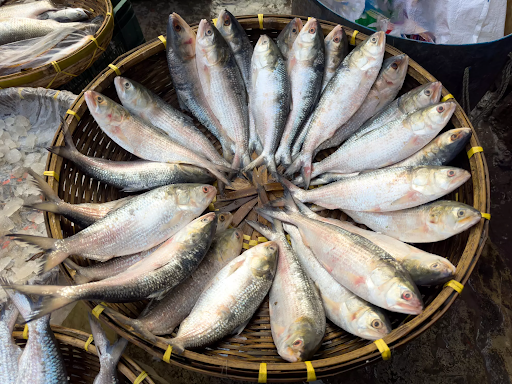
Chittagong Fishery Ghat is considered to be the largest wholesale market for Hilsa fish in Bangladesh.
Bangladesh leads in the production of Hilsa fish
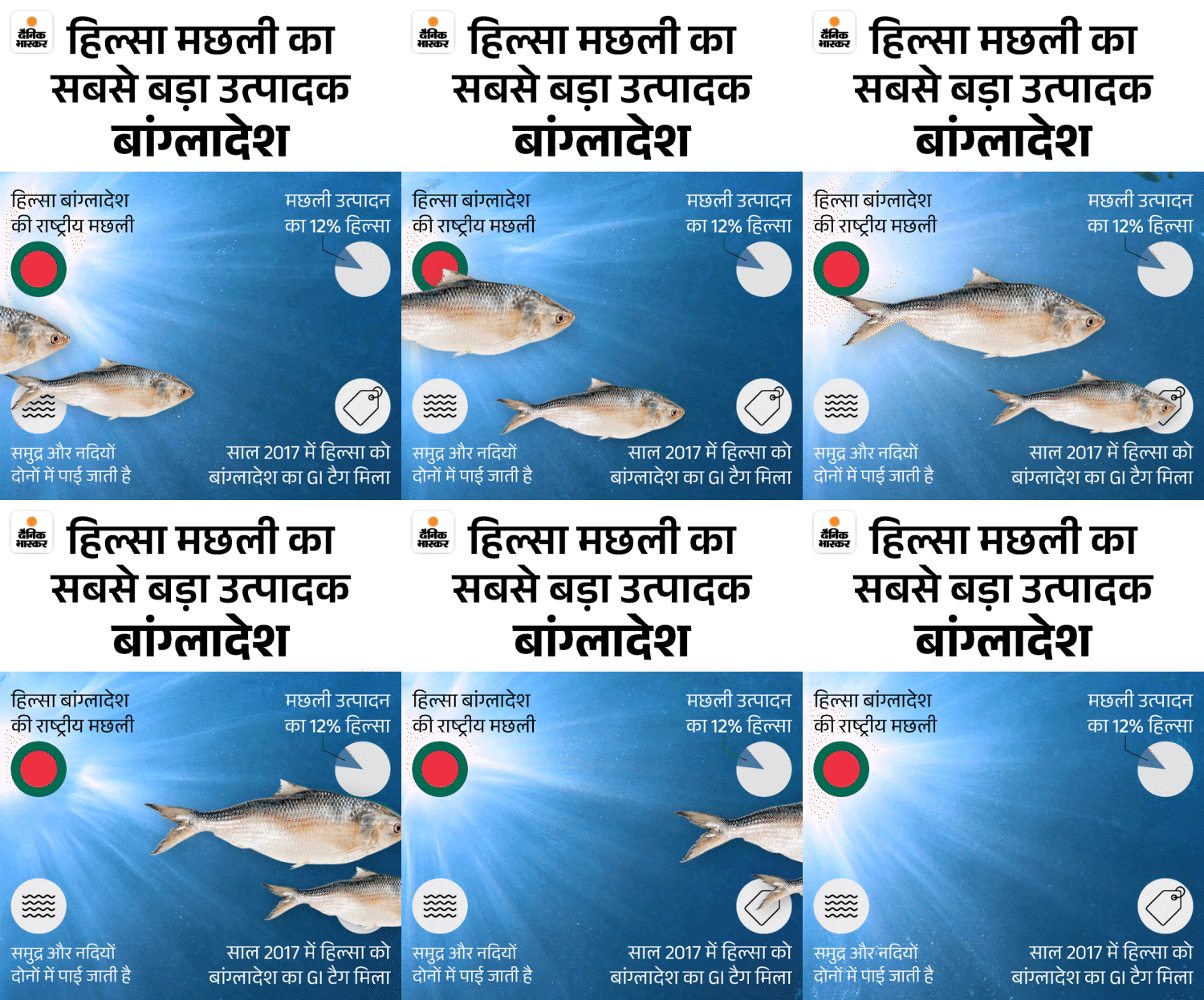
Bangladesh is one of the largest fish producing countries in the world. It is in third place after India and China. Hilsa fish (Ilish) is its major export product, providing about 70% of the global supply. Fisheries contribute about 3-4% to the GDP of Bangladesh.
Hilsa’s share in the total fish production of Bangladesh is 12 percent. Here, 5.50 lakh to 6 lakh tonnes of fish is caught every year, providing livelihood to 5 lakh fishermen and 20 lakh people in associated industries.
Bangladesh exported 71,477 tonnes of fish and fish products (such as shrimp, hilsa, other marine fish) in the financial year 2023–2024 (FY24). Earned approximately Tk 4,376 crore from this.
Source link
[ad_3]

