
9 minutes ago
- copy link
For the first time, international media has been allowed to visit the area affected by the massive flood caused by the breaking of the glacier on the Nepal-Tibet border.
China’s Foreign Ministry on Sunday gave a tour of the Guirong border crossing to journalists from several foreign media organizations, including Reuters.
This area was hit by a strong wave of water, mud and debris on August 26. Including China and Nepal, more than 1,300 people have died in this disaster, while more than 5,000 people are still missing.
5 photos related to Tibet-Nepal accident

Chinese officials giving information about the devastation caused by floods and debris at Gyirong Port in Tibet.
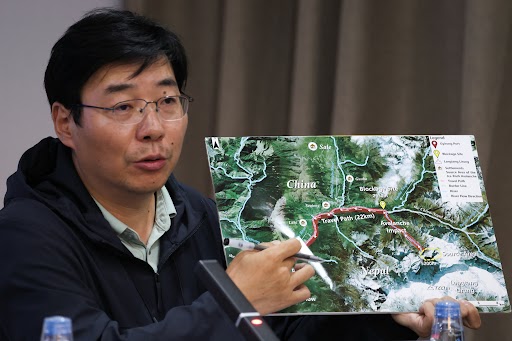
Chinese scientist Su Pengcheng giving information about the disaster at Gyirong Port in Tibet, along with a map of the China-Nepal border.
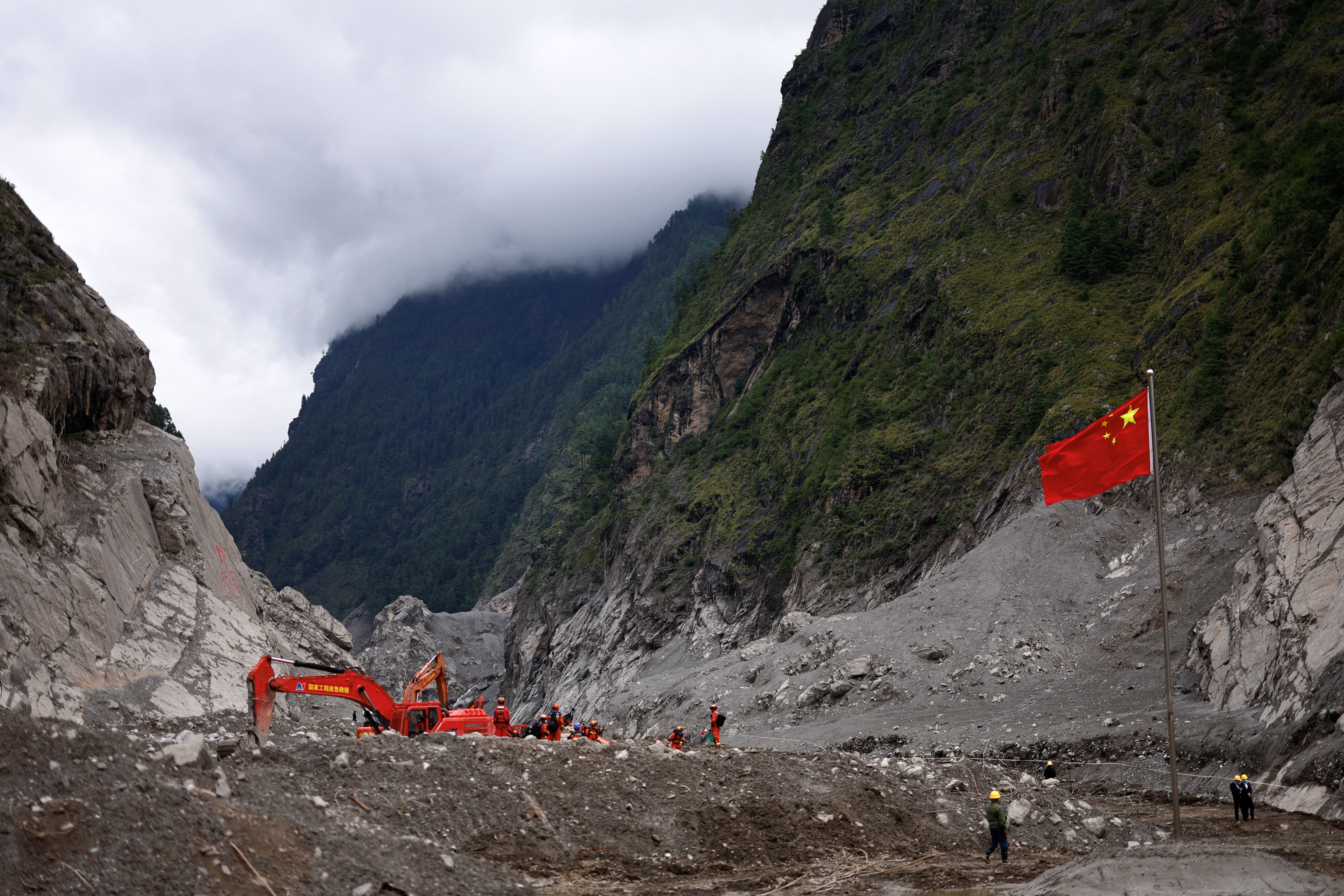
Rescue workers search for people under the debris near the Chinese flag at Gyirong Port in Tibet.
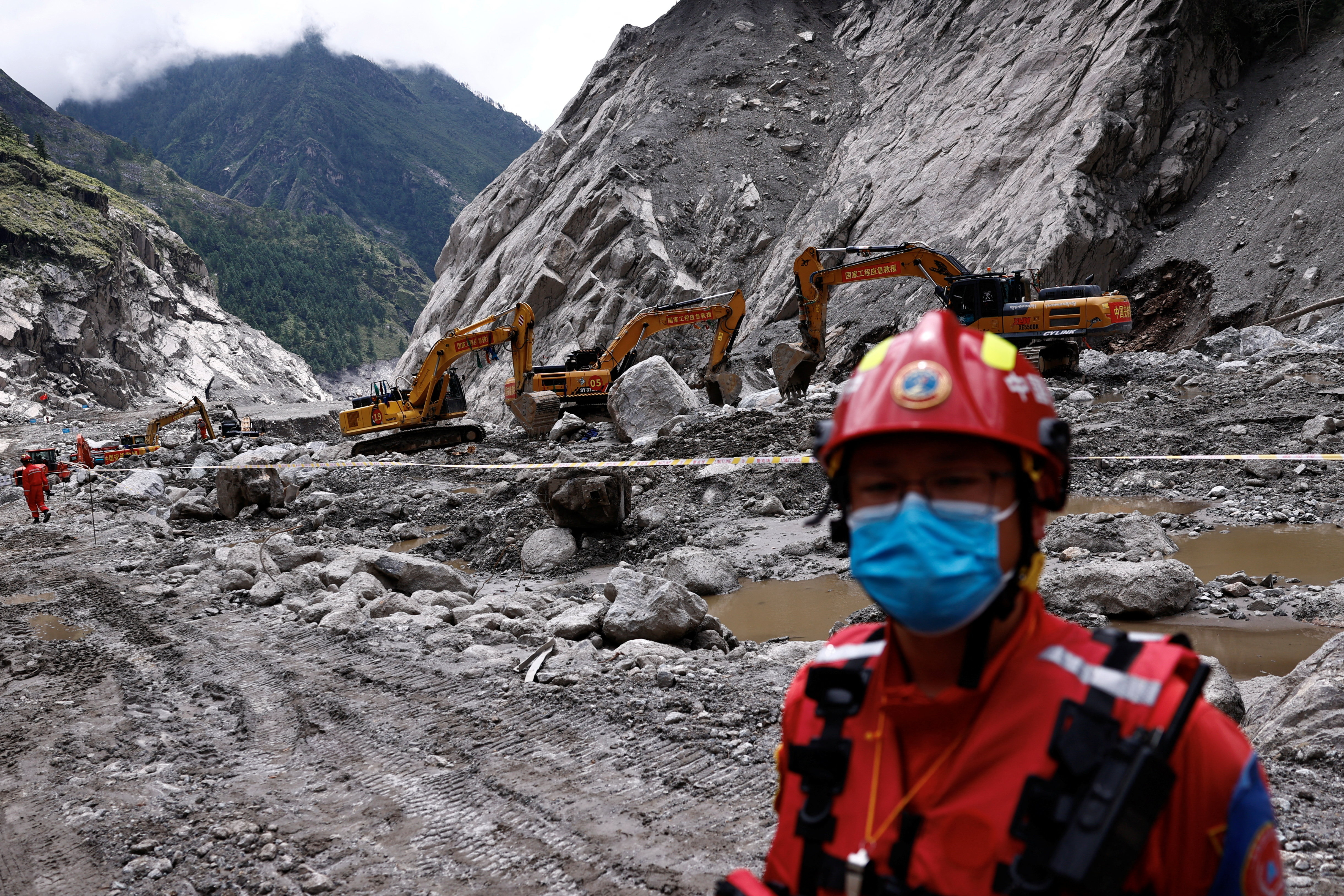
Rescue workers search for debris in the worst-hit area of Gyirong Port in Tibet.
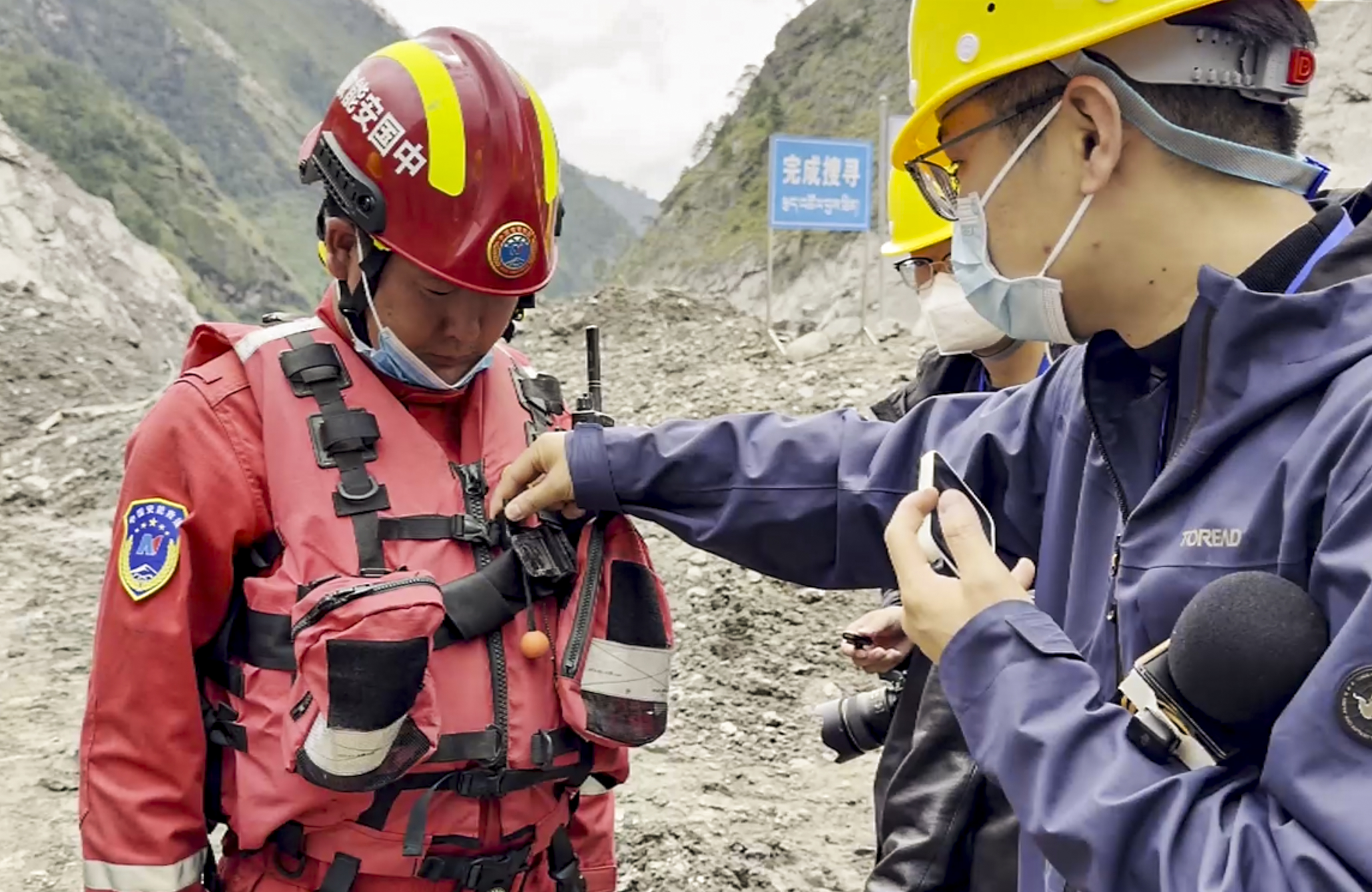
Rescue workers removing debris from the site of the immigration building that was washed away in the flood on the China-Nepal border.
China showed devastation to foreign media for the first time
During the visit, journalists saw the ongoing rescue operations in the affected area. Rescuers wearing orange uniforms are searching for people and bodies with the help of digging machines, shovels and underground search radar.
Before the disaster, there was a five-storey Chinese Customs Building here, but now no trace of it remains. The border gate, about 20 meters high, has also been buried under the debris. Only a part of the nearby water tower is visible there.
The Chinese flag has been installed where the border gate was earlier. The entire surrounding area is covered with brown-black debris. Rescue workers are continuously digging behind the warning board.

Many people were buried under the debris of the flood on August 26 at Gyirong Port built on the Tibet-Nepal border.
For news related updates go through the blog given below…
live updates
11 minutes ago
- copy link
China’s claim – destruction started due to breaking of glacier towards Nepal
After the glacier broke towards Nepal on August 26, a strong wave of water, mud and debris reached the border of China. It completely destroyed the Gyirong border crossing.
In the video of the accident, a black wave of water, mud and debris is seen moving rapidly towards the border crossing. People did not get much time to recover and reach a safe place.
China says that the accident started with the breaking of the glacier on the Nepal side. After this, China started a large-scale relief and rescue operation in the affected area.
11 minutes ago
- copy link
Records of fingerprints and tattoos for identification of dead bodies
The rescue team is preparing records of identification marks like fingerprints and tattoos to identify the bodies found in the debris. So far 993 personal items have also been recovered from the spot, which can help in identifying the missing people.
However, families of missing foreign nationals and diplomats from their countries are demanding China to share more information. They say that they are not getting enough information about their citizens.
Speaking to Reuters, representatives of four countries said that China has not yet clarified how the DNA testing of the recovered bodies will be done. He also asked whether the bodies would be identified through border CCTV and facial recognition footage and whether this information would be given to the families.
China’s Foreign Ministry said that the information given regarding the floods is transparent and timely. The ministry has also expressed readiness to work with other countries and agencies.
12 minutes ago
- copy link
Important route for trade and Kailash Yatra between Nepal-Tibet
Gyirong Border Crossing is an important route for trade and movement between China’s Tibet and Nepal.
Gyirong became the main route for trade and people movement between Nepal and Tibet after the 2015 earthquake damaged the other route to the east.
Many types of goods including electric vehicles were sent from China to Nepal through this route. It is also an important route for pilgrims going to Mount Kailash in Tibet via Nepal.
China is now considering rebuilding this border crossing. According to officials, if it is rebuilt, changes can be made in the design so that the damage caused by such incidents in future can be reduced.

This is how Gyorong Port looked before the disaster.
12 minutes ago
- copy link
Earlier also the border was closed due to glacier flood
The Gyirong border crossing had earlier also remained closed from July to January last year. At that time the road had to be closed due to flood caused by the glacier.
After this incident, concern has increased regarding the monitoring of glaciers and the lakes formed from them.

The scene after a landslide at Gyirong Port on the Nepal-China border in July 2025. This disaster was caused by the flood caused by the release of water from the glacier lake.
According to Chinese scientists, there are more than 3,000 glacial lakes in Tibet and surrounding areas. Of these, 187 have been identified as high-risk lakes. These are monitored with the help of sensors on the ground and from a distance.
Norbu Tsering, deputy head of China’s emergency rescue headquarters, said that to deal with such disasters, it is necessary to strengthen the system of monitoring and timely warning. He also stressed the need for international cooperation for this.
13 minutes ago
- copy link
43 killed in China, 519 people still missing
According to Chinese officials, as of Saturday, 43 people were confirmed dead on the Chinese side, while 519 people were missing. These include 261 foreign citizens from 23 countries. 49 Indians are also among the missing.
Among the missing foreign nationals are several pilgrims who had gone to Mount Kailash in Tibet via Nepal.

Source link
[ad_3]

