
- Hindi News
- Business
- India Rupee Hits Record Low 93.24 Amid Oil Price Surge | Exports Benefit
Mumbai22 minutes ago
- copy link
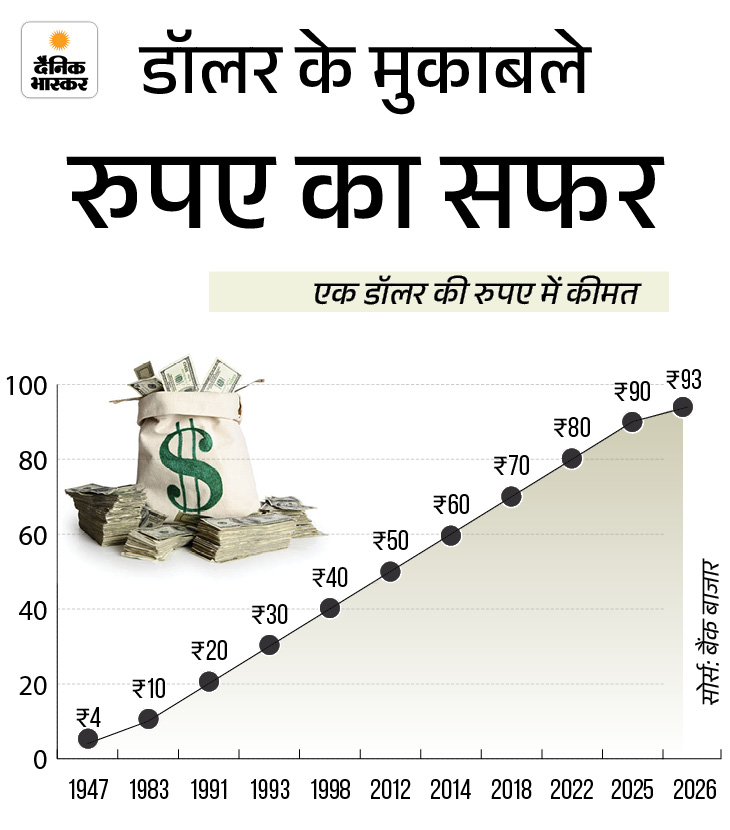
Today, on March 20, the Indian Rupee reached its lowest level of 93.24 against the US Dollar. The rupee has fallen due to rising oil import bill and continuous withdrawal of money from the Indian market by foreign investors.
Understand the impact of rupee’s fall in 10 questions and answers:
Question 1: What is the latest status of the rupee and what new record has it created?
answer: Today the rupee crossed the psychological level of 93 against the dollar for the first time. During trading it had fallen to a record low of 93.24, although now it has recovered slightly to 93.12. At the beginning of this month, the rupee was at the level of 92.
Question 2: What is the biggest reason for this historic fall in the rupee?
answer: The biggest reason for this is the rise in crude oil prices. After Iran’s attacks on the energy bases of Gulf countries, the prices of Brent crude had crossed $ 110 per barrel. India imports 85% of its oil needs, for which we have to pay in dollars. Due to oil becoming expensive, the demand for dollars increased and the rupee became weak.
Question 3: What is the role of foreign investors (FIIs) in this?
answer: Foreign portfolio investors have so far withdrawn approximately $ 8 billion (about Rs 83 thousand crore) from the Indian stock market in the month of March. Due to global uncertainty and fear of war, foreign investors are pulling their money out of emerging markets like India and investing it in safe havens like US bonds. Due to such heavy selling, the pressure on the rupee has increased a lot.
Question 4: What does the ‘Strait of Hormuz’ tension have to do with the rupee?
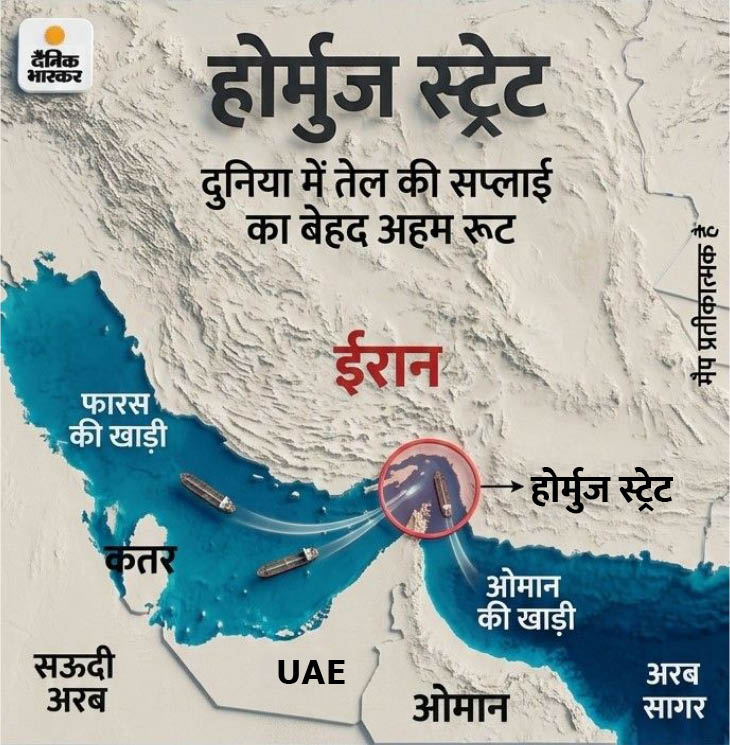
answer: The Strait of Hormuz is the sea route through which 20% of the world’s oil and almost half of India’s oil passes. Due to increasing tension between Iran and Israel, there is a fear of supply disruption on this route. Market experts say that until the situation on this sea route becomes clear, the rupee will continue to fluctuate.
Question 5: Is the Reserve Bank doing anything to stop this decline?
answer: Yes, RBI is continuously interfering in the foreign exchange market. The bank tries to arrest the fall of the rupee by selling dollars from its foreign exchange reserves.
Question 6: How will the weakening of the rupee affect the common man’s pocket?
answer: Due to weakening of rupee, imports will become expensive for India. More money will have to be paid for things like crude oil. Apart from this, electronic goods like mobiles, laptops imported from abroad will also be expensive. Studying abroad will become expensive.
Question 7: Will this also affect the country’s GDP growth?
answer: Absolutely. Economists have warned that high energy prices could reduce India’s growth rate. Continuous increase in energy prices will increase inflation and harm India’s growth. It will also be difficult to cut interest rates.
Question 8: Does anyone benefit from the fall of the rupee?
answer: Yes, exporters benefit from weak rupee. Companies in the IT sector, pharma and textile industries get paid in dollars for their services or products. When they convert those dollars into rupees, they get more rupees than before.
Question 9. How might the rupee move in the coming days?
answer: Market experts believe that as long as crude oil prices remain above $110-115 and selling by foreign investors continues, the rupee will remain weak. If global sentiment does not improve, rupee may even touch the level of 94.
Question 10: How is the price of currency determined?
answer: The price of any country’s currency is mainly decided on the basis of its ‘demand and supply’ in the international market. If India has to import more goods like crude oil from abroad, then more dollars will be required for payment. As the demand for dollar increases, it will become expensive and the rupee will fall.
Apart from this, the country’s inflation rate, interest rates and confidence of foreign investors also decide the value of the currency. If interest rates in India are good and the economy is stable, then foreign investors will bring dollars here, which will increase the supply of dollars and strengthen the rupee. In simple words, the more the currency is in demand and less availability in the world, the higher will be its price.

Source link
[ad_3]

