
New Delhi5 minutes ago
- Copy link
E20 petrol being sold in India since 2023.
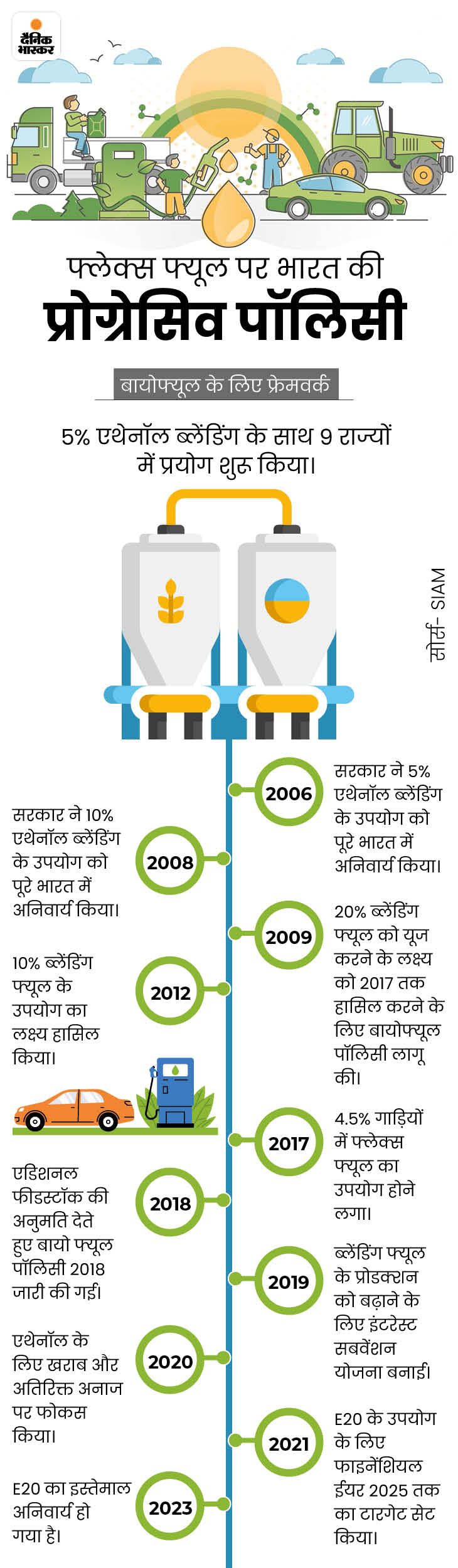
The Supreme Court today dismissed the petition challenging the plan to add ethanol to petrol. Under this plan, 20% ethanol is being added to petrol sold in the country. Ethanol was introduced in 2023.
The government has set a target to provide E20 petrol at all petrol pumps in the country by 2025-26. The decision was given by the bench of Chief Justice of India (CJI) BR Gavai and Vinod Chandran of Justice. This petition was filed by lawyer Akshay Malhotra.
According to the petitioner, the vehicles made in India before April 2023 cannot work with the petrol found. Also, BS-VI standard vehicles are not compatible for this. Therefore, consumers should get the option to choose fuel without ethanol.
Attorney General R Venkatarmani said in the court on behalf of the government, “This petitioner is an Englishman. An outsider will tell us which petrol to use.
The petition said that mileage is reduced by 6%
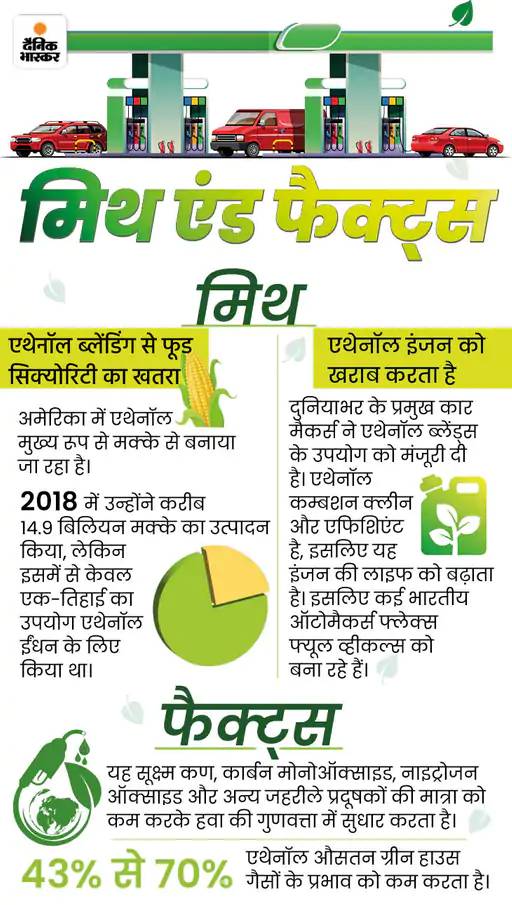
During the hearing, senior advocate Shadan Audrasan on behalf of the petitioner referred to a report of the NITI Aayog of 2021, which was worried about the mileage reduced by 6% mileage for the old trains- especially for vehicles made before 2023.
He said, ‘We should be given the option … We are not against E20, but at least the suppliers should tell us that some vehicles are not compatible with it. Only vehicles built after April 2023 can withstand E20.
The petition said that despite adding 20% ethanol, the price of petrol did not decrease, which consumers are not benefiting.
Ministry said- E20 fuel does not harm vehicles
The Ministry of Petroleum and Natural Gas had said on the issue at the beginning of August that the E20 fuel does not cause any harm to the vehicles. According to the ministry, in a long Test, 100,000 km of vehicles were run from E20 and checked every 10,000 kilometers. As a result, there was no significant difference in power, torque and mileage. However, it is believed that mileage in new vehicles may be 1-2% and old trains may be reduced by 3-6%, but it is not ‘drastic’ and it can be cured by engine tuning.
What about old trains?
There was a concern about the old trains that the E20 could deteriorate their engines and parts, but the ministry made it clear that the E20 has been inserted in the E20 and has ensured safety under BIS and Automotive Industry Standards. If rubber parts or gaskets have to be changed after running 20000 – 30000 km in old trains, then it is part of routine maintenance and is also cheaper.
What is ethanol?
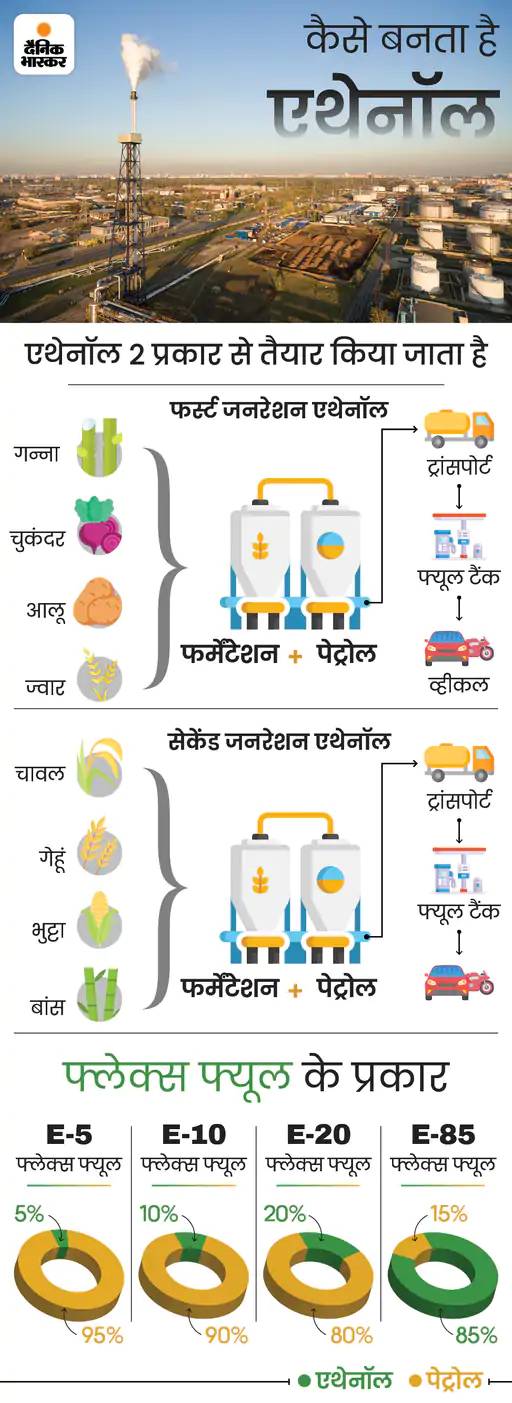
Ethanol is a kind of alcohol, which is made from starch and sugar firm. It is mixed with petrol and used as eco-friendly fuel in trains. Ethanol is produced primarily from sugarcane juice, but ethanol can also be prepared from starch containing materials such as maize, rotten potatoes, cassava and rotten vegetables.
- 1g ethanol: First generation ethanol is made from sugarcane juice, sweet beet, rotten potatoes, sweet tides and maize.
- 2G ethanol: Second generation ethanol is made from cellulose and lignacellulous materials such as rice husk, wheat husk, corncob (corn), bamboo and woody biomass.
- 3g biofuel: Third generation biofuel will be made from Elgi. Right now work is going on.
E-20 petrol sold in the country since April
Governments around the world are working on ethanol blended fuel to prevent air pollution from petrol and diesel vehicles and reduce fuel prices. In India too, ethanol is being seen as an alternative to petrol and diesel. This will also increase the mileage of vehicles.
Uses from 5% ethanol started in the country, which has now reached 20%. The government has started a process to move to E-20 (20% Ethanol + 80% Petrol) to E-80 (80% ethanol + 20% petrol) by implementing National Bio Fuel Policy in the month of April. Apart from this, only flex fuel complex vehicles are being sold in the country from April. Also, old vehicles can be changed in ethanol compliant vehicles,
What is the benefit of mixing ethanol?
Mixing ethanol in petrol will help reduce pollution caused by the use of petrol. Using this, the vehicles emit 35% less carbon monoxide. Sulfur dioxide and hydrocarbon emissions also reduce ethanol. This fuel also reduces the emission of nitrogen oxide due to 35% oxygen present in ethanol.
- What is the benefit of the common man: Ethanol adulterated petrol -run vehicles are much less hot than petrol. Alcohol fly quickly in ethanol, due to which the engine does not heat up soon. Apart from this, it will be much cheaper than crude oil. This is also expected to get relief from inflation.
- Benefits farmers: Increased use of ethanol will also increase farmers’ income. Because ethanol is made from sugarcane, maize and many other crops. Sugar mills will get a new source of earnings and earning will increase. Ethanol has benefited farmers Rs 21 thousand crore.
Source link
[ad_3]

