
India on Monday achieved a long-awaited milestone in its civil nuclear energy programme as the country’s most advanced atomic reactor – the Prototype Fast Breeder Reactor (PFBR) at Kalpakkam in Tamil Nadu – attained criticality, marking the start of a sustained nuclear fission chain reaction and bringing the reactor one decisive step away from full operation.
Announcing the development, Prime Minister Narendra Modi described it as a defining moment in India’s nuclear journey.
“Today, India takes a defining step in its civil nuclear journey, advancing the second stage of its nuclear programme. The indigenously designed and built Prototype Fast Breeder Reactor at Kalpakkam has attained criticality,” the Prime Minister said in a statement. He added that the achievement reflects “the depth of our scientific capability and the strength of our engineering enterprise,” and is a decisive step towards harnessing India’s vast thorium reserves in the future.
In nuclear terminology, criticality refers to the point at which a reactor achieves a self-sustaining nuclear fission reaction, where the number of neutrons produced is sufficient to keep the reaction going without external intervention. While it does not mean the reactor is yet generating electricity at full power, it is among the most crucial milestones in commissioning any nuclear plant.
The PFBR, a 500 megawatt electric sodium-cooled fast breeder reactor, has been more than two decades in the making, involving some of the most complex engineering and materials challenges ever undertaken by India’s atomic energy establishment. The reactor has been developed and is operated by Bharatiya Nabhikiya Vidyut Nigam Limited (BHAVINI) under the Department of Atomic Energy at the Indira Gandhi Centre for Atomic Research (IGCAR) campus in Kalpakkam.
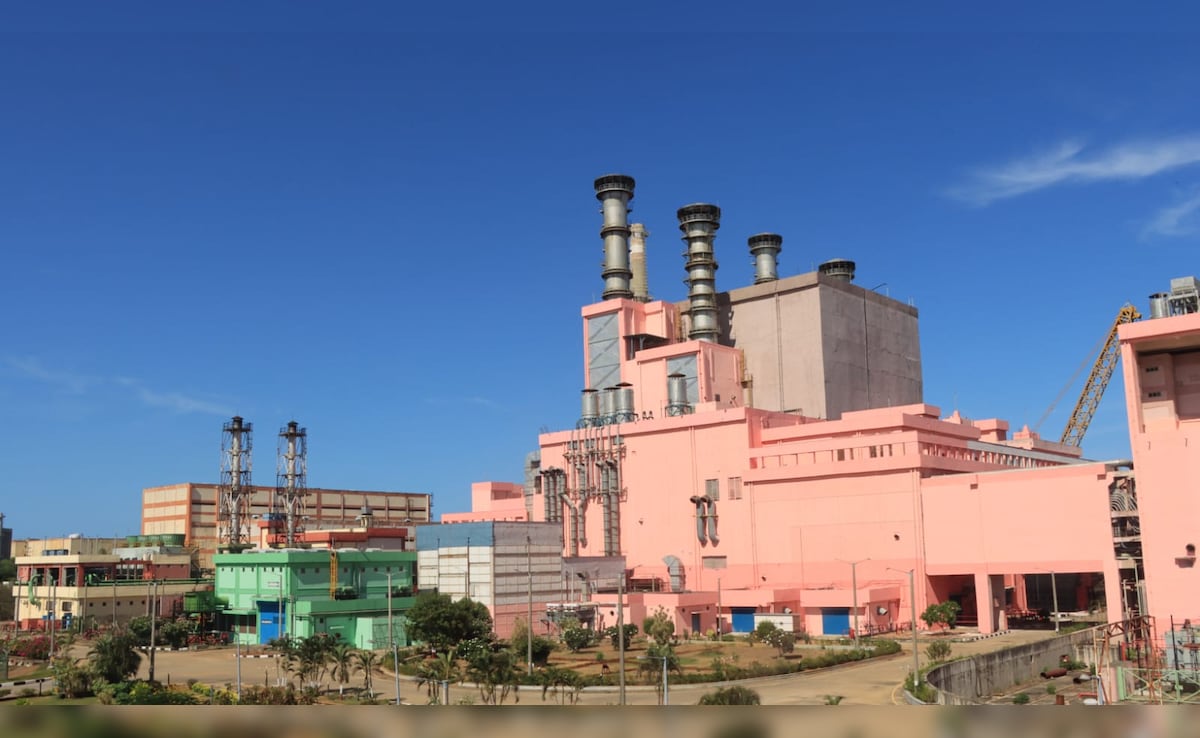
Calling it a historic milestone for India’s peaceful nuclear energy programme, Atomic Energy Commission Chairman and Department of Atomic Energy Secretary Dr Ajit Kumar Mohanty said the Prototype Fast Breeder Reactor at Kalpakkam has achieved first criticality, marking India’s entry into the second stage of the three-stage nuclear power programme envisioned by Homi Jehangir Bhabha.
“Today, India achieved yet another historic milestone in the country’s peaceful usage of atomic energy by entering the second stage of the three-stage nuclear power programme envisioned by Dr. Homi Jehangir Bhabha, the architect of our country’s nuclear power programme. The Prototype Fast Breeder Reactor, a 500 megawatt electrical nuclear reactor, constructed by Bharatiya Navbhikiya Vidyut Nigam Ltd., Kalpakkam in Tamil Nadu, has achieved its first criticality i.e. initiation of sustained nuclear chain reaction. The achievement reinforces Department of Atomic Energy’s contribution to India’s commitment to achieve the net zero emission target by 2070, as announced by Prime Minister Narendra Modi. The Prototype Fast Breeder Reactor utilises fissile material recovered from the reprocessing of spent fuel from first stage Pressurized Heavy Water Reactors. The Prototype Fast Breeder Reactor will produce more fuel than what it consumes,” Mohanty said.
He added, “The spent fuel generated in The Prototype Fast Breeder Reactor will, in turn, be processed and recycled back into the reactor, thereby enabling closure of the second stage fuel cycle. This will pave the way for utilisation of the abundant thorium reserves in the third stage of the nuclear power programme, comprising of thorium-based reactors. The The Prototype Fast Breeder Reactor was designed and built indigenously, reflecting decades of dedicated efforts by our scientists, engineers and industry partners.”
Fast breeder reactors are fundamentally different from conventional nuclear reactors. While traditional reactors primarily consume uranium fuel, fast breeder reactors use plutonium as fuel and are designed to produce more fissile material than they consume by converting fertile uranium-238 into plutonium-239. This unique capability has earned the PFBR the description of an “Akshay Patra” of energy, symbolising a near-limitless source of fuel.
Globally, only Russia currently operates a functional commercial fast breeder reactor, underscoring the technological exclusivity of the achievement. Several other countries had pursued breeder reactor programmes in the past but abandoned them due to cost, safety concerns, and technological complexity.
The attainment of criticality at PFBR formally signals the start of India’s second stage of its three-stage nuclear power programme, a strategy originally envisioned by nuclear scientist Homi Bhabha. In this stage, plutonium produced in pressurised heavy water reactors is used in fast breeder reactors, paving the way for the third stage – thorium-based reactors – where India holds one of the world’s largest reserves.
The milestone also aligns with India’s broader climate and energy goals. The government has outlined an ambitious plan to ramp up nuclear power capacity to 100 gigawatts by 2047, as part of its push towards low-carbon and clean energy sources. Fast breeder reactors like the PFBR are seen as potential game changers, enabling long-term energy security while sharply reducing carbon emissions.
Once fully operational, the PFBR is expected to demonstrate the commercial viability of fast breeder technology in India and serve as a template for future breeder reactors planned across the country.
Calling it a moment of national pride, the Prime Minister congratulated India’s scientists and engineers, saying the achievement marked not just a technological triumph, but a strategic leap towards energy self-reliance.
“A proud moment for India,” he said. “Congratulations to our scientists and engineers.
Source link
[ad_3]

