
Rice is the one thing most of us never really question. It shows up on the plate, gets eaten, and life moves on. But a new study out of Hokkaido University in Japan has just turned that quiet assumption on its head. Scientists have discovered a group of hidden, health-promoting fats in green and black japonica rice varieties, which have never been found in any rice before. For a country where rice is like a religion, this matters. A lot. Here is what the science actually says, and why it is worth paying attention.
The Discovery Nobody Saw Coming
Rice feeds more than half of the world’s population, yet we still only partly understand the nutrients it contains. More than 85% of the rice we eat is composed of starch, though it also contains some protein (around 10%), small amounts of fat (roughly 2%), a few vitamins, and trace elements. That 2% figure for fat is exactly why scientists have largely ignored it, until now.
To address this gap, researchers at Hokkaido University studied japonica rice varieties, which are short- to medium-grain rice most familiar as Japanese rice. They become soft, tender, and slightly sticky when cooked and account for roughly 15% of global rice consumption. The researchers collected and analysed 56 japonica rice cultivars from across Japan, including brown, red, green, and black varieties. Their findings were published in the journal Food Research International in January 2026.
What they found was not a minor update to the existing science. Using advanced analytical techniques, including liquid chromatography and mass spectrometry, the researchers identified 196 distinct lipid molecules across five major groups in japonica rice. That is not a small tweak to what we already knew; that is an almost entirely new nutritional picture of a food that billions of people eat every day.
Also Read: Baisakhi 2026: 5 Traditional Desserts To Celebrate The Festival With
What Exactly Are These “Good Fats”?
Here is where it gets genuinely exciting. The team also discovered that colourful Japanese rice varieties, particularly black and green rice, have a higher health-promotion index due to their unique lipid composition. They contain potentially beneficial fats, including compounds known as FAHMFAs (fatty acid esters of hydroxy medium-chain fatty acids) and LNAPEs (N-acyl-lysophosphatidylethanolamines). These lipids have previously been linked to anti-inflammatory effects and improved metabolic health in certain biological systems. This is the first time FAHMFAs have been identified in rice. In plain language: these are fats that appear to help the body manage inflammation and communicate better between cells. Not the scary kind of fat. The useful kind.
As lead author, Associate Professor Siddabasave Gowda explains: “Although lipids make up only a small proportion of rice, they are critical in determining its nutritional value. They help maintain cell membrane integrity, store energy, and support essential signalling processes in the body.”
The Blood Sugar Connection
This is the part that is particularly relevant for India, where type 2 diabetes has become one of the most urgent public health challenges the country faces. The researchers studied how these pigmented rice varieties affect blood sugar by simulating human digestion in the laboratory. Selected rice samples were cooked and then exposed to digestive enzymes to measure how quickly their starches broke down, an indicator of how sharply each type of rice can raise a person’s blood sugar level after a meal.
Black and green japonica rice caused a slower increase in blood sugar compared with white rice. This suggests their starch is digested more gradually and released into the bloodstream at a slower rate. These properties could make pigmented rice useful for developing foods that support heart health, help regulate blood sugar, and lower the risk of lifestyle-related conditions such as type 2 diabetes.
For a population that has long been told to eat less rice and more “healthier” alternatives, this finding is meaningful. It suggests that the problem was never rice itself; it was the type of rice.
India Already Has Its Own Pigmented Rice Traditions

Here is what makes this conversation especially relevant for an Indian audience: pigmented, colourful rice varieties are not foreign to this part of the world. They are just underused, often sidelined in favour of white polished rice because of cost, availability, and habit.
For more than 2,000 years, the grain of the South Indian landrace “Kavuni” has been reported to exhibit anti-oxidant, anti-arthritic, and anti-diabetic properties, and has been used to cure gastritis and peptic ulcers, as well as to enhance blood circulation. There is a long tradition in South India, particularly in Tamil Nadu, of using this dark, pigmented rice in everything from festival sweets to medicinal preparations. Ayurveda has praised red rice, known as Rakthashali, for balancing all three doshas, and red rice or Matta rice remains a staple in Kerala households to this day.
The grain of some traditional pigmented rice varieties has proven effective in supporting glucose homeostasis and is thus useful for the management of diabetes mellitus. Unlike white rice grain consumption, which raises blood glucose levels, consuming pigmented grain can reduce blood glucose levels. Extracts of pigmented rice grain and bran have been shown to effectively inhibit the activity of endogenous α-amylase and α-glucosidase, thereby inhibiting the conversion of starch to glucose in the small intestine.
The new Hokkaido research adds a critical and previously missing layer to this older understanding. It is not just the anthocyanins or antioxidants in pigmented rice that make it useful; there is an entire lipid profile underneath that the scientific world is only now beginning to map.
What Makes Green Rice Specifically Worth Watching
While black rice has had its moment in the sun (most health food stores and online platforms in India stock it now, though at a premium), green rice has received far less attention. Among the most remarkable discoveries was the identification of FAHMFAs within rice lipids, compounds previously unreported in this cereal. FAHMFAs are bioactive lipids known for their anti-inflammatory properties and their potential to enhance metabolic health, suggesting that rice consumption could confer benefits beyond caloric intake.
The presence of FAHMFAs in green rice specifically is what makes this study a landmark moment. Some of these compounds, including a group called FAHMFAs, have previously been linked to anti-inflammatory effects and improved metabolic health. This is the first time these particular lipids have been detected in rice. To be clear, this is not about green rice being some kind of miracle food. It is about recognising that a grain many of us have eaten for generations contains compounds we did not know existed, with mechanisms we are only beginning to understand.
Also Read: Why Does Your Body Want Watery Fruits Instead Of Regular Meals In Summer?
A First-Of-Its-Kind Finding, But With Caveats
It would be dishonest not to mention the limitations. The study did not evaluate bioavailability, absorption, or long-term metabolic effects in humans. The presence of bioactive lipids does not establish therapeutic benefit. The laboratory simulated digestion, it is not the same as a long-term human clinical trial, and scientists are careful to say so. This is promising early science, not a prescription.
What it does do is open a door. Associate Professor Gowda notes: “Our research group has discovered novel bioactive lipids in Japanese dietary fish, herbal teas, and seaweeds, helping to shed light on Japan’s underexplored lipid-rich food resources.” The same logic applies to India’s own underexplored heritage grains, from Kavuni black rice in Tamil Nadu to Pokkali red rice in Kerala. There is very likely a great deal of nutritional complexity in these traditional varieties that modern science has not yet mapped.
What This Means For What You Eat
Practically speaking, what should an Indian reader do with this information? A few things are worth considering.
First, if you are already eating brown, red, or black rice, keep going. The science on pigmented grains is consistently supportive, and the Hokkaido study just added another reason to choose them. The glycaemic index of red rice is estimated at around 55, making it an ideal choice for diabetics. It not only keeps blood sugar levels in check but also keeps you satiated for longer hours.
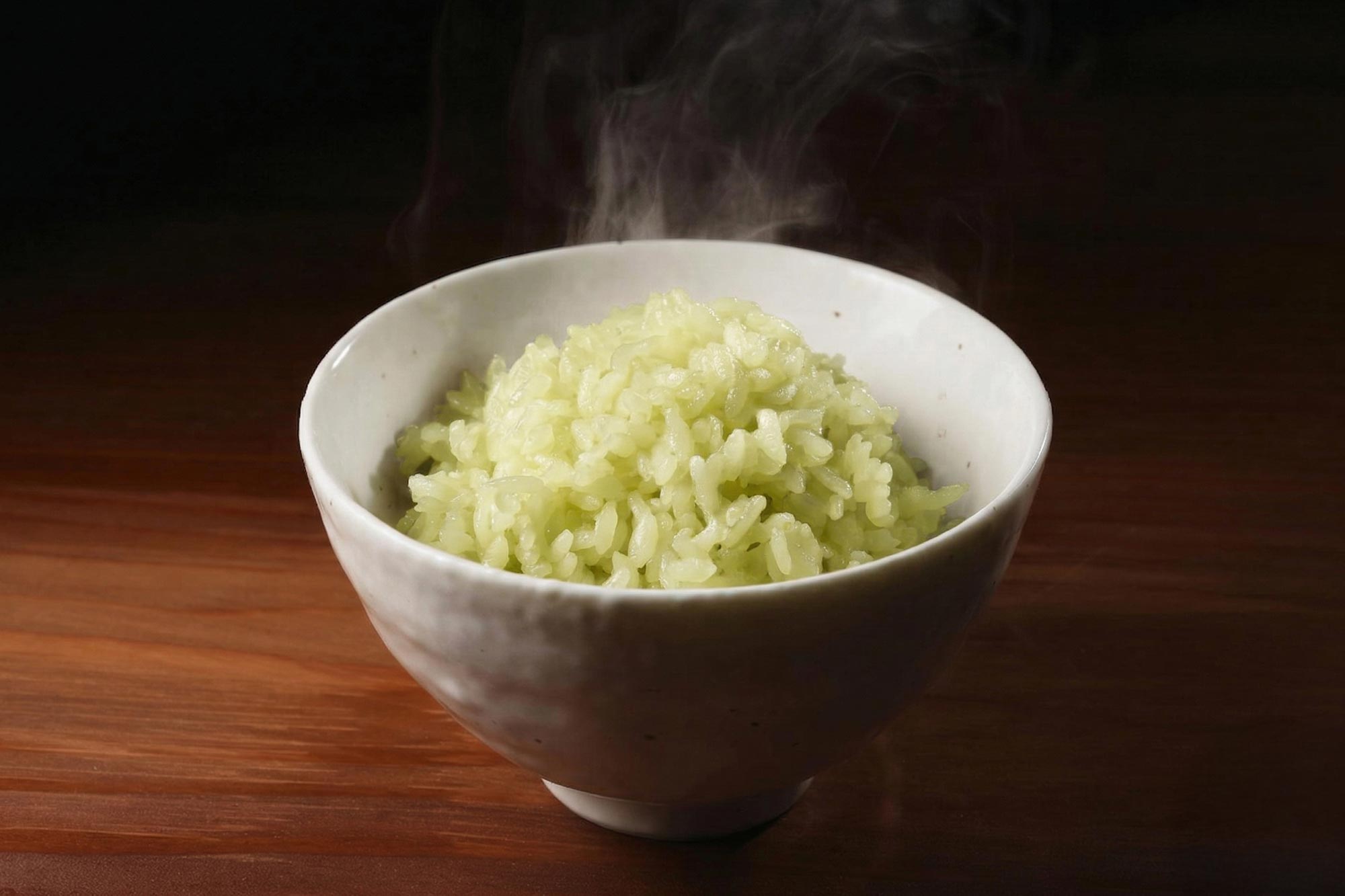
Second, green rice, while not as widely stocked in Indian supermarkets, is worth seeking out if you can find it. It is not the same as uncooked green-tinted rice you might spot occasionally; japonica green rice is a specific pigmented variety. As awareness grows, so will availability.
Third, the broader lesson here is about variety. The assumption that all rice is nutritionally equivalent has been quietly demolished by this research. Gowda adds: “People may be interested in learning about the health benefits of different pigmented rice varieties and, based on this knowledge, choosing the type that best suits their needs.”
The discovery of FAHMFAs and other bioactive lipids in japonica rice shifts the paradigm of rice from merely an energy source to a functional food with considerable therapeutic potential. That is a big shift in how we think about the most ordinary grain on the Indian plate.
The Bigger Picture For Indian Nutrition
India is at a crossroads when it comes to food and health. Rates of type 2 diabetes, metabolic syndrome, and cardiovascular disease are rising sharply, and diet is central to all of it. The instinct in recent years has been to reach for imported superfoods, quinoa, acai, and chia seeds, while overlooking the nutritional depth already present in traditional Indian grains.
The coloured rice, which usually gets its colour due to the deposition of anthocyanin pigments in the bran layer of the grain, is rich in phytochemicals and antioxidants. Black rice varieties are especially high in protein, fat, and crude fibre. These are not exotic foreign findings; this is the science finally catching up to what traditional Indian food culture already knew.
The challenge now is to close the gap between what research is discovering and what actually ends up on Indian plates. That requires better awareness, more accessible pricing for heritage grain varieties, and a willingness to move past the habit of polished white rice as the default.
Also Read: Video: Artist Carves Farah Khan’s Face On Watermelon, Filmmaker Reacts
Good Fats, Good Rice
The Hokkaido University study will not overhaul Indian eating habits overnight. But it does something important: it gives people a scientific reason to revisit the colourful, underused grains that have been sitting on the margins of the Indian diet for decades. Green rice and black rice are not trendy foods. They are old varieties with new science to back them up. For a country carrying a growing burden of lifestyle disease, that is not a small thing. The answer to better nutrition may have been in the grain all along; it just needed a mass spectrometer and a lab in Japan to confirm it.
Source link
[ad_3]

