
New Delhi52 minutes ago
- Copy link
The GST Council’s meeting was to be held for two days (3-4 September), which was completed in a day.
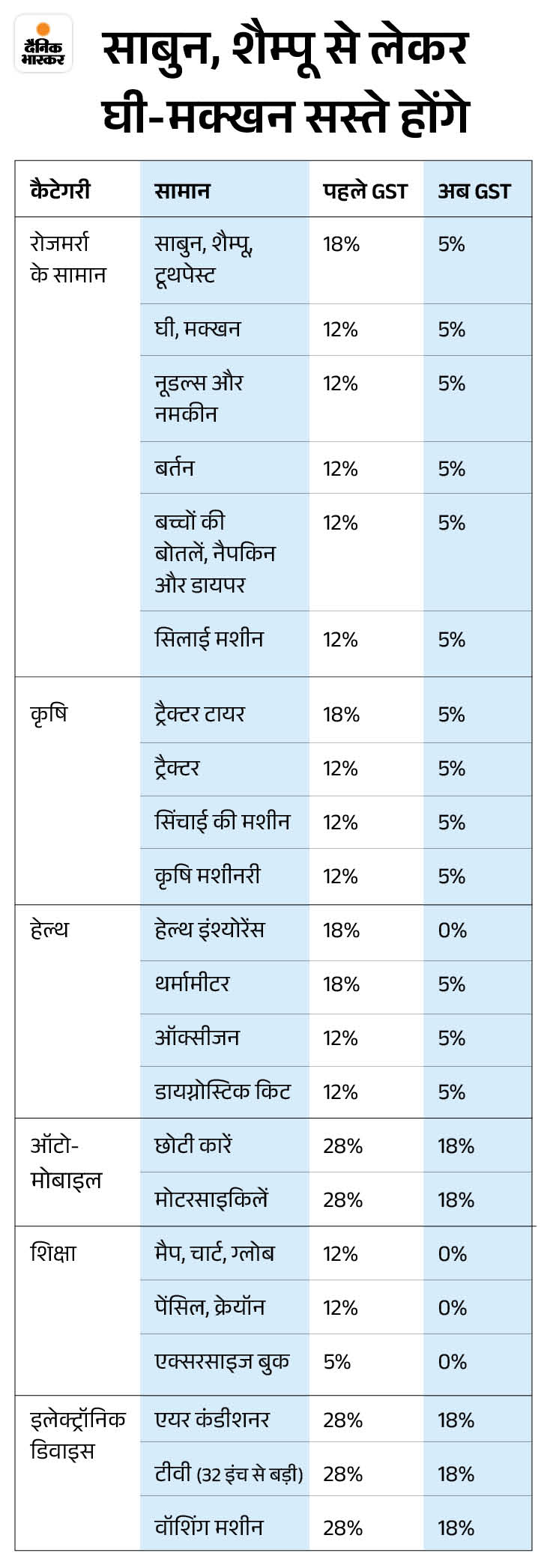
Now only two slabs instead of 4 of GST will be 5% and 18%. This will also make common needs such as soap, AC, car with shampoo. It was decided in the 56th meeting of the GST Council. Finance Minister Nirmala Sitharaman gave this information on 3 September.
Finance Minister Sitharaman said that many food items including milk, roti, pizza bread, chena will be GST free. At the same time, individual health and life insurance will also not be taxed. 33 Life -saving medicines, rare diseases and medicines for serious diseases will also be tax free.
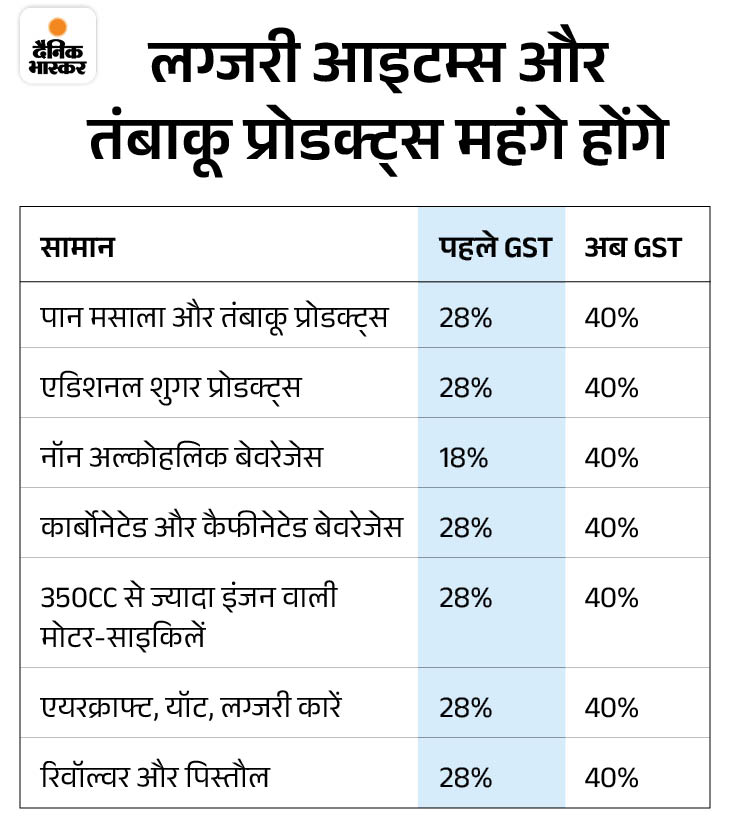
Apart from this, 40% GST will now be replaced instead of 28% on luxury items and tobacco products. Medium and large cars, motorcycles with engine more than 350cc will come to this slab.
New slabs will be implemented from 22 September
The Finance Minister said that the new slabs will be implemented on the first day of Navratri i.e. 22 September. However, the new 40% GST rate on tobacco goods will not be applicable yet.
The purpose of these changes is to give relief to the common man, support small businesses and reduce their use by increasing taxes on harmful products such as tobacco.
These changes will improve the lives of citizens: PM
PM Modi wrote on X, ‘I am happy that the GST Council has approved this proposal of the Central Government. This includes deduction in GST rates and several improvements.
This will benefit the general public, farmers, MSMEs, middle classes, women and youth. These major changes will improve the lives of our citizens and make it easy to do business. Especially small traders and businesses will help. ‘
Now know about the changes in GST in question and answer …
Question 1: What is a big change in GST rates?
answer: Finance Minister Nirmala Sitharaman said that now 5%, 12%, 18% and 28% slabs of GST have been reduced to two. Now there will be a slab of only 5% and 18%.
In addition, there will be a special tax rate of 40% on the aircraft for big cars, yacht personal use such as tobacco, paan masala, carbonated drinks and luxury items.
Some items such as UHT milk, chhena, cheese, bread, chapati, paratha have been completely removed to 0%. The new rates except tobacco will be implemented from 22 September.
Example: Hair oil
First: Suppose a hair oil bottle was priced at Rs 100 and if 18% GST was levied on it, then the calculation would be something like this …
GST = 100 × 18% = 18 rupees
Total price = 100 + 18 = 118 rupees
Now: The new rate is 5%.
GST = 100 × 5% = 5 rupees
Total price = 100 + 5 = 105 rupees
Benefit: The first bottle available for Rs 118 will now be available for Rs 105.
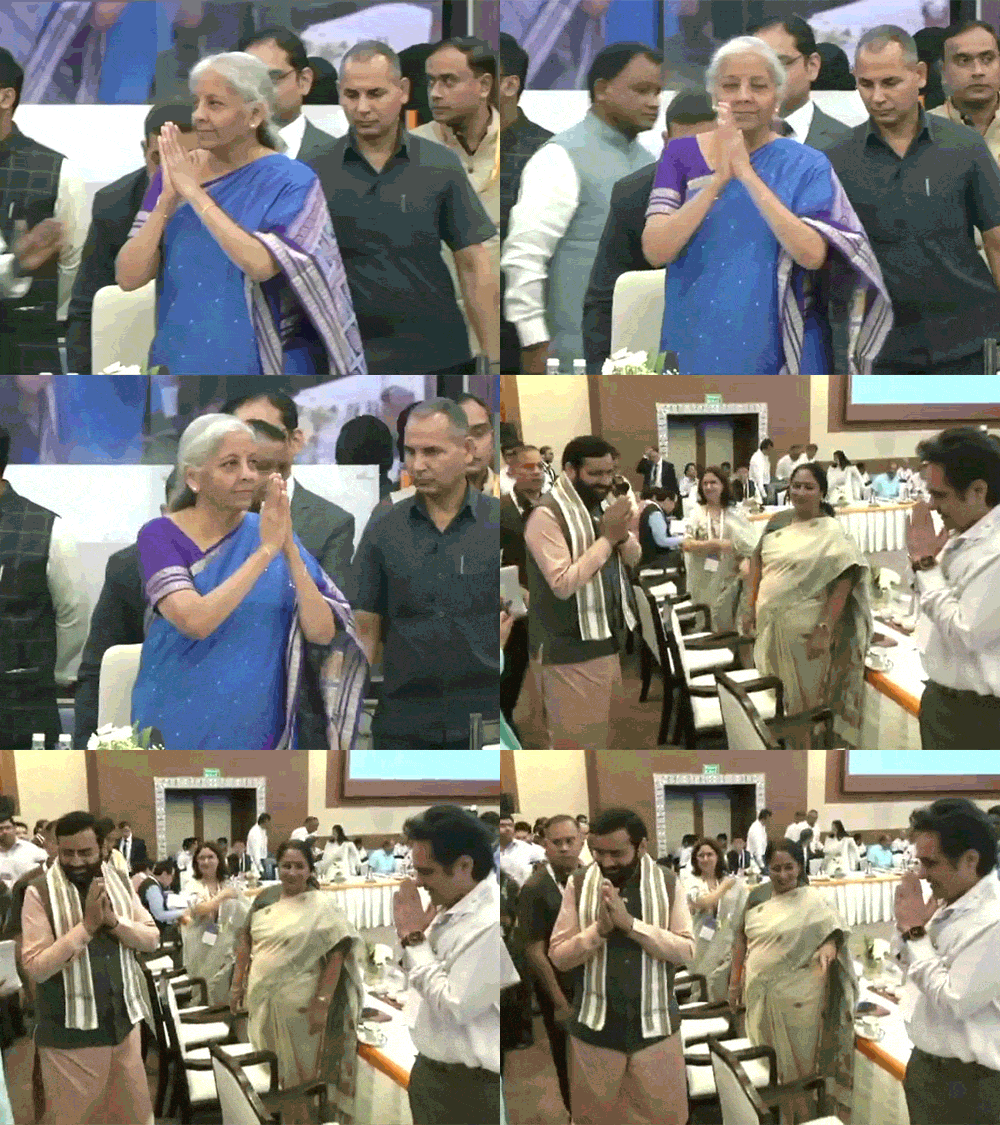
The 56th meeting of the GST Council was held in New Delhi under the chairmanship of Finance Minister Nirmala Sitharaman.
Question 2: What is the purpose of changing GST rates?
answer: Finance Minister Sitharaman said that the aim of GST 2.0 is to simplify the tax structure, reduce tax burden on common people, and promote small industries. In addition, inverted duty structures have to be cured.
Inverted duty structure occurs when the rate of GST on raw materials is higher than the finished product. This makes production expensive, because the manufacturer has to pay more tax on raw materials, but less tax is received on the finished goods.
Question 3: What will be the benefit of the common man from these changes?
answer: These changes will reduce the burden on your pocket. Everyday items, food items and small vehicles will become cheaper. 18% tax on health insurance for individual, family, and elderly has been removed. This will make it cheaper to take insurance and more people will be able to take it.
- If the tax on cement is 28% to 18%, the cost of building or repairing will be slightly lower.
- Luggage like TV, air conditioner will also come under 28% to 18% tax, that is, they will also be cheap.
- 33 essential medicines, especially cancer and serious diseases, will now be tax-free.
- Small cars and motorcycles up to 350cc will now come under 18% tax instead of 28%.
- Tax on auto parts and three-wheelers also ranged from 28% to 18%, which will make them inexpensive.
Question 4: What will be the benefit of farmers and industries from these changes?
answer: GST on tractor, farming-bound machines, harvesting machines and composting machines for farmers has come down from 12% to 5%. Tax on 12 bio -pesticides has also increased from 12% to 5%, which will make farming cheaper. For industries there:
- Textile: The textile industry will be promoted due to reduced tax on man -made fiber (18% to 5%) and yarn (12% to 5%).
- Fertilizer: GST on sulfuric acid, nitric acid, and ammonia increased from 18% to 5%, making fertilizer cheaper.
- Renewable energy: GST on biogas plant, wind-makement, solar cooker, and solar water heater increased from 12% to 5%.
- Handicrafts: Tax on marble, granite blocks, and leather goods ranged from 12% to 5%, which would benefit labor -based industries.
- Automotive: GST on small cars, motorcycles (up to 350cc), buses, trucks, and auto parts from 28% to 18%, which would make them cheap.
Question 5: The government will not harm the government by reducing GST rates?
answer: The Finance Minister admitted that reduced tax on everyday goods could affect revenue initially. According to SBI Research, if the new rates are applicable from 1 October 2025, then there may be revenue loss of Rs 85,000 crore annually.
But Sitharaman says that increasing consumption will make it compensate in a long time. Also, revenue will increase by stopping tax evasion and increasing compliance. Luxury and Sin Goods are also expected to have good income on 40% slab.
Question 6: Why will the new tax rate on tobacco products not be implemented right now?
answer: Currently, compensation cess with tobacco products such as paan masala, gutkha, cigarettes, and bidi is levied with 28% GST, which can range from 5% to 290% according to the product. For example, there is 204% on gutkha and 71% cess on untouchable tobacco.
The new 40% GST rate will be applicable to these when all the debt of cess will be repaid. Its date will be decided by Finance Minister and GST Council.
Approval received from a group of ministers of GST Council
Last week, the Group of Ministers (GOM) accepted the central government’s two -slab proposal. Bihar Deputy Chief Minister Emperor Chaudhary had said on August 21 that the group had approved the proposal of 5% and 18% structure by removing the current 12% and 28% rates.
PM announced GST reforms on Independence Day
Prime Minister Narendra Modi had told the Red Fort on Independence Day that this year Diwali is going to get a big gift. We are bringing Next Generation GST Reforms. Will reduce tax for ordinary people, everyday things will become cheaper, people will benefit greatly.
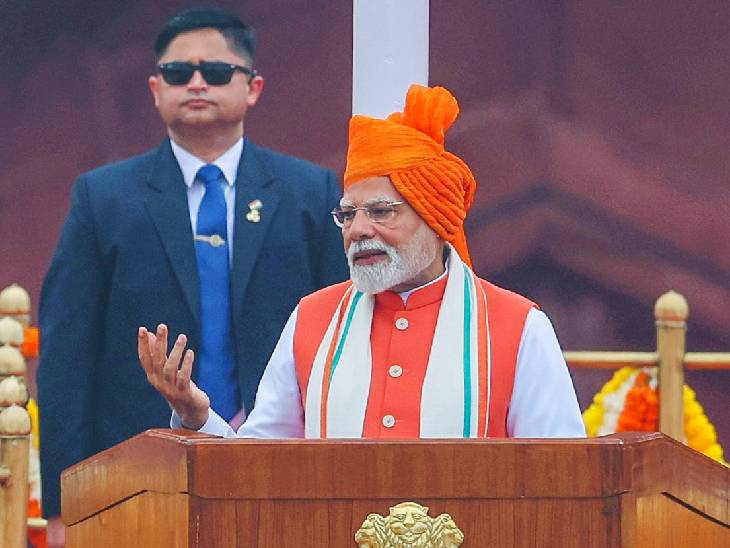
Prime Minister Narendra Modi announced GST Reforms on Independence Day.
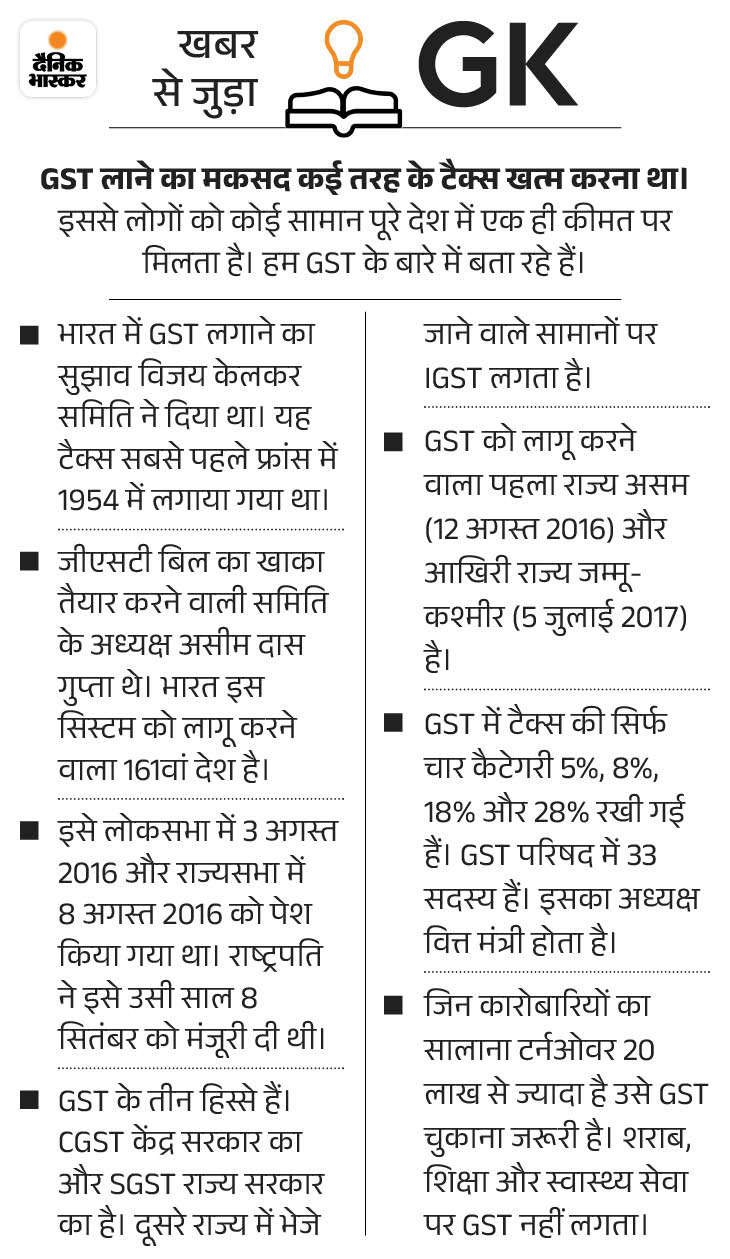
———————-
Read this news too …
1. GST improvement will reduce the impact of US tariffs: Claim- Tax deduction can increase ₹ 5.31 lakh crore, this can support the economy
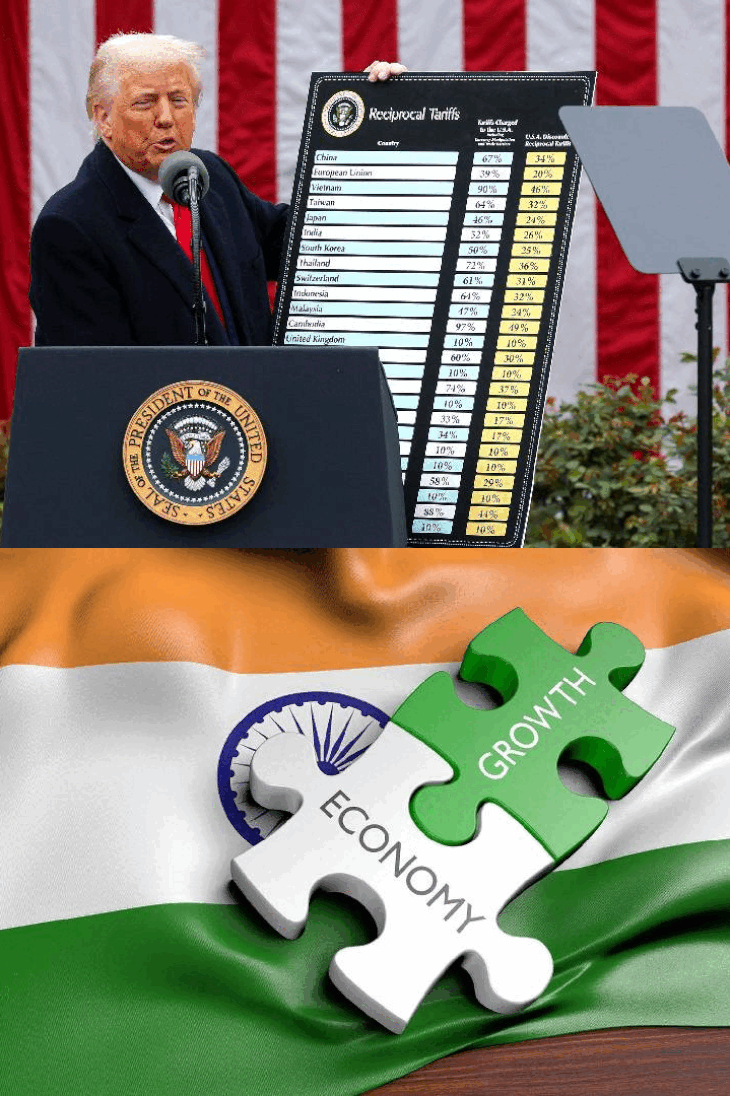
America’s tariff will not have much effect on India. This claim was made by Fitch Solutions company BMI in its latest report. The report said that the improvement in Goods and Services Tax (GST) will reduce tax rates, which will increase consumption.
This will reduce US tariff pressure. The GST improvement and recent reduction in income tax may increase by ₹ 5.31 lakh crore in consumption. Which is about 1.6% of GDP.
2. GST will finish slabs of 12% and 28%: 5% and 18% slab approval for GOM, this will make it cheaper.
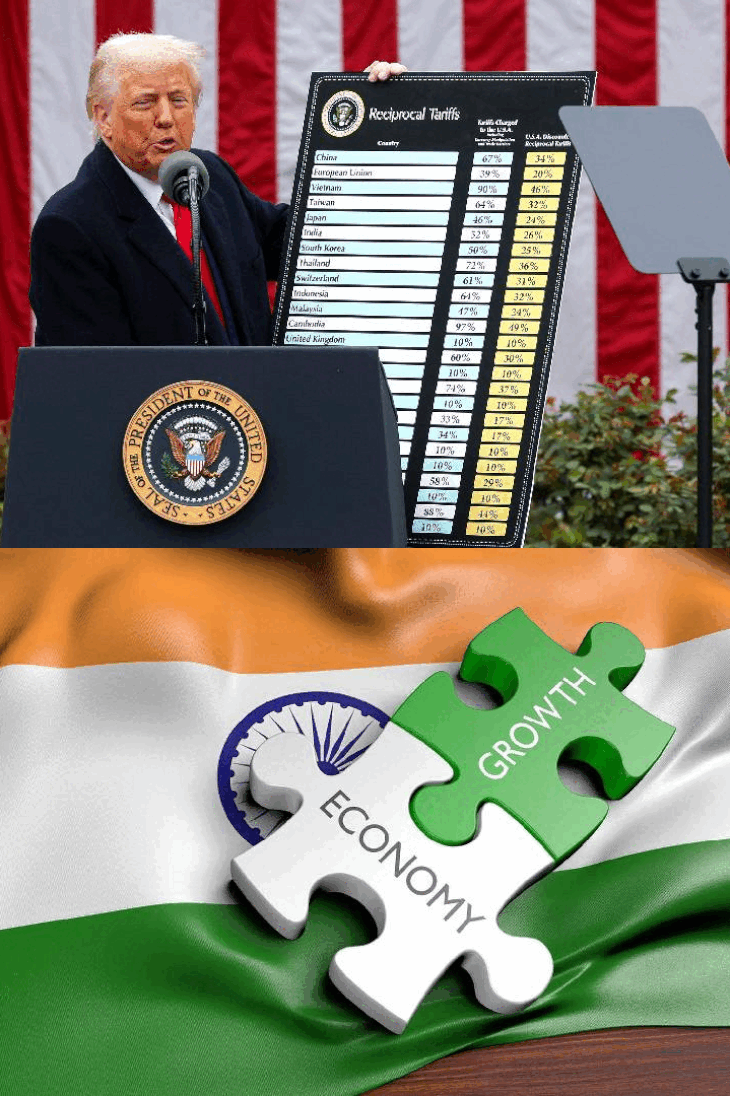
A group of ministers of GST Council have approved the abolition of slabs of 12% and 28% of GST. Now only two slabs of GST will be 5% and 18%. Luxury items will come under 40%. Group of Ministers (GOM) convenor Samrat Chaudhary gave this information. Currently 4 slabs of GST are 5%, 12%, 18%, and 28%.
On the GOM meeting, its convenor Emperor Chaudhary said- We have supported the central government’s proposal, with 12% and 28% GST slab.
Source link
[ad_3]

