
New Delhi1 hour ago
- copy link
RBI has directed that banks will no longer be able to keep more than 100 million dollars (about Rs 950 crore) with themselves every day. Earlier, banks were holding 300 to 500 million dollars (Rs 2,845-4,743 crore) every day.
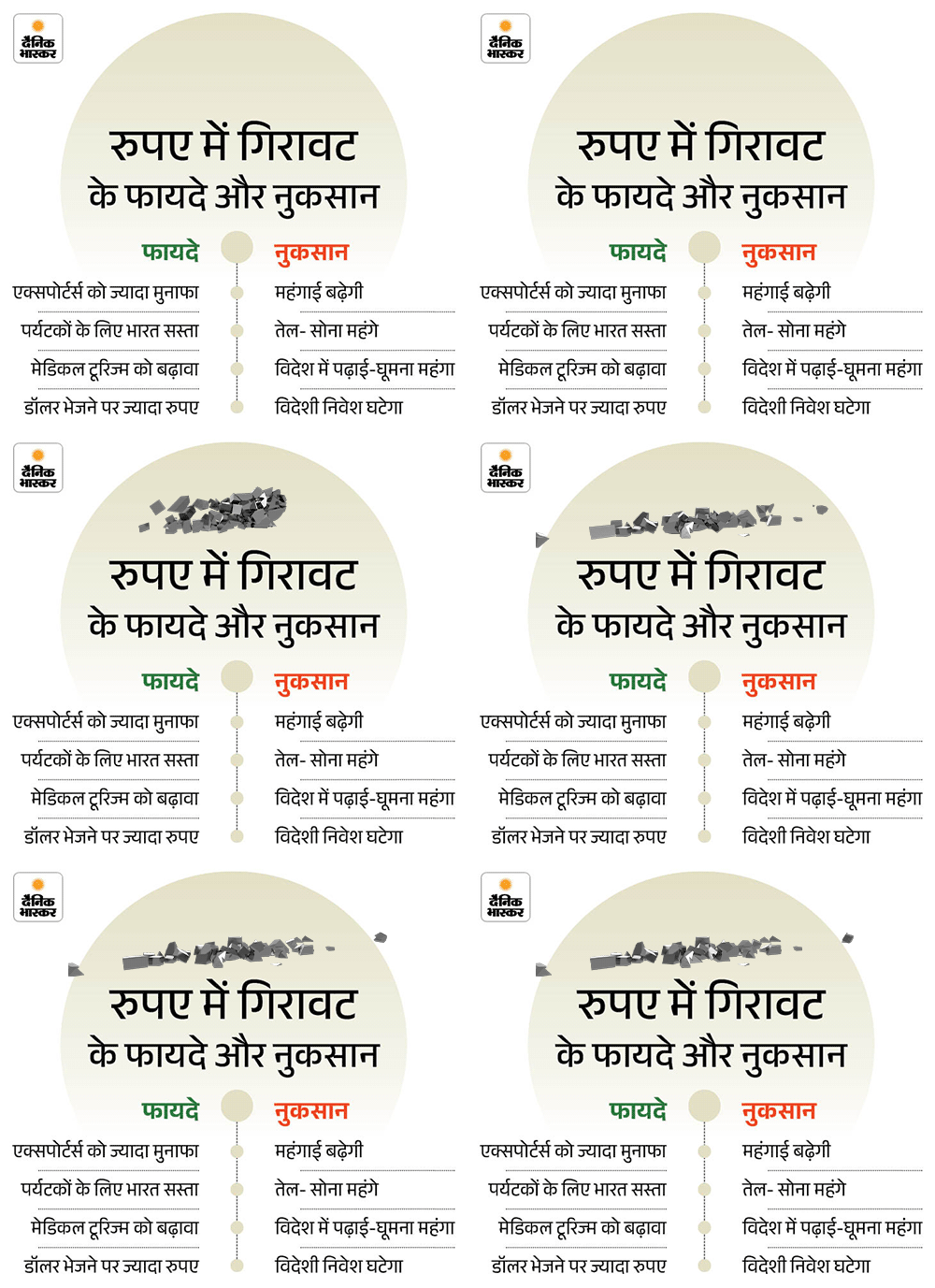
According to Forex analysts, the effect of the instruction will be that banks will now sell the extra dollars they have in the market, which will strengthen the rupee. Due to which buying foreign goods, studying and traveling abroad can become cheaper.
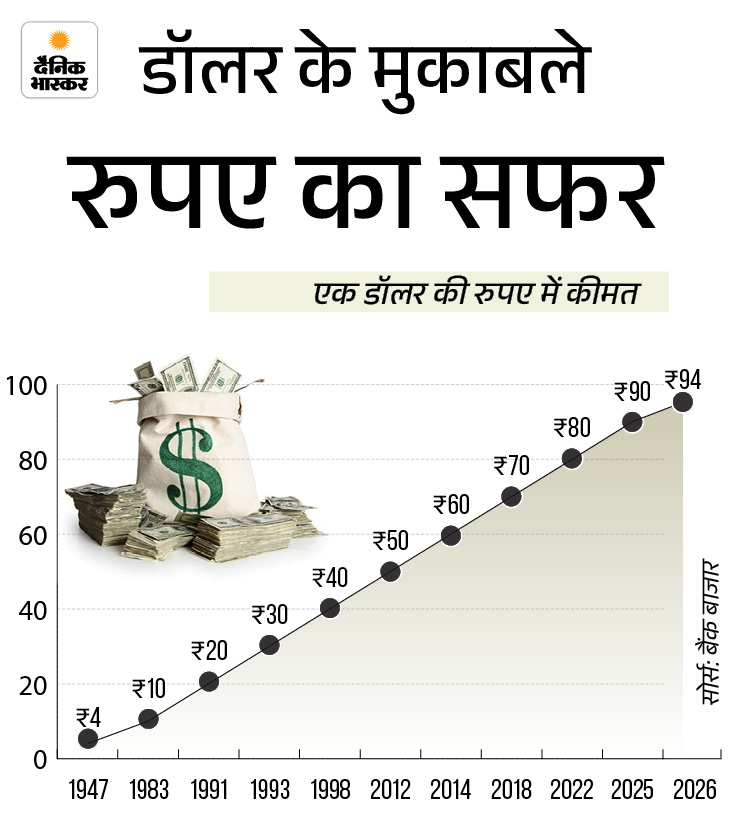
Apart from this, electronics products like mobile, laptop can also become cheaper. A day before RBI issued this instruction, the rupee has reached an all-time low of ₹ 94.59 against the dollar.
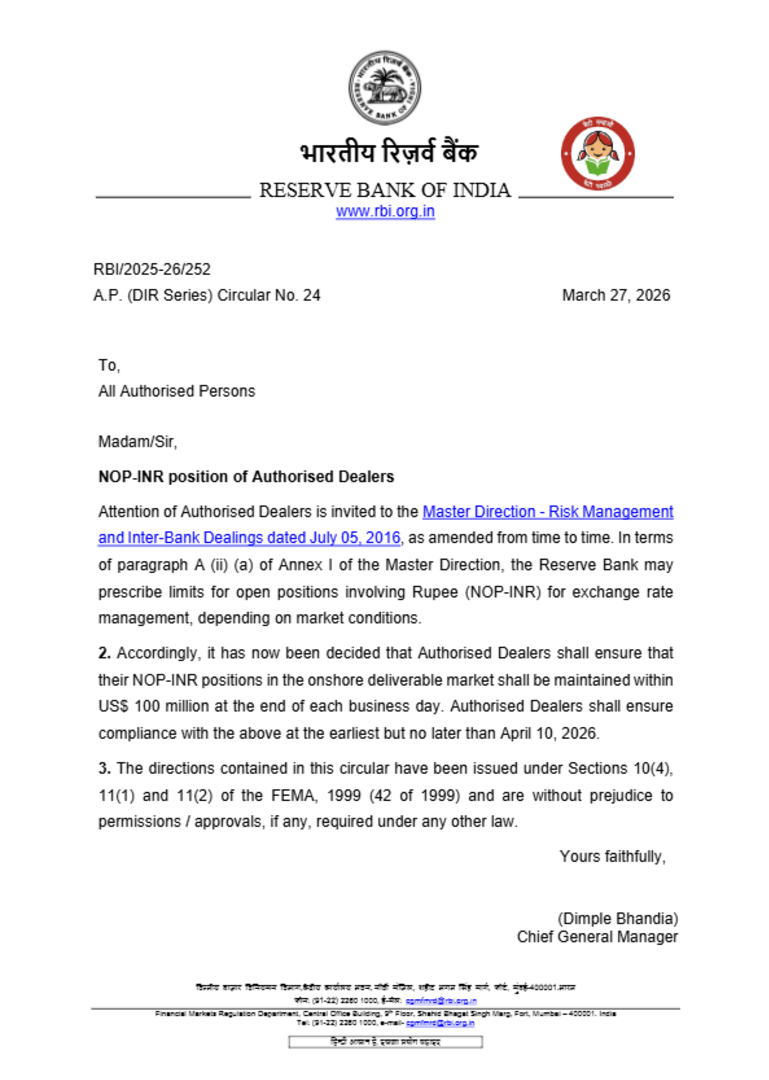
Reserve Bank of India instructions.
RBI took this decision in view of the fall in rupee.
RBI has taken this decision in view of the falling rupee against the dollar and market instability. Issuing instructions, RBI asked all banks to limit their net open positions (NOP-INR) on the Indian currency in the onshore deliverable market to $100 million at the end of each trading day. That means banks will have to keep their foreign currency exposure within this range at the end of every business day.
RBI gave banks time till April 10
RBI has given time till April 10 to all authorized foreign exchange dealers to comply with this new rule. According to Dilip Parmar, FX Analyst, HDFC Securities, this step will reduce the long positions (speculation) taken by banks in dollars in the stock market. This will help in preventing a sudden and huge fall in the rupee when the market opens.
What is Net Open Position (NOP)?
Net open position refers to the total foreign currency that banks have bought or sold, but have not hedged. According to existing rules, banks could set their own limit up to 25% of their total capital. But now RBI has directly capped it at $100 million.
Dilip Parmar pointed out that banks often hold large forex portfolios, some of which are used for arbitrage (profiteering). When banks hold large unhedged positions, it leads to sharp fluctuations in the rupee in intraday trading. RBI had earlier warned banks, but now it has been converted into an official order.
Indian rupee reached near ₹95 level
According to RBI, on Friday the rupee closed at an all-time low of ₹94.59 against the dollar. The rupee has made its all-time low record 5 times out of the last 10 trading sessions.
Due to continuous withdrawal of money from the Indian market by foreign investors, the rupee is now very close to touching the level of ₹ 95 per dollar. According to foreign brokerage firm Bernstein, if the war continues, the rupee may go up to 98.
Effect of Iran war and increase in crude oil prices
The main reason behind this fall of rupee is the ongoing war in West Asia and the rise in the prices of Brent crude oil. The Indian currency has fallen by about 4% since the US-Israel and Iran war started in late February.
Biggest fall in rupee since 2011-12
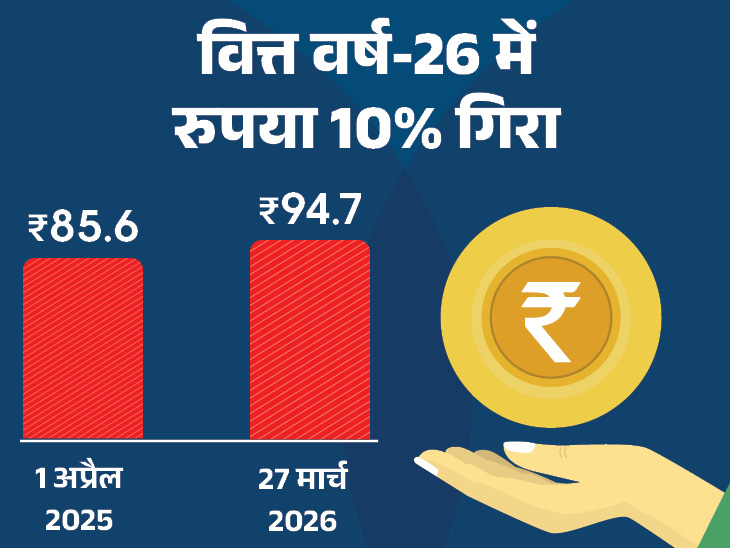
India’s financial year runs from April to March. According to data, for the first time in 14 years the rupee has fallen so much in a year. Earlier there had been a decline of about 14% during the Eurozone crisis in 2011-12. Whereas from April 1, 2025 till now i.e. in FY-26, the rupee has fallen by 10%.
Danger of inflation increasing in India due to dollar becoming expensive
The Middle East conflict is being considered as the most serious energy crisis in decades, which is directly impacting India.
oil prices: India’s import bill increased due to expensive crude oil.
Essential goods expensive: Supply of LPG, plastic and other petrochemical products affected.
Fear of inflation: Due to the dollar becoming expensive, petrol, diesel and imported goods will become expensive, due to which retail inflation may increase.
Studying and traveling abroad is expensive: Now you will have to spend more money to buy dollars for going abroad or for studies.
Electronics Expensive: Mobiles, laptops and imported parts can be expensive, as payment is in dollars.
Will the rupee go to 98 per dollar?
Analysts have started reducing GDP growth estimates. According to Bernstein, if the war continues for a long time, the pressure on the current account balance will increase and the rupee may cross the level of 98 this year.
Some analysts have expressed the possibility of RBI increasing interest rates in the next 12 months to control inflation.
How is the value of currency decided?
- If the value of a currency decreases against the dollar, it is called currency depreciation.
- Every country has foreign currency reserves, through which international transactions take place. Its increase and decrease affects the currency.
- If there are enough dollars in India’s foreign reserves, the rupee will remain stable. If the dollar decreases, the rupee will weaken; if it increases, it will become strong.
Read this news also…
Center increased commercial LPG quota from 50% to 70%: Priority to steel-auto and textile sectors, after restaurants, 20% additional supply to big industries.
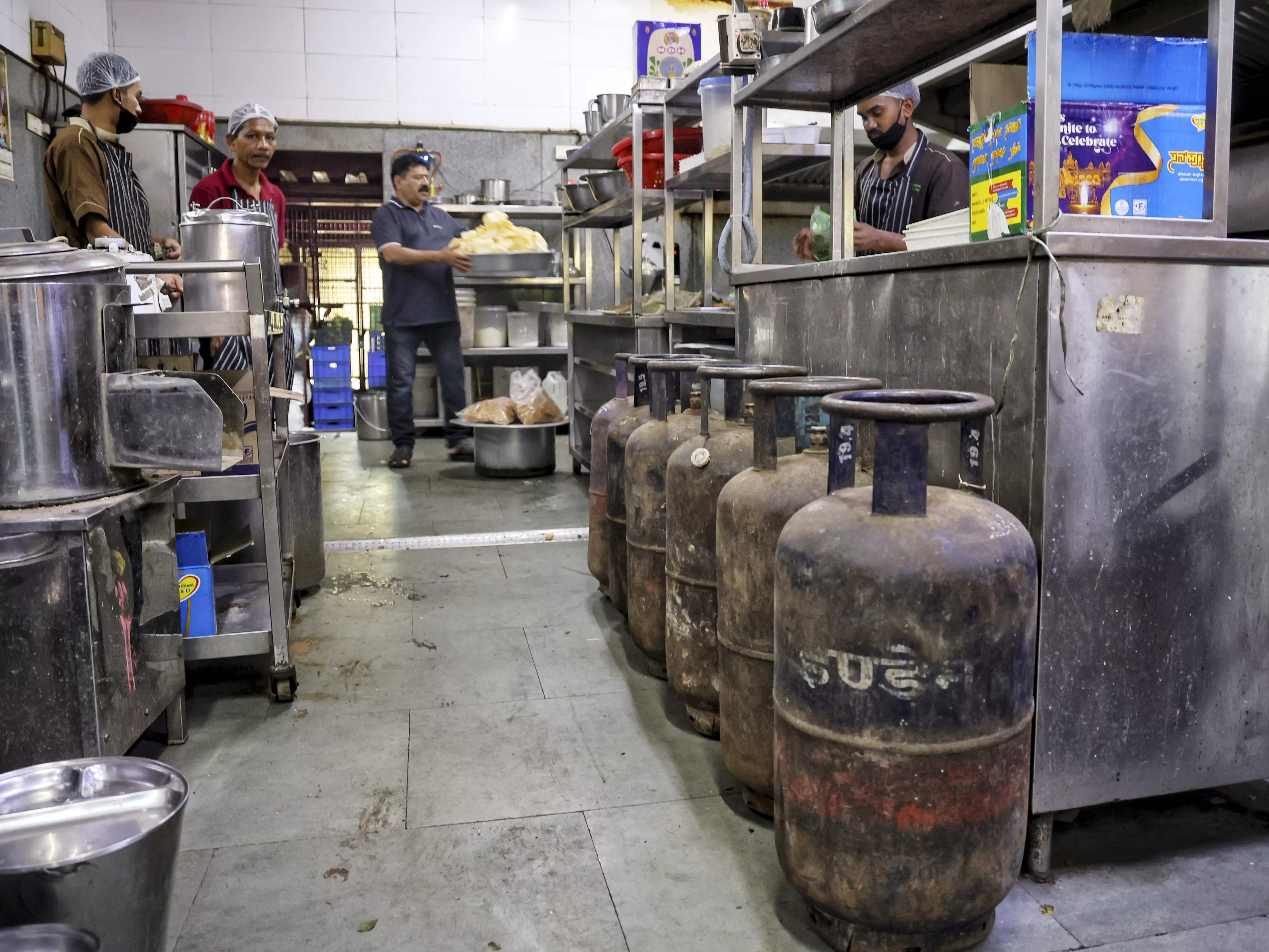
Amidst the ongoing gas crisis in the country, the Central Government has once again directed the states to increase LPG supply. On Friday (27 March), the government has increased the allocation i.e. quota of commercial LPG cylinders from 50% to 70%. Those industries which are completely dependent on LPG will get the most benefit from this decision. Read the full news…

Source link
[ad_3]

