
- Hindi News
- Business
- RBI Repo Rate | RBI MPC Meeting 2026 June Update; Sanjay Malhotra EMI Loan Interest Rate
Mumbai4 minutes ago
- copy link
The Reserve Bank has not changed the repo rate in the second meeting of the new financial year. It has been maintained at 5.25%. Due to this, loans will not become expensive and EMI will not increase. RBI Governor Sanjay Malhotra informed about the decisions of the Monetary Policy Committee on June 5.
Earlier in April also there was no change in the repo rate. RBI last reduced the interest rate by 0.25% to 5.25% in December 2025. The rate at which RBI gives loans to banks is called repo rate. When RBI reduces the repo rate, banks pass this benefit on to the customers.
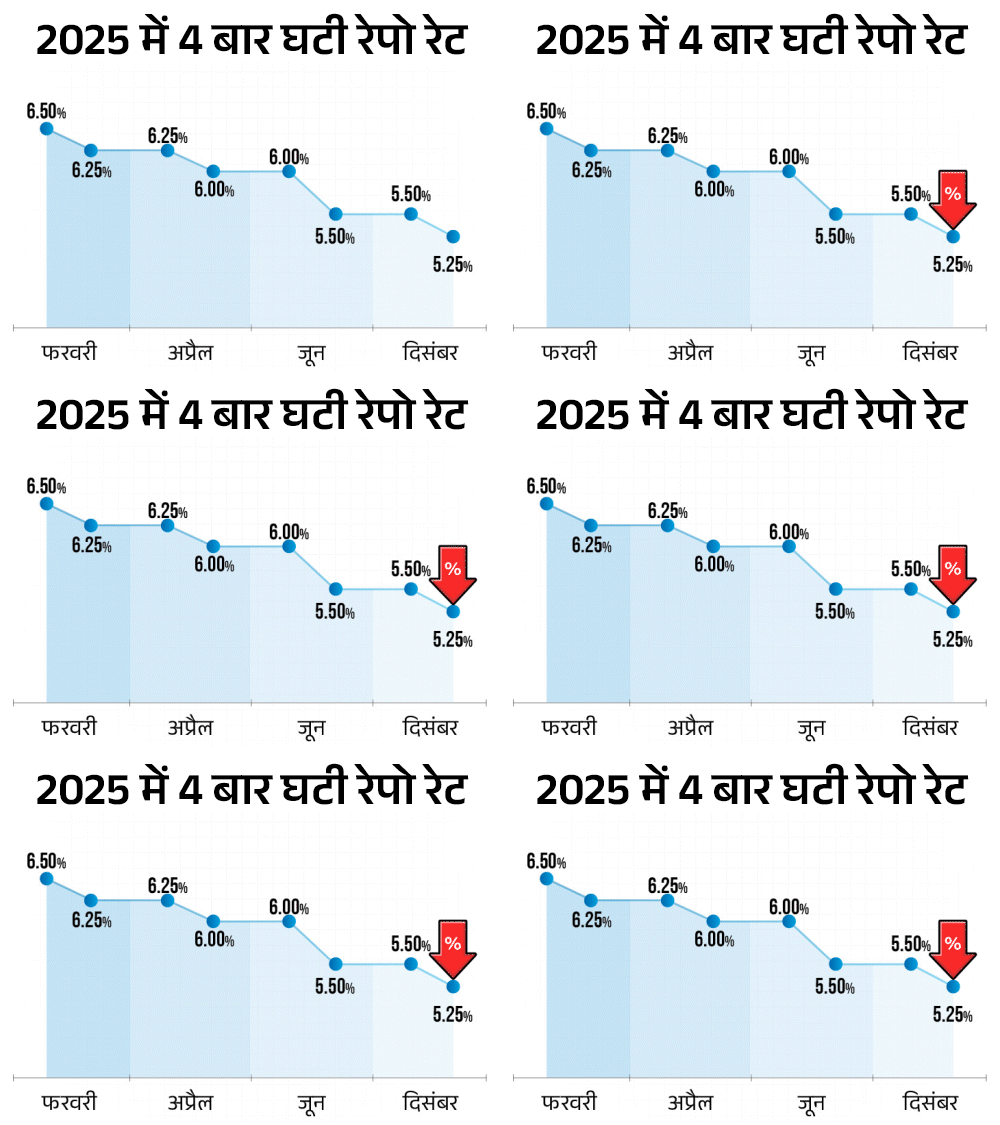
RBI meeting is held every two months
The Monetary Policy Committee consists of 6 members. Of these, 3 belong to the RBI, while the rest are appointed by the Central Government. RBI meeting is held every two months. There will be a total of 6 meetings of the Monetary Policy Committee in the financial year 2026-27. The first meeting was held on 6-8 April 2026.
Other big decisions of RBI MPC meeting
- Growth estimates reduced: Due to the ongoing tension in West Asia (Middle East) and disruptions in the supply chain, RBI has reduced the economic growth rate i.e. GDP growth estimate. Now the GDP growth outlook for the current financial year has been reduced from 6.9% to 6.6%.
- Stance kept ‘neutral’: Despite rising inflation risks, the Monetary Policy Committee has decided to maintain its policy stance ‘neutral’. The committee will keep an eye on the situation and take further steps based on the data.
- Concern about inflation: Governor Sanjay Malhotra said that although retail inflation is currently within the target range, rising prices of fuel and energy due to global tensions may put pressure on the retail market and the pockets of the general public in the future.
- Fear of weak monsoon: Concern has also been raised regarding the forecast of reduction (less rainfall) in the west-south monsoon. This can have a direct impact on agricultural production and demand in rural areas. However, government schemes like crop diversification will help in reducing its impact.
- Service sector strong: The good thing is that domestic economic activity still remains strong. The performance of manufacturing and service sectors is better and consumption in urban areas is getting support due to GST rationalization and stable employment.
What is repo rate, how does it make loan cheaper?
The interest rate at which RBI gives loans to banks is called repo rate. Due to low repo rate, the bank will get loan at low interest. If banks get cheaper loans, they often pass the benefit on to their customers, that is, banks also reduce their interest rates.
Why does the Reserve Bank increase and decrease the repo rate?
Any central bank has a powerful tool to fight inflation in the form of the policy rate. When inflation is very high, the Central Bank tries to reduce the money flow in the economy by increasing the policy rate.
If the policy rate is high then the loan that banks get from the Central Bank will be expensive. In return, banks make loans costlier for their customers. This reduces money flow in the economy. If money flow decreases, demand decreases and inflation decreases.
Similarly, when the economy goes through a bad phase, there is a need to increase money flow for recovery. In such a situation, the Central Bank reduces the policy rate. Due to this, the loan received by the banks from the Central Bank becomes cheaper and the customers also get the loan at a cheaper rate.
—————————————————————
Also read this business related news…
Sensex up 150 points and trading at 74,500: Nifty up 50 points at 23,450; Buying in media and IT stocks
Today i.e. Friday, June 5, the Sensex is trading at 74,500 with a rise of 150 points (0.23%). Nifty has also increased by 50 points (0.18%), it has reached the level of 23,450. There is maximum buying in media and IT stocks in today’s business.

Source link
[ad_3]

