
- Hindi News
- Business
- Nagastra Drone Thwarts Enemy Plot In Operation Sindoor | Solar Industries
Chhatrapati Sambhajinagar1 hour agoAuthor: Ravindra Bhajani
- copy link
Satyanarayan Nuwal is the founder and chairman of Solar Industries India Limited, a company manufacturing indigenous drone ‘Nagastra’.
The indigenous weaponized drone ‘Nagastra’ which foiled the enemy’s conspiracy during Operation Sindoor has been manufactured by Solar Industries India Limited. Now this company is also making weaponized dog robots and ‘humanoid robots’ that look like humans.
The company’s founder and chairman Padmashree Satyanarayan Nuwal told ‘Dainik Bhaskar’ that for the security of the country, these robots can be deployed even in minus 40 degree Celsius temperature. The company is also working on indigenous projects like anti-drone system ‘Bhargavastra’ based on micro missile. Read the full interview…
Question: Your Nagastra and Loitering Munitions were used in Operation Sindoor, can you tell something about this?
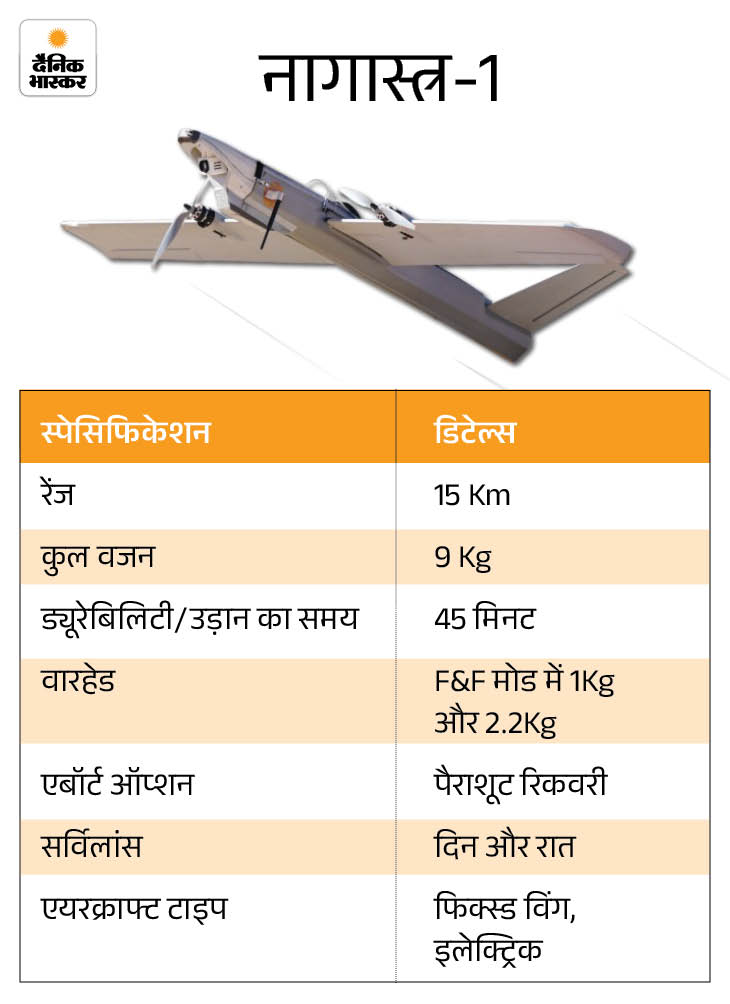
answer: The use of drones in the Azerbaijan and Armenia war in 2020 changed the nature of conventional warfare. A completely new form of weapons appeared before the world. We also decided to build an unmanned aerial system after 2020. After three years of hard work, we made the country’s first weaponized drone ‘Nagastra-1’, which was supplied to our army.
I consider its precise use in ‘Operation Sindoor’ to be only divine grace. The range of Nagastra-1 is 15 kilometers. After this we have prepared other variants including Nagastra-1A, Nagastra-1B and Nagastra-2. These are also called ‘kamikaze drones’ or ‘suicide drones’.
It can hover over the target for a long time, detect the enemies and after receiving the precise signal, it can attack by directly hitting it with the explosive warhead. We have also started supplying it to the army. Their range is 25 to 50 kilometers and 1 to 5 kg of explosives can be installed in them.
Question: Has swarm technology been used in these drones?
answer: Swarm drones are currently under-development. During Operation Sindoor, our big drones were used to counter the small drones that came from the other side. After this, we have developed ‘Bhargavastra’ based on micro missile as a counter drone system.
It can see up to 10 kilometers and has the ability to shoot down any external drone or UAV that comes within a radius of 2.5 kilometers. Its trial testing has been done in different ranges. Swarm drones are networks of small and autonomous drones that work together with the help of AI and advanced software algorithms.
Being in swarms, they target enemy air defense systems, radars or targets in hundreds at the same time. Different drones in the swarm can be assigned different tasks; Like some do spying, some do electronic jamming, and some do direct attack.
Question: Now do you want ‘BrahMos’ to remain in the country, what development has happened in it?
answer: Till a year ago, BrahMos booster and rocket system were being imported from Russia. We have developed it in-house with the help of DRDO. Russian scientists also came here.
He had to stay here for five days and see the arrangements. But, on the very first day in the evening they approved our system. Now we have prepared 100 rockets; Apart from this, its warhead has also been made. At present his testing is going on.
Question: Use of AI and robotics increased around the world, are we ready?
answer: After the 2020 war between Azerbaijan and Armenia, unmanned aerial systems and long range missiles have been used most in the Russia-Ukraine and Iran-Israel wars. The importance of AI and robots will increase further in the coming times.
In this, accuracy and affordable price are most important. Many steps have been taken in this direction in the Defense Procurement Policy 2026. All I can say is that we are moving in the right direction.
Question: What work is being done at your place regarding AI and robots?
answer: We have done a lot of work and are also doing it. We have got the possession letter in MIHAN SEZ, Nagpur. We are waiting for some approvals, which will be received in two-three months. We will start our work in three-four months. Today our soldiers have to be deployed in minus 40 degree Celsius (−40∘C) temperature.
To further improve surveillance and security, we will create the country’s first weaponized robot within a year. We are making a prototype of a dog robot. After this, we will prepare a humanoid (human-looking robot) in two-three months.
Question: Apart from Pinaka, are you also working on rocket technology?
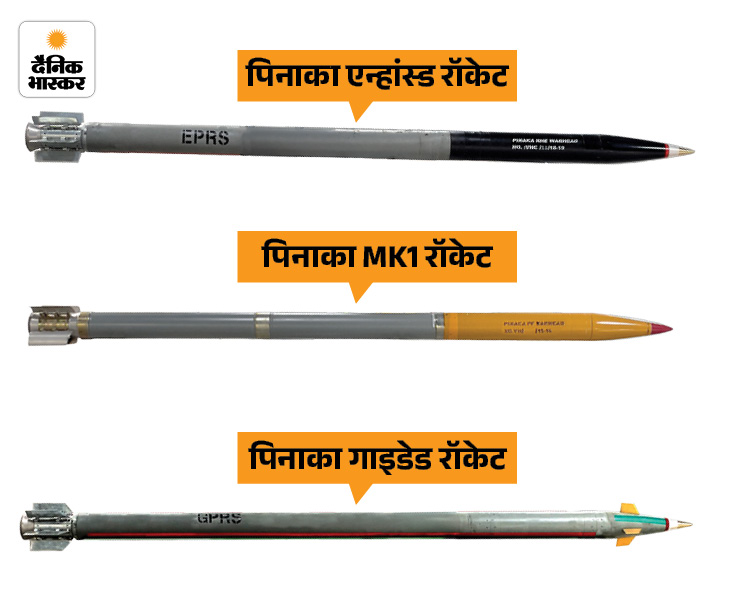
answer: It is not possible to tell. The Pinaka rocket we are making can currently hit a range of 75 kilometers. We have given a proposal to the army to increase its range to 300 kilometers. We are confident that we will soon achieve success in this also. We are in talks with the Indian Army and the Central Government.
Question: What is our current level of self-reliance in terms of ammunition?
answer: We are at par with the global level in terms of high energy materials and propellants. Earlier we were importing 100% of the material, today we are exporting more than 70% of it to countries like US, Israel, Germany and France.
Question: Work is going on at a fast pace on the Ahilyanagar-Sambhajinagar Defense Corridor in Maharashtra, what is your opinion on this?
answer: If anyone is most practical and aggressive regarding the Defense Corridor, it is the Maharashtra government. The way the defense corridor work is going on systematically, I have no doubt that the defense corridor here will be the most successful. Maharashtra gets the advantage of its geographical location, which is most important for the defense sector.
Secondly, the visionary policy of Chief Minister Devendra Fadnavis is taking it forward rapidly. Certainly I feel that among all the defense corridors that came up five-seven years ago or are coming up now, the defense corridor of Maharashtra will progress much faster.
Question: Has there been a change in the mentality of ‘indigenous versus imported’ in India?
answer: Due to the vision of Prime Minister Narendra Modi, there has been a big change in the thinking of the government in the last few years. The policy has been made very well. But, a lot of work still needs to be done in the system that implements the policy. Just having good policies will not suffice, but it is necessary to have a strong accountability and monitoring system.
Small countries like Poland, Sweden, Denmark and France are ahead of us in terms of technology. More than 50 percent of the people working there are Indians. The opportunities that we should have got here, were not available due to some reasons.
Question: How was the journey from getting explosive license in Chandrapur to Padmashree?
answer: I started my business at the age of 17. I was born in Bhilwara, Rajasthan, from there I came to Ballarshah. Struggled for two years there too. When nothing worked out, I came to Chandrapur. In Chandrapur, there was a gentleman named Abdul Sattar Allah Bhai, who had a magazine (license) of explosives. I started my career by renting that magazine from him.
In 1984, the world’s largest company ‘ICI’ made us its distributor and by 1994, we had become the largest trading house in the country. In 1995-96 we started explosive manufacturing on a small scale and by 2004 we became the country’s largest producer and exporter.
In 2010 we decided that we should enter the defense sector. In 2014, the BJP government made a provision to license complete ammunition in the private sector. We got this license in 2015. In our country for 100 years there were only ordinance factories or we used to import, it is necessary to be self-reliant in this. With this thinking we entered this sector.
Read this news also…
The country’s economy will grow at the rate of 6.9% in 2026-27: RBI’s annual report claims, India’s pace will remain strong despite the global crisis.
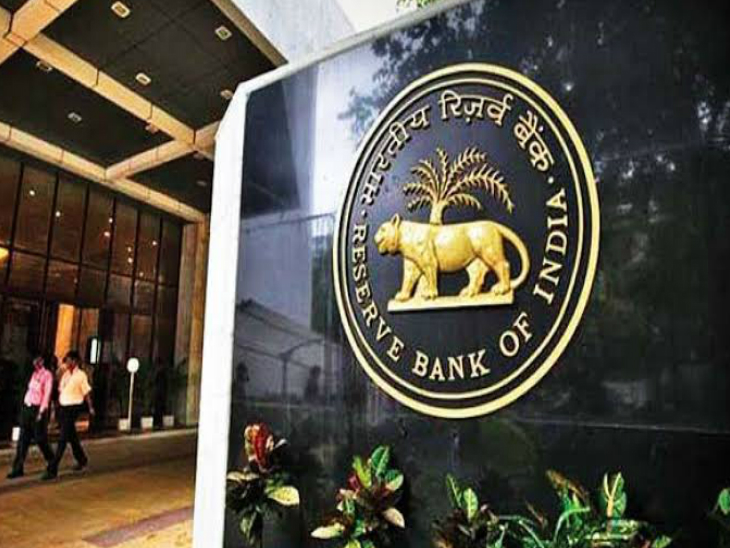
The Reserve Bank of India (RBI) has released its annual report for the year 2025-26 on Friday. According to the report, despite the ongoing tensions and economic uncertainties around the world, the pace of the Indian economy will remain strong in the year 2026-27. During this period, the country’s real GDP growth rate has been estimated at 6.9%. Read the full news…

Source link
[ad_3]

