
kathmandu27 minutes ago
- copy link
It has been only two months since Nepal’s Prime Minister Balen Shah assumed power, but questions have started being raised on his government. Balen had launched a 100 point reform agenda after taking oath on March 27. However, on the tracker website of the Prime Minister’s Office, 88 promises are being reported as overdue i.e. behind schedule.
Apart from this, within 30 days of the formation of the government, two senior ministers of Balen had to resign from their posts. Labor Minister Deepak Shah was accused of wrongly getting a job for his wife, after which he was removed. Home Minister Sudan Gurung had to resign after allegations of his relations with a businessman who was under investigation.
Due to this, resentment is increasing among the Gen-Z youth. The youth are raising questions that if these people are elected, then what is the difference in the new politics? Are there no capable people left in the government?

Balen Shahan took oath as PM on March 27.
Questions are being raised even within Balen’s party
There have been protests against many decisions of the Balen government. This has also been challenged in the court. Along with the opposition, questions are now being raised from within his party as well.
Wallen’s party Rashtriya Swatantra Party leaders Ashika Tamang and Amresh Kumar Singh also raised questions publicly after he did not answer the opposition’s questions in Parliament.
Amresh Singh said that Nepal’s democracy is becoming like ‘Pakistan model’, where the government is not accountable to the Parliament.
Balen had made many promises after becoming PM.
After becoming Prime Minister, Balen had made big promises like reducing the number of ministries, merging deficit boards and committees and keeping government employees and teachers away from politics.
Apart from this, there was also talk of implementing the recommendations of Gauri Bahadur Karki Commission, restarting the stalled projects, digitalizing investment and industry services and preparing a long-term strategy for energy export.
Controversy over arrest and commission report
The Balen government decided to implement the Karki Commission report made during the interim tenure of former Prime Minister Sushila Karki. The report examined corruption and abuse of power and suggested reforms. It was also associated with the Gen Z movement. The government was accused of implementing it without a clear legal basis.
Meanwhile, there was controversy over the arrest of former Prime Minister KP Sharma Oli and former Home Minister Ramesh Lekhak. It was alleged that proper paperwork was not completed. There was opposition to this at the legal and political level.
Nepali Congress leader Deepak Khadka also had to be released due to lack of evidence after being detained for a long time.

Former Prime Minister of Nepal KP Oli was arrested from his home on March 28.
Allegations of running the government through ordinances
The Balen government has a two-thirds majority in the lower house, but does not have a single member in the upper house, the National Assembly. In Nepal, the Upper House plays an important role in passing and amending laws.
In such a situation, the Balen government brought eight ordinances. These included proposals to abolish civil service trade unions and university student organisations. Nepal Supreme Court put a stay on these ordinances amid protests from employee and student organizations.
In a social media post, Balen clarified that banning party flags in schools and government offices will not end the rights of students and employees, but will strengthen professional freedom.
He said that student and employee organizations in education and bureaucracy have become ‘sleeper cells’ of political parties. According to him, transfer and promotion should not be on the basis of party, but on the basis of merit and work.
Protest from road to court on bulldozer action
The Balen government is being criticized the most for its removal of encroachment campaign. Homeless and landless people have staged protests in different parts of Nepal.
According to officials, about 4 thousand structures have been demolished in Kathmandu Valley alone. At least 15 thousand people have been affected by this.
Even when Balen was the mayor of Kathmandu, he had made bulldozer action a major part of his politics. After becoming Prime Minister, he implemented this model across the country.
However, many human rights organizations, including UN experts, have also criticized these actions. He says that the government removed poor people without proper identification, negotiation and rehabilitation plan.
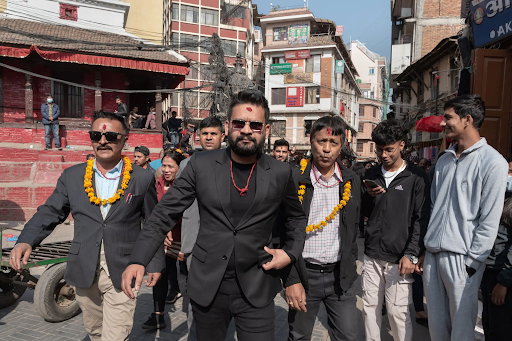
Even when Balen Shah was the mayor of Kathmandu, he had carried out bulldozer action.
Not a single press conference in 2 months
During the election campaign, Balen had promised transparency and accountability. But after becoming the Prime Minister, his silence is under question. Since taking oath, he neither addressed the nation nor held any press conference.
He had left midway during the President’s policy and program speech. Later he remained absent from Parliament without any notice. The opposition continuously created ruckus in the Parliament and demanded the Prime Minister to come to the House and answer.
Resentment in border areas due to strictness on bringing goods from India
The Nepal government has strictly enforced custom duty rules on goods coming from India. After this, protests have started on the India-Nepal border.
According to the rules, mandatory custom duty will have to be paid if goods worth more than 100 Nepalese rupees (about 63 Indian rupees) are brought from India. Tax ranges from 5% to 80% depending on the category of goods.
For decades, people of Nepal have been buying ration, medicines, clothes, utensils, electronics and wedding items from Indian border towns. The rules started being strictly enforced after the Nepali New Year. Due to this, people living on the border are suffering losses. Resentment is increasing among the people.
——————-
Read this news also…
Nepal said- Indian travelers should not go to Mansarovar through Lipulekh: This is our area; India said – there is no historical evidence of Nepal’s claim
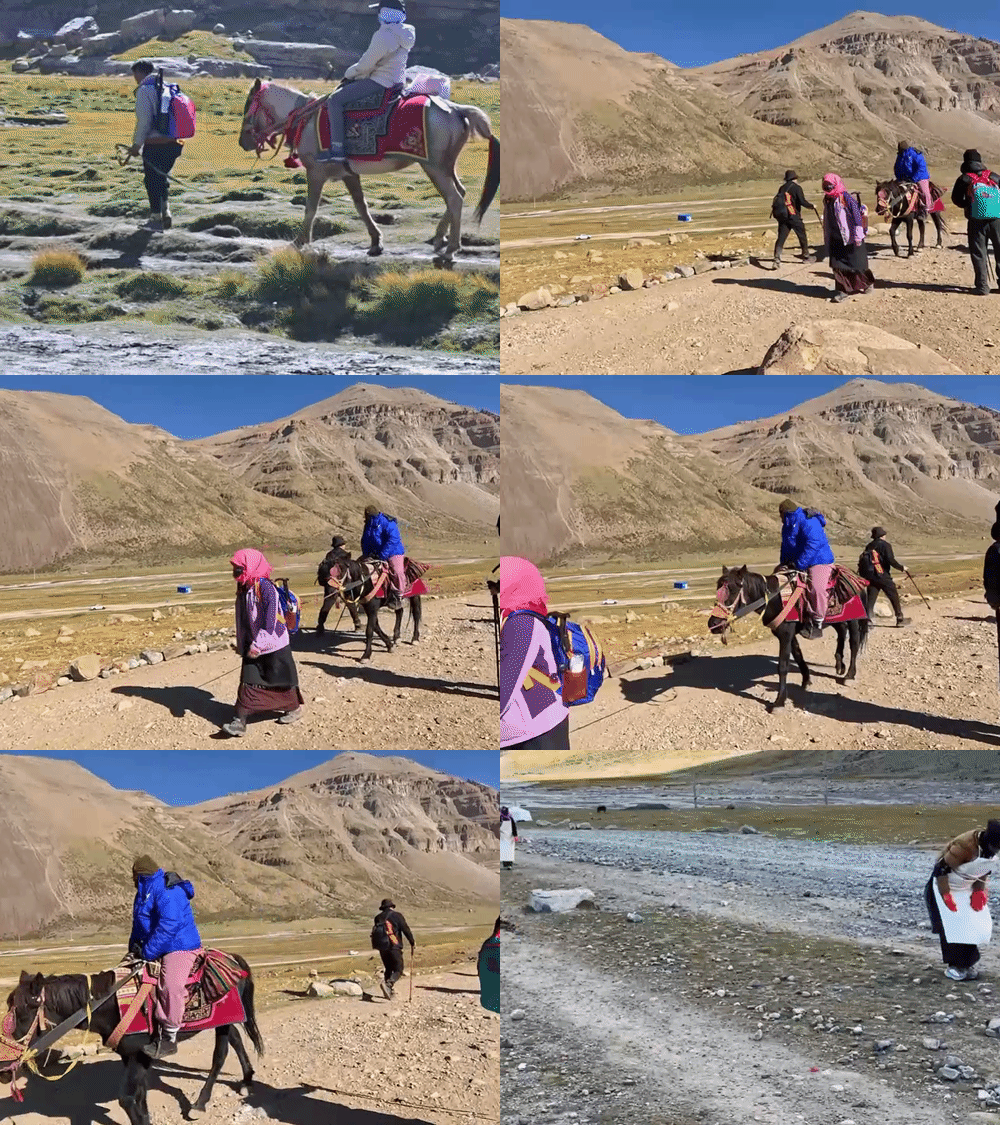
The Nepal government has appealed to Indian pilgrims not to undertake the Kailash Mansarovar Yatra via Lipulekh. Nepal’s Foreign Ministry issued a statement on Sunday saying that according to the Sugauli Treaty of 1816, Limpiyadhura, Lipulekh and Kalapani areas are part of Nepal.
The government said that it has diplomatically conveyed its objections and concerns to both India and China regarding the proposed Kailash Mansarovar Yatra via Lipulekh. Read the full news…

Source link
[ad_3]

