
New Delhi14 minutes ago
- copy link
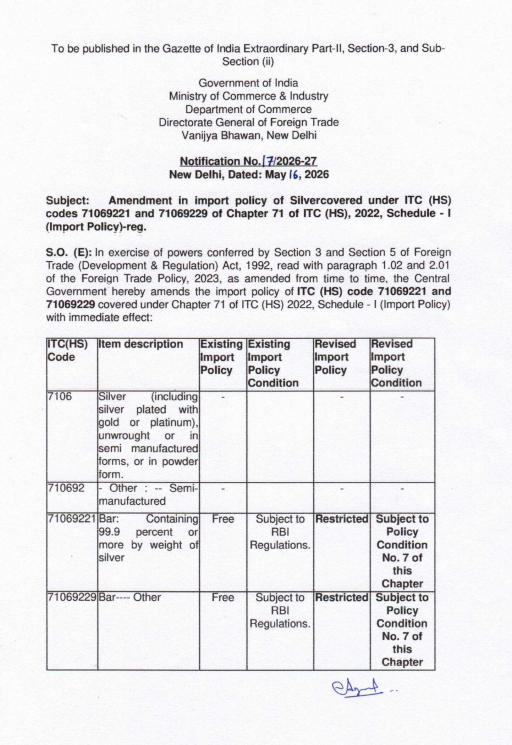
The central government has imposed new restrictions on the import of silver. According to the government notification, many categories of silver have been removed from the ‘free’ list and put in the ‘restricted’ category. The government has taken this decision to stop the increasing import of precious metals and to control the increasing import bill of the country.
After the new rules, now no company will be able to bring silver ingots (silver bars), unwrought silver (unwrought silver) or silver powder directly to India on its own. For this, first proper approval (license) will have to be taken from the government. Along with this, some categories of silver procurement have also been brought under the purview of Reserve Bank (RBI) rules.
Earlier, the government had directly increased the import duty on gold and silver from 6% to 15%.
What will be the impact of this decision on common traders, exporters and the market? Let us understand in easy questions and answers…
Question 1. What new order has the government issued regarding import of silver?
answer: The government has issued a new notification and tightened the import rules for many categories of silver. Till now the import of silver was in ‘free’ category, which has now been changed to ‘restricted’ category.
Question 2. Which silver products will come under the purview of this ban?
answer: According to the new rules, now no company or businessman will be able to bring silver bars (silver ingots), unwrought silver (unwrought raw silver) and silver powder or semi-manufactured silver directly to India on its own.
Question 3. If someone wants to import silver from India, what will be the method now?
answer: Now, to import silver, companies will have to obtain proper approval or license from the government. Without this, custom clearance will not be available. Apart from this, certain categories of silver procurement have now also been brought under the purview of the rules and monitoring of the Reserve Bank of India (RBI).
Question 4. Why did the government suddenly have to impose this ban on the import of silver?
answer: Its main objective is to stop the rapidly increasing import of precious metals into the country. Due to continuously increasing imports, the country’s import bill (import expenditure) is increasing, due to which the trade deficit increases. The government has taken this step to control it and to strengthen the Indian rupee amidst the pressures of the foreign market.
Question 5. What changes have already been made regarding tax (import duty) on gold and silver?
answer: The government has been continuously imposing strict restrictions on the import of precious metals for some time. Earlier, the government had directly increased the basic import duty on gold and silver from 6% to 15%, so that people should import less gold and silver from outside.
Question 6. What has changed in the ‘Advance Authorization’ scheme for exporters?
answer: The Director General of Foreign Trade (DGFT) has made the rules for importing duty-free (without tax) gold under this scheme very strict. Now any exporter will be able to import only a maximum of 100 kg of gold on one license under this scheme. It will not be allowed to order more gold than this.
Question 7. What are the rules for those who are applying for duty-free gold for the first time?
answer: The government has made physical verification mandatory for new applicants. That is, exporters applying for the first time will have to get their manufacturing facility or factory physically inspected before getting approval. The license will be issued to them only after the satisfaction and green signal of the government officials.
Question 8. What are the conditions for old exporters who want repeat license?
answer: DGFT has also tightened the rules for old or repeat applicants. Now a new or fresh authorization will be issued only when the concerned company has fulfilled at least 50% of the total export liability (the amount of goods promised to be sent out) under its previous license.
Question 9. How will companies importing tax-free gold be monitored?
answer: Companies will now have to submit complete reports of their import and export transactions every 15 days. It will be mandatory to get this report certified by a Chartered Accountant (CA). Along with this, the regional officers will prepare a consolidated monthly report of all this information and send it to the DGFT headquarters for central monitoring.
Question 10. What level has the import of gold in the country reached at present?
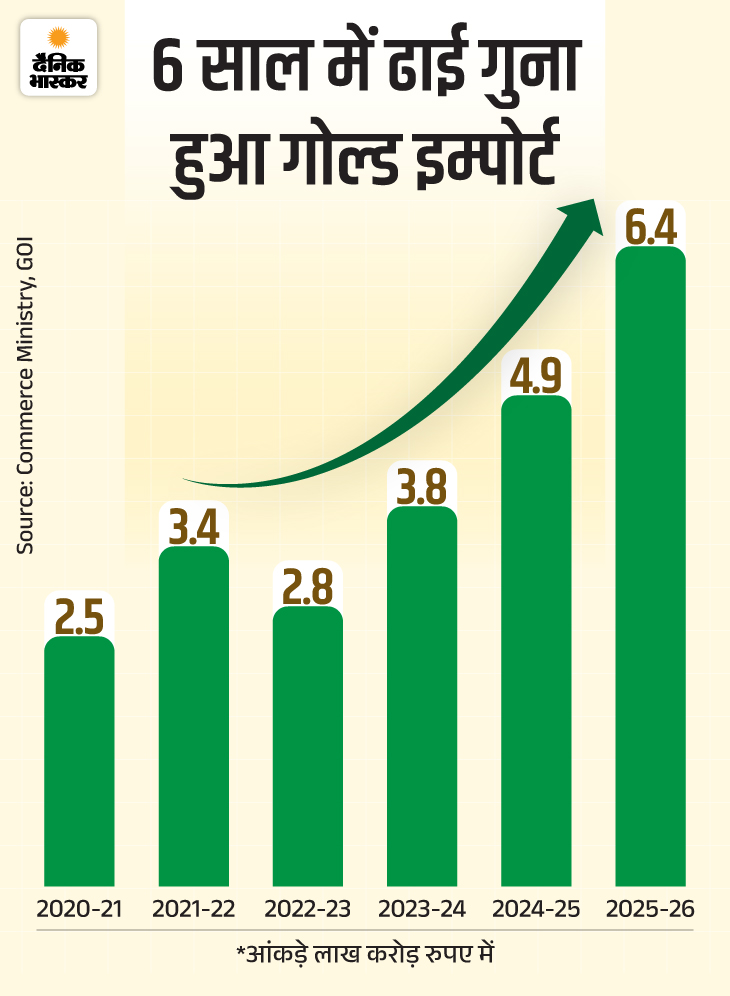
answer: India’s gold import has increased by more than 24 percent to $71.98 billion (record level) during the year 2025-26. The surprising thing is that the volume of gold decreased slightly during this period, but due to the increase in prices in the global market, the total bill increased a lot. India imports maximum gold from Switzerland, followed by UAE and South Africa.
Question 11. What does the jewelery industry have to say on these strict decisions of the government?
answer: Many major industry bodies including All India Gems and Jewelery Council have expressed concern over this. He says that increasing the import duty to 15% and imposing such restrictions on silver can activate grey-market (illegal trading) in the market. Due to this, there is a possibility of increase in smuggling of gold and silver, due to which genuine businessmen working with honesty will suffer losses.
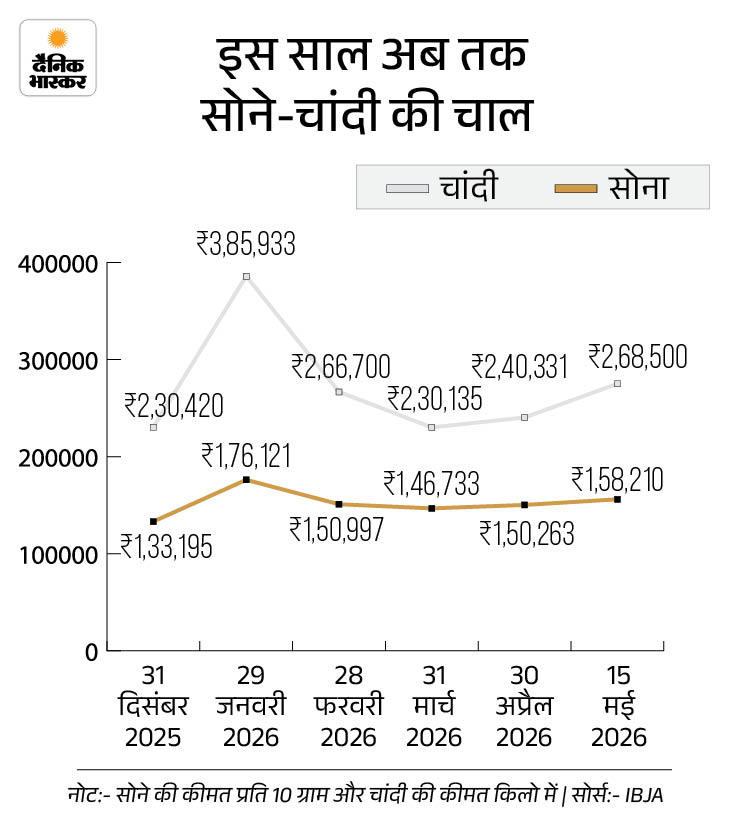
Gold became costlier by 25 thousand and silver by 38 thousand this year
This year, there are continuous fluctuations in the prices of gold and silver. So far in 2026, gold has become costlier by Rs 25,015 and silver by Rs 38,080. On December 31, 2025, 10g gold was at Rs 1.33 lakh, which has now reached Rs 1.58 lakh.
At the same time, silver was Rs 2.30 lakh per kg, which has now reached Rs 2.69 lakh. During this period, on January 29, gold had made an all-time high of Rs 1.76 lakh and silver had also made an all-time high of Rs 3.86 lakh.
PM appealed not to buy gold for a year
The Prime Minister said, ‘There was a time when people used to donate gold in the interest of the country when there was a crisis. There is no need for donations today, but in the interest of the country, we have to decide that we will not buy gold jewelery if there is any program at home for the whole year. Our patriotism is challenging us to save foreign exchange and we have to accept this and save foreign exchange.
why say so: PM Modi made this appeal to save India’s foreign exchange reserves. India buys about 99% of its gold consumption from abroad. This import bill of gold in 2025-26 was about Rs 6.4 lakh crore. Gold is at second place with 9% share in the total expenditure on goods purchased from abroad.

-
₹3 windfall tax on petrol, duty reduced on diesel-jet fuel: Decision to balance exports, no impact on petrol and diesel prices in the country

- copy link
share
-
Petrol and diesel became cheaper by Rs 5 in Pakistan: Petrol is available at Rs 409.78 per liter and high-speed diesel at Rs 409.58 per liter, yesterday it became costlier by Rs 3 each in India.
- copy link
share
-
Silver became costlier by ₹12,900 this week, reaching ₹2.69 lakh: Gold increased by ₹7,132 to ₹1.58 lakh, increased by ₹25,015 this year
- copy link
share
-
Petrol and diesel became costlier by ₹3 each, new prices implemented: Petrol in Delhi becomes ₹ 97.77 per liter, companies still incur losses of ₹ 25-30 per liter
- copy link
share
Source link
[ad_3]

