
kathmandu6 minutes ago
- copy link
File photo of devotees undertaking Manasarovar Yatra.
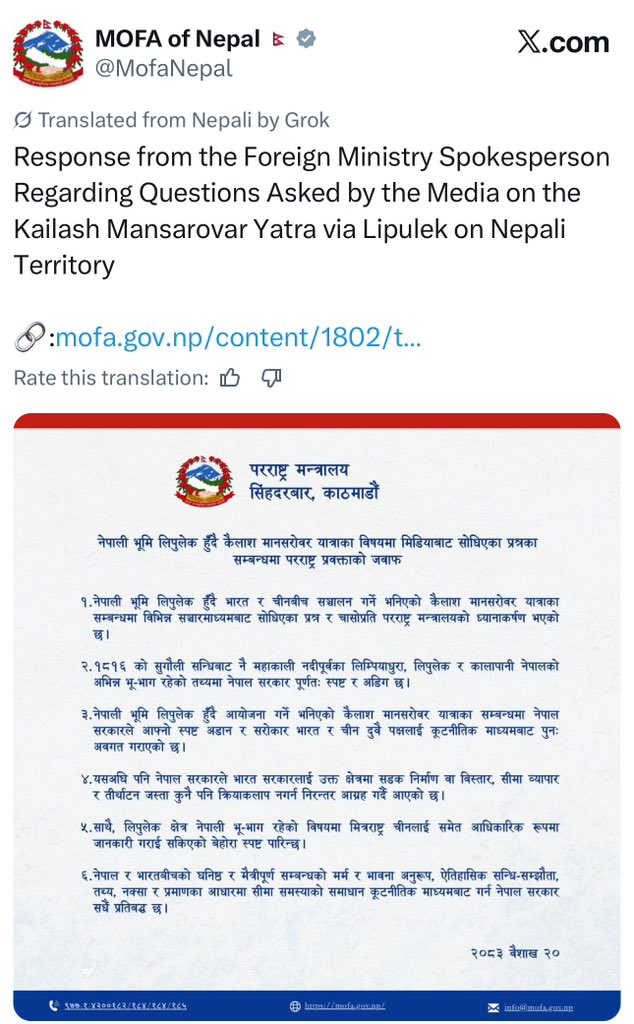
The Nepal government has appealed to Indian pilgrims not to undertake the Kailash Mansarovar Yatra via Lipulekh. Nepal’s Foreign Ministry issued a statement on Sunday saying that according to the Sugauli Treaty of 1816, Limpiyadhura, Lipulekh and Kalapani areas are part of Nepal.
The government said that it has diplomatically conveyed its objections and concerns to both India and China regarding the proposed Kailash Mansarovar Yatra via Lipulekh.
Nepal also said that in the past also it has been appealing to India not to carry out activities like road construction, trade and tourism in this area. Nepal has also officially informed China that Lipulekh is its part.
Even before this, Nepal has been claiming Lipulekh as its part. It had issued some notes last year, in which Lipulekh, Kalapani and Limpiyadhura were shown as part of Nepal, whereas these three areas fall on the Indian border.
Press release issued by Nepal government…
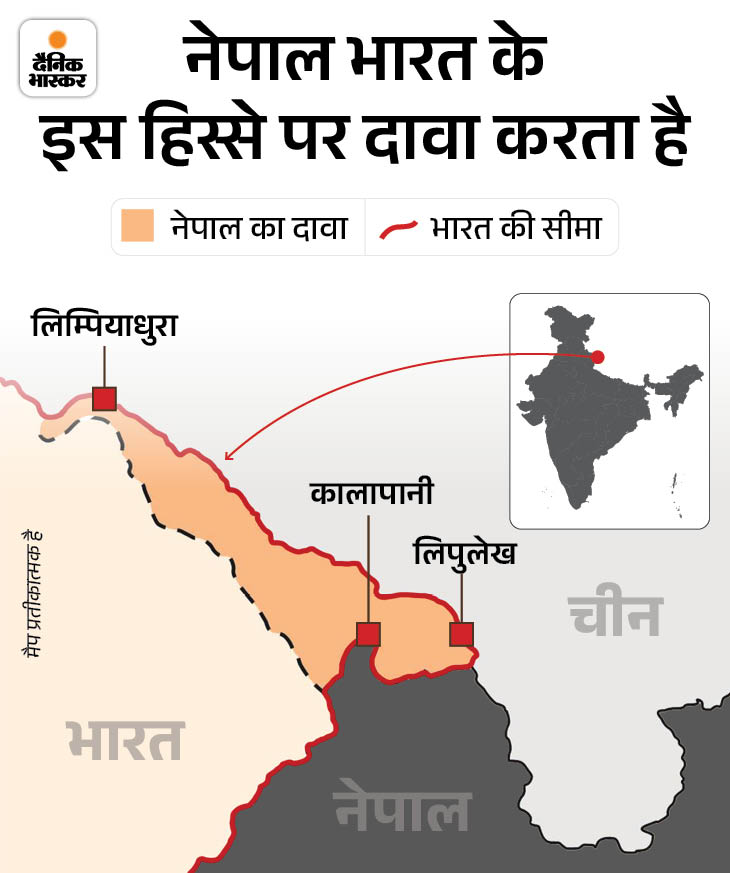
India-Nepal border determined by two rivers
In this area bordering India, Nepal and China, there is a valley formed by the Himalayan rivers, which is the origin of the Kali or Mahakali river flowing in Nepal and India.
This area is also called Kalapani. Lipulekh Pass is also here. There is another pass at some distance towards the north-west from here, which is called Limpiyadhura.
In the Sugauli Agreement signed in 1816 between the British and the Gorkha King of Nepal, the border between India and Nepal was fixed through the Kali River. Under the agreement, the western area of the Kali River was considered the territory of India, while the area falling to the east of the river became Nepal’s.
There has been a dispute between the two countries regarding the origin of the Kali River, i.e. where it first originates. India considers the eastern stream to be the origin of the Kali River. Whereas Nepal considers the western stream as the origin stream and on this basis both the countries make their respective claims on the area of Kalapani.
Mansarovar Yatra passes through Lipulekh Pass, surveillance on Chinese army also easy
- Kalapani, located in Pithoradh district of Uttarakhand, is a strategically important tri-junction between India-Nepal-China.
- India can easily keep an eye on the Chinese army from Kalapani.
- India deployed its army here for the first time in the 1962 war. Considering the importance of the area, Indo-Tibetan Border Police (ITBP) is deployed here these days.
- Pilgrims going to Mansarovar from India pass through the Lipulekh Pass of this area. After the Chinese attack in 1962, India closed the Lipulekh Pass.
- It was reopened in 2015 to facilitate trade with China and Manasarovar Yatra.
- In May 2020, India had inaugurated a new 80 km long road from Pithoragarh to Lipulekh Pass to facilitate the Kailash Mansarovar Yatra, over which Nepal had expressed displeasure.
Nepal had protested 11 years ago also
During PM Modi’s visit to China in 2015, he and the then Chinese Premier Li Keqiang had signed an agreement to increase trade through Lipulekh.
Nepal had opposed it at that time also, because this decision was taken without consulting Nepal. Nepal then sent diplomatic notes to India and China.
Kailash Mansarovar Yatra will start from 4th July
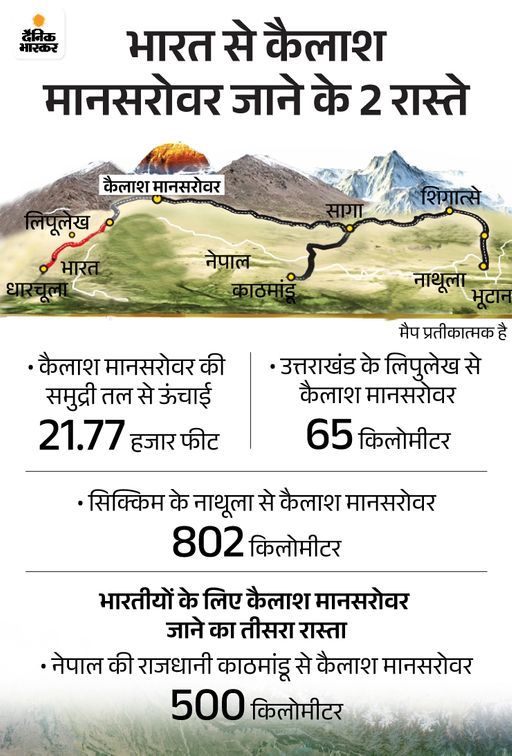
The Ministry of External Affairs has released the complete schedule of Kailash Mansarovar Yatra 2026. This year also the Yatra will be conducted from Lipulekh in Uttarakhand and Nathula Pass in Sikkim. A total of 1000 devotees will travel in 10-10 batches from both the routes, which will include 500 passengers from the Lipulekh route.
The first batch of this journey, to be operated from Pithoragarh district of Uttarakhand, will leave from Delhi on July 4. Before this, passengers will have to complete the medical, document and briefing process in Delhi from June 30 to July 3.
This time the biggest change regarding the journey is that now almost the entire journey will be by road. Whereas earlier one had to walk more than 60 kilometers, now only 38 kilometers of trek is left in the total journey. The entire journey will be of 1738 kilometers, in which most of the distance will be covered by vehicle.
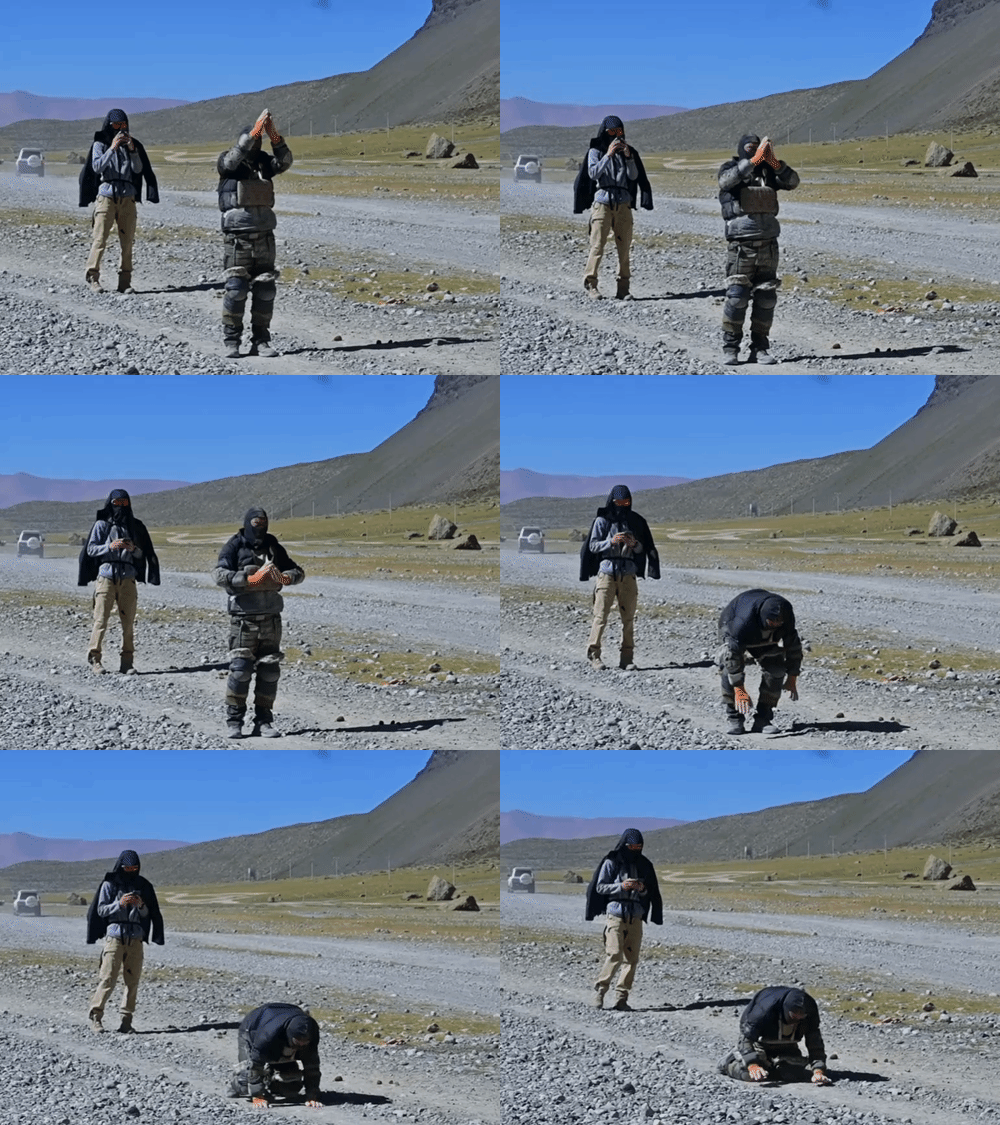
Devotees lying down and moving forward after darshan of Mount Kailash.- File photo
4 days preparation in Delhi – the journey is decided from here
The first phase of the journey starts from Delhi. As per the schedule, the passengers will reach Delhi on June 30. Health checkup will be held at Delhi Heart and Lung Institute along with passport and visa fee collection on 1st July.
A detailed medical examination will be conducted at the ITBP Base Hospital on July 2. After this, on July 3, the Foreign Ministry’s briefing, the process of depositing Chinese Visa, Foreign Exchange and KMVN fees will be completed.
In these four days, complete screening of the passengers is done and only those found fit proceed for the journey.
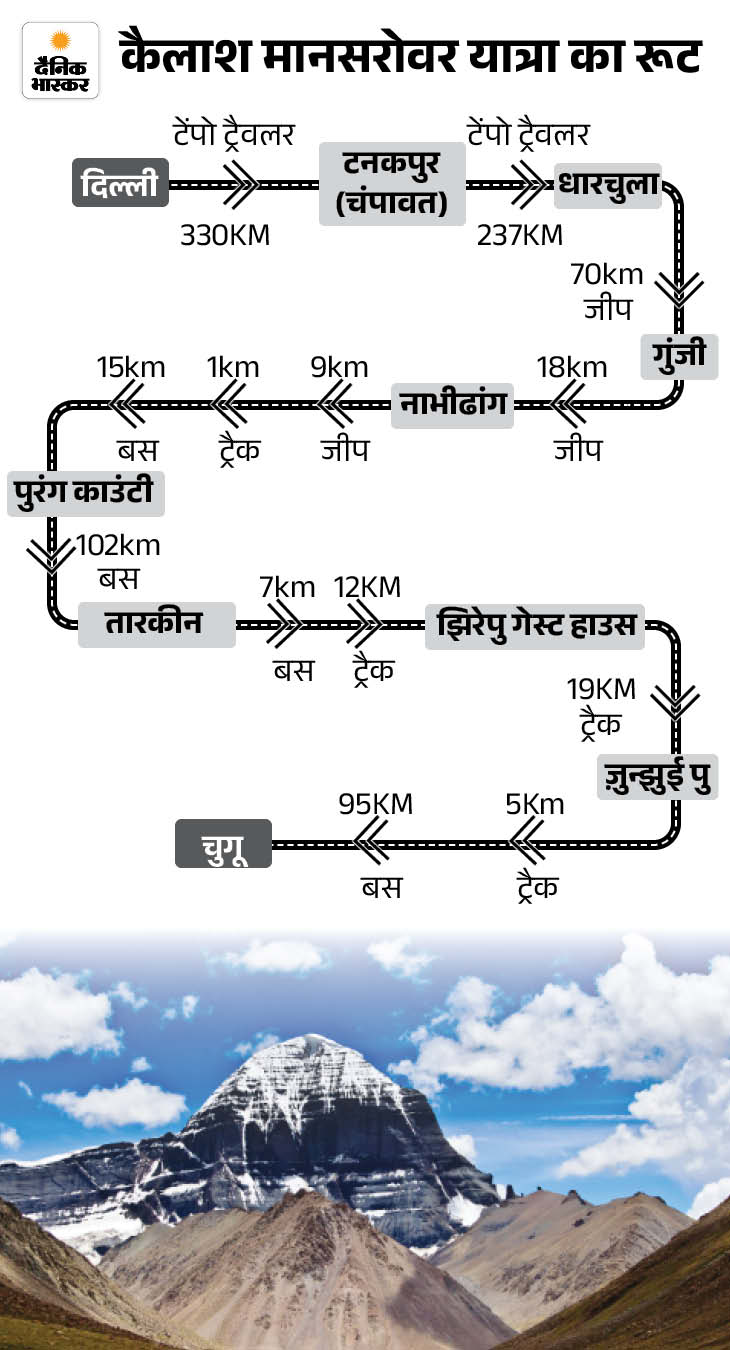
Day-wise journey from Delhi to Kailash
On July 4, the first group will leave for Tanakpur from Delhi via tempo traveler, where there will be an overnight stay. Next day, after reaching Dharchula from Tanakpur, the travelers will have night rest.
Gunji will be reached from Dharchula on the third day. Gunji is an important stop on this journey, where the travelers have to stay for a day and undergo medical examination and acclimatization process.
After this the team will reach Nabhidhang via Kalapani and will stay here for the night. The next day we will cross the Lipulekh Pass and enter Purang County of China, where we will have an overnight stay.
After staying for a day at Purang, the pilgrims will proceed further after seeing Manasarovar and Rakshas Tal. After this, after reaching Tarkin, we will stop at Jhirepu Guest House, from where Kailash Parikrama starts.
During the Parikrama, the pilgrims have to proceed from Jhirpu to Zunzhui Pu and then proceed further to Chugu. In this stage, Dolma Pass is crossed, which is considered to be the most difficult part of the journey.
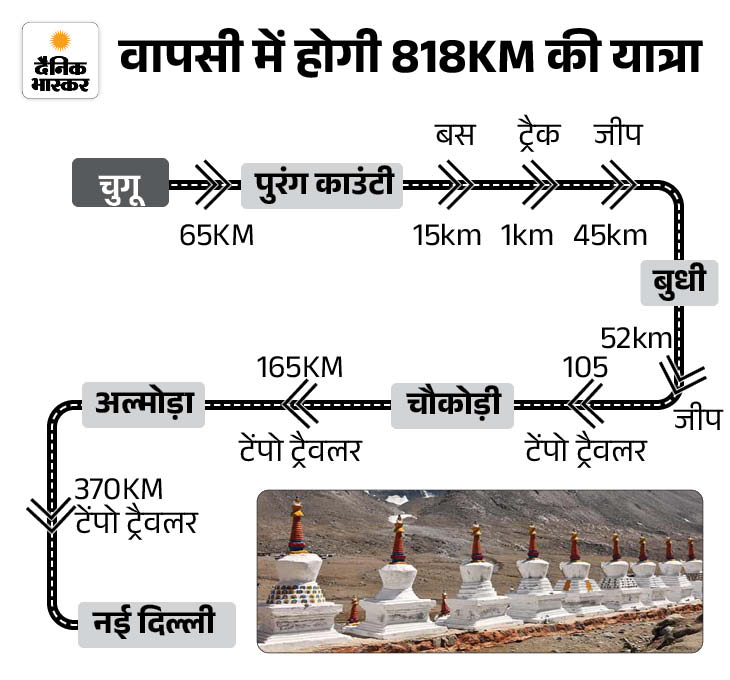
While returning – Complete return plan from Kailash to Delhi
After completion of Kailash Parikrama the return journey starts from Chugu. From here the team reaches Purang County by bus, where there is a stopover once again.
After this, the group of travelers enters India through Lipulekh Pass and reaches Budhi via Nabhidhang. After overnight stay in Budhi, the next stop is Chaukodi, to reach where jeeps and tempo travelers are used.
From Chaukodi, passengers are taken to Almora. After staying here for one night, the next day is the last phase of the journey, in which one reaches Delhi from Almora via Bhimtal and Haldwani.
In this way, the entire journey is completed in a circular route, in which the going and coming routes pass through different stops, due to which the travelers also get to see different areas of Kumaon.
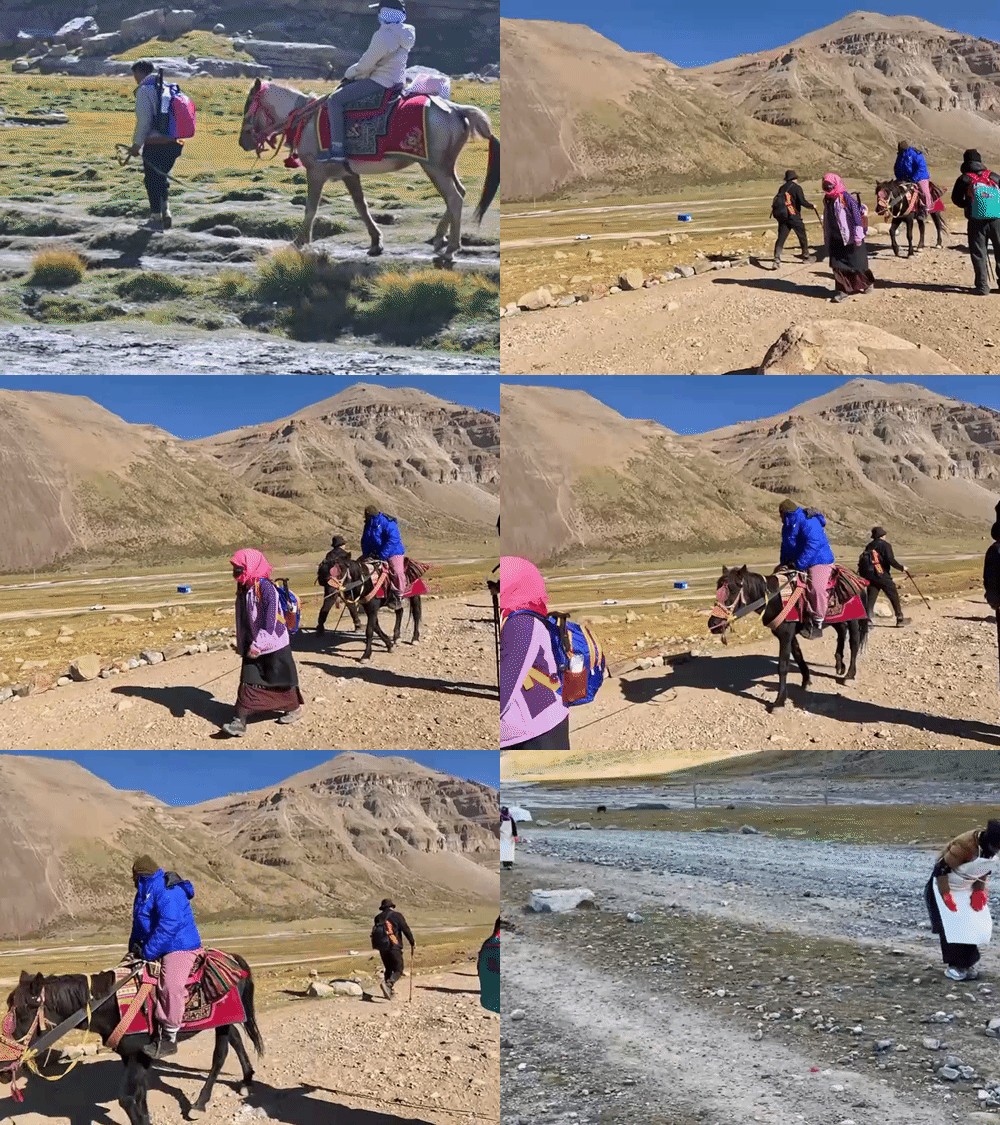
The facility of mules for traveling on foot is also available on the route.
Total distance and trek – how easy the journey has become now
This time the total distance of Kailash Mansarovar Yatra will be 1738 kilometers. In this, approximately 1690 kilometers will be traveled by vehicle and only 38 kilometers will be on foot.
Before 2019, travelers had to walk more than 60 kilometers from Dharchula to Lipulekh Pass. The journey was quite challenging due to lack of oxygen and difficult geographical conditions on the way.
Now, after the construction of roads on both sides of India and China, this journey has become quite easy. Vehicles have started reaching the border area, making this journey more accessible than before even for elderly and first-time pilgrims.
Why is this year’s journey special – rare yoga formed after 60 years
This year’s Kailash Mansarovar Yatra is also considered very special from the religious point of view. After 60 years, a rare combination of Agni Ashva Varsha is being formed, which is considered an important time for attaining salvation in Hindu, Buddhist and Jainism.
According to Tibetan astrologer Daulat Raipa, this is a special year in the 60-year cycle. It is believed that the result of one parikrama done this year is equal to 12 parikrama in normal years.
For this reason, this time devotees not only from the country but from all over the world are expected to participate in this yatra.


Source link
[ad_3]

