
Last Updated:
Pakistan boosts security for US-Iran ceasefire talks: How is India’s ‘Blue Book’ protocol for VVIP security different from Pakistan’s? New Delhi also has ‘Yellow Book’, what is it?




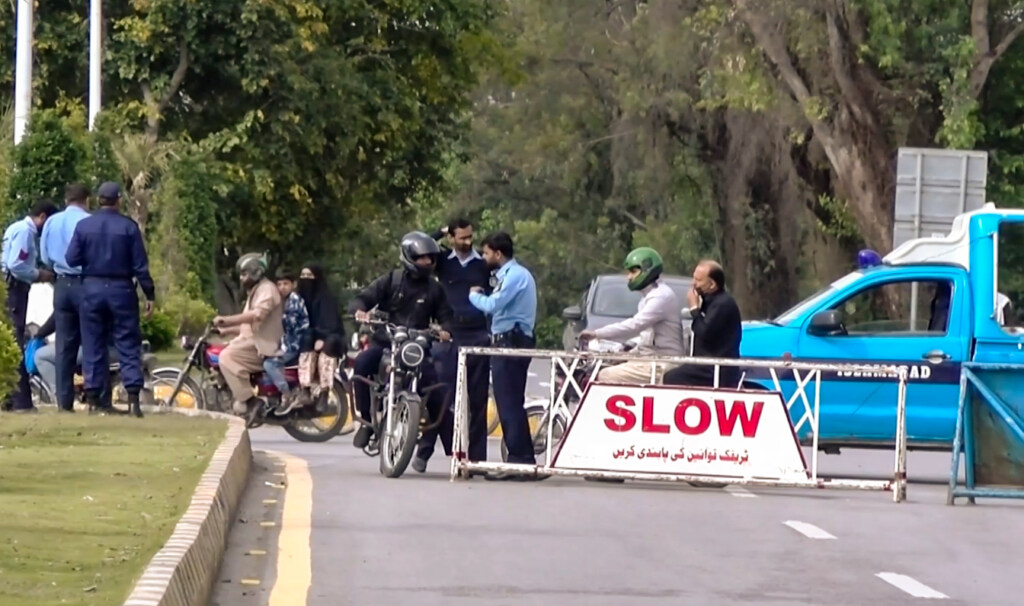
Security personnel check commuters at a barricade amid heightened security measures ahead of US-Iran talks, for which authorities have announced a two-day holiday, in Islamabad, Pakistan, on Thursday. (PTI)
Ahead of the high-stakes peace talks between the United States and Iran in Pakistan, Islamabad authorities have activated the ‘Blue Book’ VVIP security measures to protect arriving foreign delegates, including US Vice President JD Vance.
What is the Blue Book protocol of India and Pakistan? What is the yellow book protocol? News18 explains.
In both India and Pakistan, the ‘Blue Book’ refers to a highly confidential manual that outlines the mandatory security and protocol procedures for protecting the highest constitutional dignitaries. While the specific tactical details are classified, the general framework in both countries is similar, governing the reception, transport, and safety of VVIPs.
PAKISTAN’S SECURITY ARRANGEMENTS
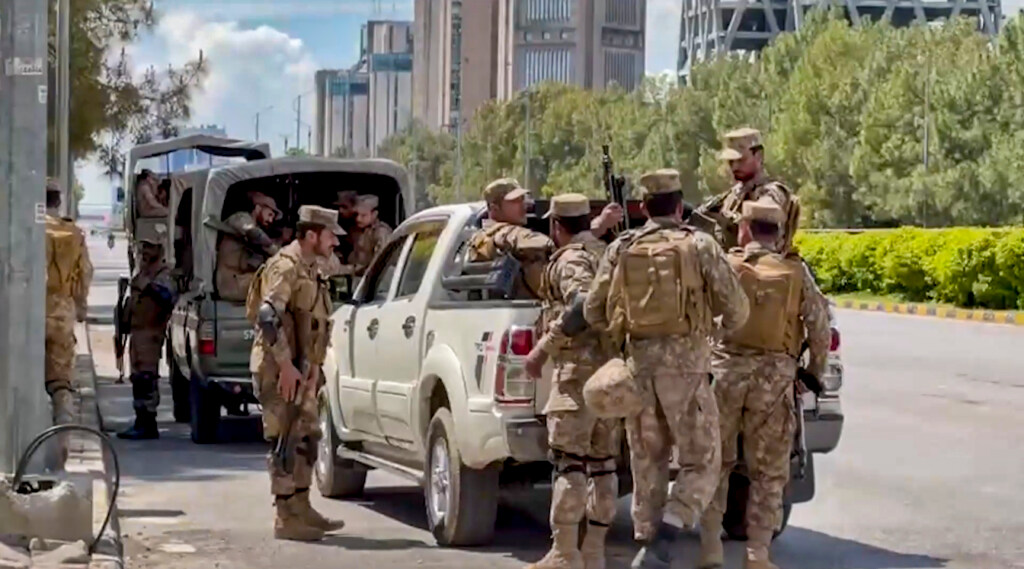
Police and paramilitary troops are deployed under strict Blue Book guidelines to ensure “foolproof” security for international delegations.
Major routes like the Faisal Avenue and the Expressway are closed or restricted to facilitate the movement of delegates. Local holidays have been declared in the twin cities of Islamabad and Rawalpindi to manage the logistical demands of the security protocol.
Close protection teams are barred from carrying digital gadgets, and specific “Red Zone” entry points are restricted to authorised personnel only.
WHAT IS INDIA’S ‘BLUE BOOK’ PROTOCOL?
Issued and updated by the Ministry of Home Affairs (MHA), the Blue Book in India specifically details protocols for the President, Vice-President, and Prime Minister.
- It mandates multi-layered security coordination between central agencies (like the Special Protection Group (SPG) for the PM) and state/district administrations.
- The visiting dignitary must be received and seen off by the Governor and Chief Minister of the state. Any absence or variation from this is considered a protocol breach.
- It includes specific rules for “Journey by Road,” such as the requirement for the main car and spare car to be of the same make and colour, and typically bullet-proof.
- All lists of officials, visitors, and guest lists must be approved in advance by the respective VVIP secretariats.
While the Blue Book covers high constitutional offices, the “Yellow Book” provides security guidelines for other individuals (like Union Ministers or high-profile citizens) based on specific threat assessments (Z+, Z, Y, and X categories).
WHAT IS THE ‘BLUE BOOK’ IN PAKISTAN?
In Pakistan, the Blue Book serves as the definitive guide for protecting high-level dignitaries, including the President, Prime Minister, and visiting foreign Heads of State. Its primary goals are to prevent bodily harm, “embarrassing incidents”, or any disruption to the VVIP’s scheduled movements.
It establishes strict vetting procedures for guest lists, employees, and vehicles. Buildings, aircraft, and travel routes must undergo mandatory security checks. Detailed instructions describe “Isolation Cordons” and “Inner Cordons”. Specific duty passes are required for anyone entering these high-security zones.
The protocol includes unique guidelines, such as checking any food served to the VVIP by a competent doctor and monitoring all “eatables” brought from the market.
WHAT IS INDIA’S ‘YELLOW BOOK’ PROTOCOL?
In India, the “Yellow Book”, officially titled “Security Arrangements for the Protection of Individuals”, is a confidential manual issued by the Ministry of Home Affairs (MHA). It provides the standard operating procedures and guidelines for the security of individuals other than the President, Vice-President, and Prime Minister (who are covered by the Blue Book).
Target Protectees: It covers a wide range of people including Union Ministers, State Chief Ministers, Judges of the Supreme Court and High Courts, Members of Parliament, and high-profile private citizens (such as celebrities or activists) who face specific threats.
Threat-Based Assessment: Security is granted based on a comprehensive threat perception assessment conducted by central intelligence agencies.
Positional Security: Certain officials receive “statutory” or “positional” security automatically by virtue of their office to ensure they can make bold, impartial decisions.
Security Categories Defined in the Yellow Book
The book defines the specific personnel and logistics required for different levels of security:
- Z+ Category: The highest level for Yellow Book protectees, often involving around 55 personnel, including commandos from the National Security Guard (NSG) or Central Reserve Police Force (CRPF).
- Z Category: Typically involves 22–25 personnel, including Personal Security Officers (PSOs), escorts, and armed guards at the residence.
- Y+ and Y Categories: Usually includes 11 personnel (for Y+) or 2 PSOs and a few armed guards (for Y).
- X Category: The basic level, usually consisting of 1 or 2 PSOs with no residential guards.
Key Protocols
Periodic Review: Security cover is not static; it is reviewed periodically by high-level committees at the MHA to be upgraded, downgraded, or withdrawn based on the latest threat inputs.
Logistical Guidelines: It contains specific rules regarding the use of escort vehicles, bulletproof cars, and anti-sabotage checks.
State vs Central Responsibility: While the MHA issues the Yellow Book, the primary responsibility for protecting an individual rests with the State Government where the person resides.
KEY FAQs
What is the ‘Blue Book’ protocol?
The Blue Book is a security manual for top leaders like the President, Prime Minister, and Vice-President, detailing every step of their protection and movement.
Is there a difference between India and Pakistan’s Blue Book?
Not much difference, both countries follow similar concepts. High-level, strict security rules, focus on protecting top leaders, detailed planning of routes, venues, and coordination.
What is the ‘Yellow Book’?
The Yellow Book covers security for other VIPs (ministers, politicians, judges, etc.), based on threat levels (Z+, Z, Y, X categories).
With agency inputs
April 10, 2026, 12:58 IST
Read More
Source link
[ad_3]

