
On March 4, five days into the Iran war, Donald Trump said Iran’s air force and navy had been eliminated. “They have no navy; it’s been knocked out. No air force; it’s been knocked out. No air detection – that’s been knocked out.”
On April 2, 34 days into the war, Trump again said Iran’s military had been destroyed. “Iran’s Navy is gone, Air Force is in ruins, and their leaders – most of them – and the terrorist regime they led are now dead…”
Advertisement – Scroll to continue
Between these statements there were more, each reporting an end to Iran’s resistance.
Punctuating each was a barrage of attacks by a country with a missile arsenal experts widely believe is the largest and most diverse of any in West Asia.
The pace may have slowed, as Israel and Gulf states said, but the strikes continue, including those that damaged energy infrastructure in Qatar and Kuwait this week, and one aimed at a Saudi Arabia oil export terminal that was intercepted.
And Iran has denied it is running out of projectiles. In fact, the Revolutionary Guards Corps has said missile and drone production continues despite the war. On Thursday alone, Iran fired 15 ballistic missiles and 11 drones at the UAE.
Iran’s missile store: Is it really gone?
Short answer – no.
The US has only destroyed a third of Iran’s vast missile arsenal despite having pounded launch sites, missile silos, and military sites over the past 35 days, Reuters reported last week citing inputs from five intelligence community sources.
The status of another third is unclear, but they have likely been damaged, four sources said.
One of the sources said the intelligence was similar for Iran’s drone capability, saying there was some degree of certainty about only a third having been destroyed.
A report by American broadcaster CNN offered a less optimistic estimate.
On April 3 US intelligence sources told CNN ‘roughly half of Iran’s missile launchers are still intact’, as are ‘a large percentage of cruise missiles on the coast’.
Strikes on Iran’s launchers may also reduce its ability to deploy missiles.
But it is the second bit of information in the CNN report that is critical since it suggests Tehran can still enforce its blockade of the Strait of Hormuz. The blockade has roiled the global energy market, driving up fuel and gas prices worldwide and threatening to overwhelm poor countries.
Intel sources on Iran’s missile stocks.
The same sources, meanwhile, also said Tehran still has ‘thousands of one-way attack drones – roughly 50 per cent of its capabilities’.
The CNN and Reuters reports underscore the point that any assessment of its military force as having been “knocked out” is likely off the mark.
Both also note that while some missiles and drones are ‘inaccessible’, i.e., they have been buried under rubble after US-Israeli forces targeted entrances to caves and underground storage depots where Iran hid them, these may be recovered if the fighting slows or stops.
This in stark contrast to Trump’s Thursday remarks – that Iran had “very few rockets left”.
One source told CNN Iran is ‘still very much poised to wreak absolute havoc…’
How many missiles does Iran have?
Pre-war assessments, including by Israel, suggest Iran entered the war with 2,000 to 2,500 medium-range ballistic missiles (MRBMs) and 6,000 and 8,000 short-range options (SRBMs).
Of course, an exact count is difficult, if not impossible, to secure, particularly since Iran keeps most of its missiles in underground facilities spread across the country for exactly that purpose.
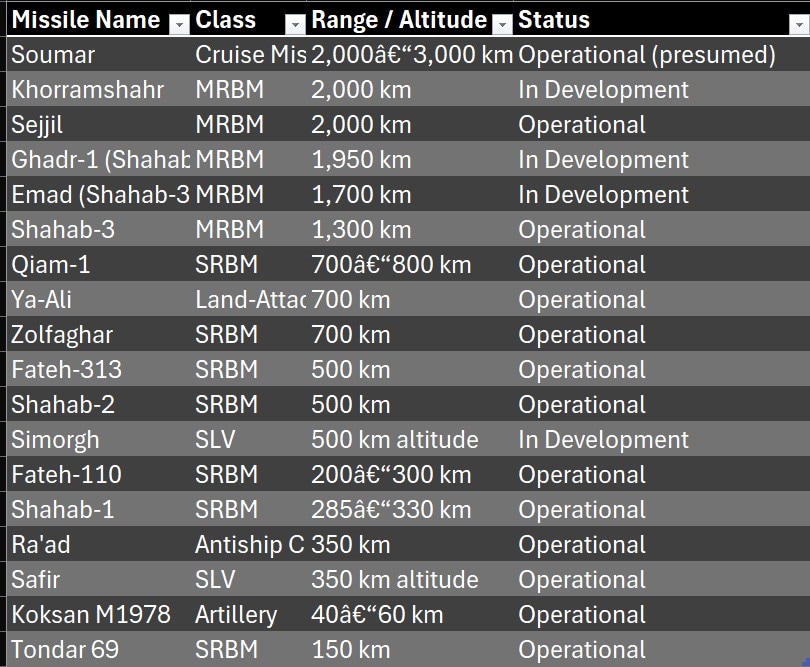
Iran’s missile arsenal. Source: Missile Defense Project, Center for Strategic and International Studies
But even as far back as 2022 US CENTCOM estimated an arsenal of 3,000 missiles of all kinds, including ballistic and cruise. And Tehran added hypersonic missiles – Fattah-1 and -2 – in 2023.
Data from the Washington-based Center for Strategic and International Studies indicates Iran also has the Soumar, a ground-launched nuclear-capable cruise missile with a reported max range of 3,000km, and the Sejjil, a medium-range ballistic missile with a 2,000km-range.
How about Iran’s navy?
Trump has also claimed devastating blows to Iran’s naval forces.
But sources told CNN that while this may be true, naval assets operated by the elite Revolutionary Guards Corps remain a threat. One source said the IRGC still has ‘hundreds, if not thousands, of small boats and unmanned surface vessels left’.
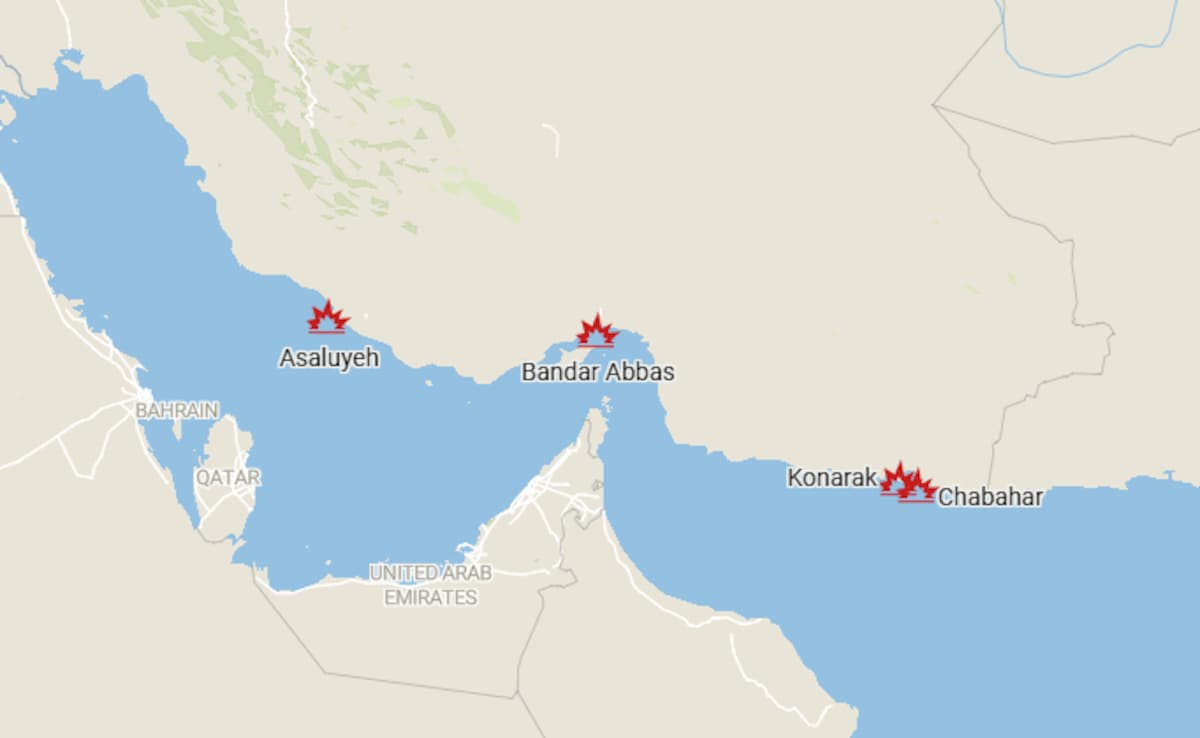
Iranian naval bases Photo: @Osinttechnical
The US has said it has destroyed 155 Iran naval vessels but it is the IRGC, and not the Iran Navy, that is enforcing the Strait of Hormuz blockade, experts have said.
What has the US said
The Pentagon reacted sharply to reports Iran’s capabilities have not been degraded as completely as the President and Secretary of Defence Pete Hegseth have claimed.
A Pentagon official told Reuters that Iranian missile and drone attacks had dropped by about 90 per cent since the start of the war. CENTCOM has ‘damaged or destroyed over 66 per cent of Iranian missile, drone, and naval production facilities and shipyards’ the official added.
Hegseth made the same point in a press briefing. “They will still shoot some missiles… but we will shoot them down… the last 24 hours saw the lowest number of missiles and drones fired…”

Iran insists it retains substantial stocks of missiles and drones (File).
White House spokesperson Anna Kelly told CNN “anonymous sources desperately want to attack President Trump and demean the incredible work of our United States military in achieving the goals of Operation Epic Fury”.
So what does this mean for the war?
Donald Trump claimed this week the war would end in two to three weeks as he threatened to send Iran back to the Dark Ages. But based on these two reports the war is far from over, even if Trump and the US wants to push a contrary narrative.
Iran remains a military force with a stockpile of enriched uranium.
US and Israel stated war objectives were to degrade Tehran’s ballistic missile programme and secure its uranium. Neither has been met, though Trump this week claimed an unannounced third – regime change – had been effected. This too, however, is disputed.
And the firing of long-range missiles at US-UK military bases in the Indian Ocean island of Diego Garcia, even though the projectiles failed, suggest Iran could still have a few hidden tricks to play.
Source link
[ad_3]

