
New Delhi17 minutes ago
- copy link
A big news has come to light after the official meeting between French President Emmanuel Macron and Indian Prime Minister Narendra Modi. Flying Whales and India’s BLP Group have joined hands. The objective of this partnership is to make India a global hub for next generation cargo airship manufacturing.
This agreement is the first part of a larger industrial plan. Under this, India will become the third global manufacturing hub of flying whales after France and Canada. Additionally, it aims to rapidly deliver heavy lift airship technology to the Middle East and Asia Pacific region.

India will build cargo airship in collaboration with French company ‘Flying Whales’; This was announced during the conversation between President Emmanuel Macron and Prime Minister Narendra Modi. (file photo)
India chosen as third global aerospace hub
Under this agreement (MoU), Flying Whales and BLP Group will together set up an assembly line of LCA60T cargo airship in India. Tamil Nadu is being considered as the location for this.
The project is expected to create more than 300 high-skilled jobs in the aeronautics sector and will also boost the country’s aerospace supply chain. This will further strengthen India’s position in advanced and sustainable aviation manufacturing.
The Indian plant will be the third pillar of Flying Whales’ global structure. The first is in France which will cater to Europe and Africa, the second in Canada which will cater to the US, and now the Indian plant will cater to the Middle East and Asia Pacific region.
Each hub will have production and operations responsibilities specific to its region, but will all adhere to global technical standards.
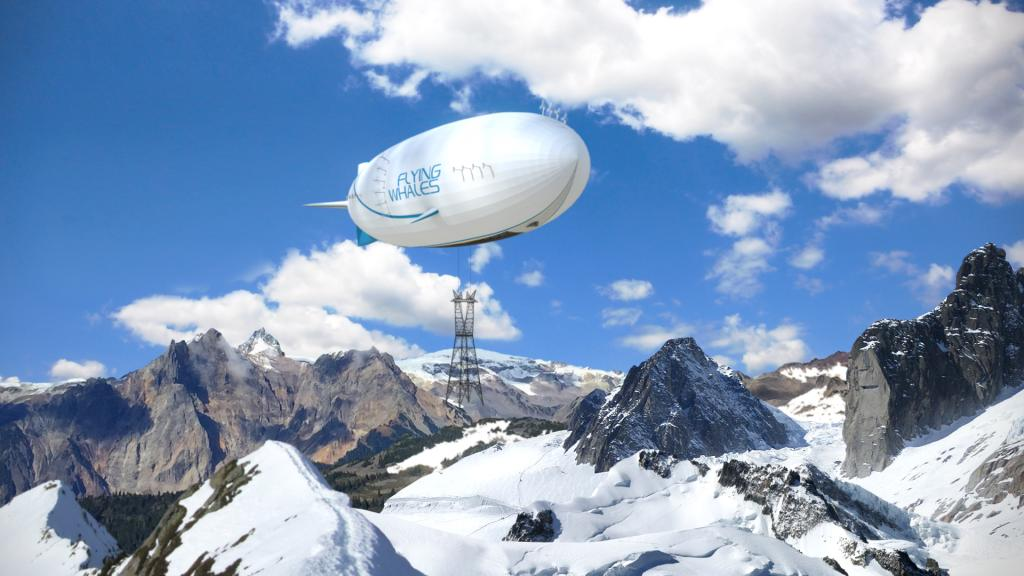
LCA60T is a new and modern mode of transportation. It can load and unload tons of heavy goods even while remaining stable at one place in the air, due to which there is no impact on the ground. It has a hybrid propulsion system, which can be made completely electric in future. With this it will be able to fly without any pollution.
LCA60T’s role in future logistics
At the heart of this partnership is the LCA60T (Large Capacity Airship 60 Ton). It is a strong helium-powered airship that can carry a weight of up to 60 tons.
It is designed to work in remote and inaccessible areas where there are no roads, railways or port facilities. Its air stability and vertical loading system allows heavy infrastructure equipment to be transported directly to the site.
It is expected that this airship will be of great help in renewable energy projects like wind turbine blades and electric towers. It will also be used for construction, defence, relief operations, mobile medical units and transportation of goods in remote areas. Companies say that it has much less impact on the environment compared to traditional heavy lift transport systems.
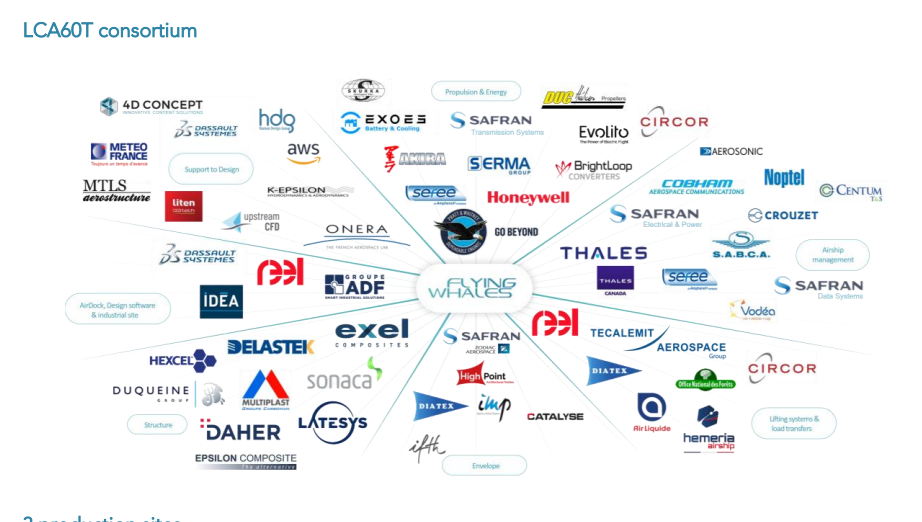
Global demand and initial agreements
Flying Whales has already signed more than 25 commercial agreements in the Middle East and Asia Pacific region, which shows the interest in this technology. According to the company, a total of 90 such agreements have been signed across the world through its service unit.
Creation of a hub in India will speed up work in those areas where transportation is a challenge due to bad roads or difficult terrain.
Three Pillar Global Strategy
Flying Whales has divided its long-term strategy into three regional hubs:
- France: for Europe and Africa
- Canada: to America
- India: For Middle East and Asia Pacific
With the addition of India as the third major hub, the company’s global manufacturing plan is now complete. It has been designed in such a way that the production is not limited to one place but can be done in different countries and international operations can be expanded on a large scale.
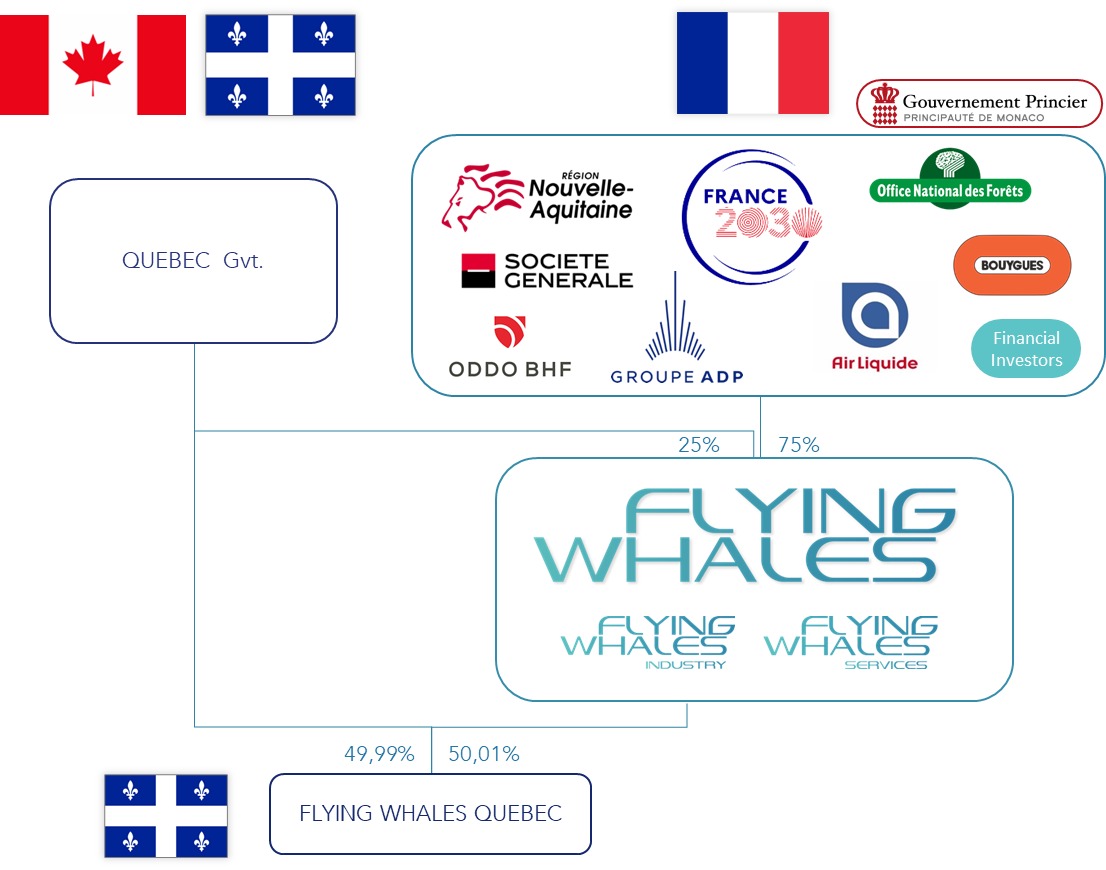
Flying Whales is a French-Canadian aerospace company backed by the French government and private sector partners.
Flying Whales is building the world’s largest airship program, focused on the transportation of heavy cargo. Their LCA60T airship is designed to transport electrical towers, wind energy components and even military equipment like tanks to remote areas.
The company is setting up its first manufacturing plant in France, while the second plant is being built in Canada with the help of the Quebec government. India was considered the first choice as the third global hub for this vast area extending up to Australia, which has now been finalized through this partnership.
Leadership Statements
Flying Whales President Sebastian Bogan called it a historic step in the company’s journey. He said, “This partnership with India is a major turning point in bringing together innovation and big goals. Together with France and Canada, we are not just building airships, but creating a new sustainable model of transport that will connect remote areas and reduce pollution in heavy logistics. BLP Group will be a core part of our strategy in the Middle East and Asia Pacific.”
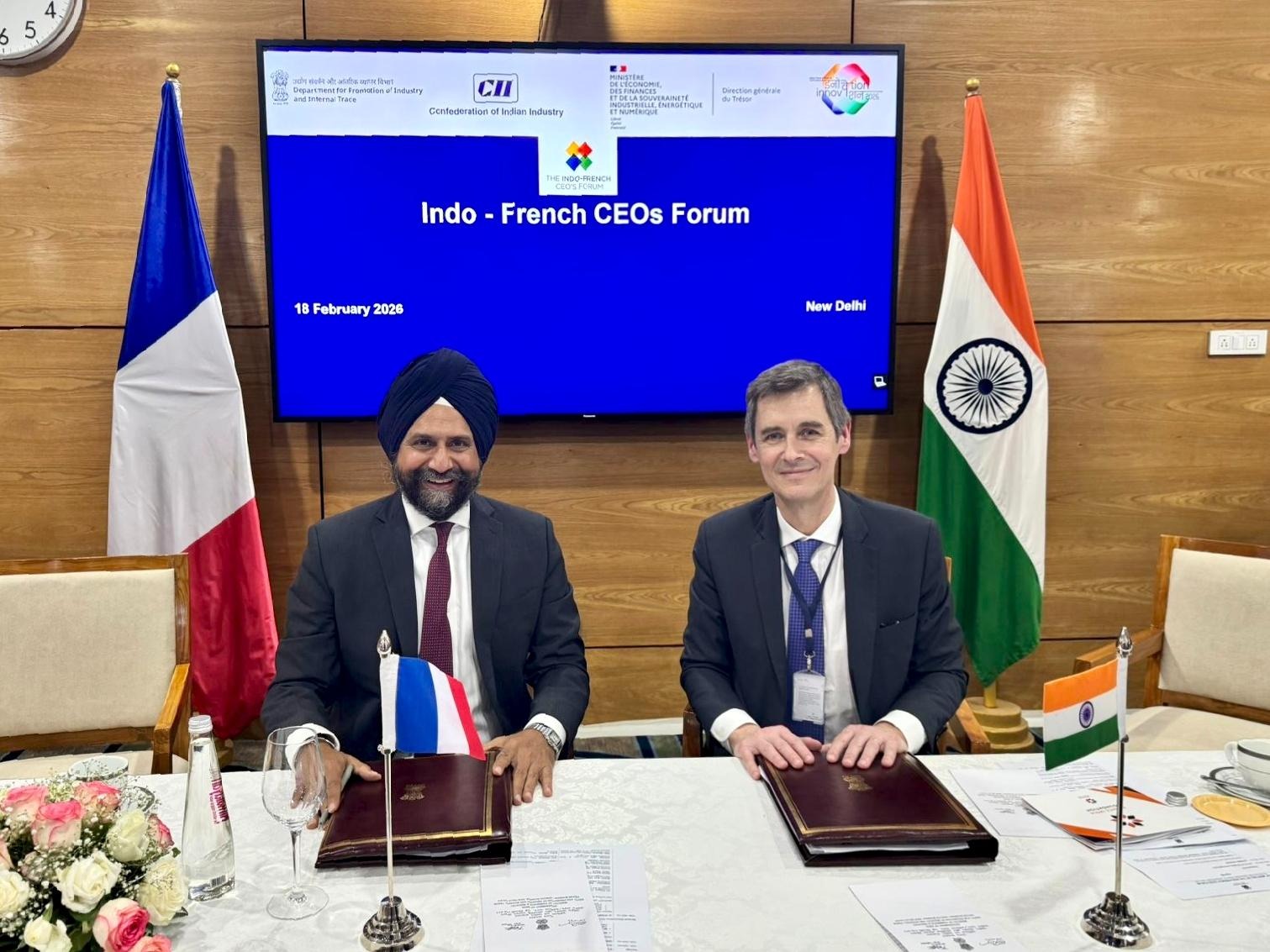
Tejpreet S Chopra, CEO of BLP Group and Sebastian Bugon, President of Flying Whales.
Tejpreet S Chopra, CEO, BLP Group, said that this collaboration reflects the common vision of technology and sustainability. He said, “The LCA60T will open up new possibilities in areas such as infrastructure, clean energy and defence. We are proud to help build this aerospace ecosystem in India.”
BLP Group and its AI ecosystem
BLP Group is an Indian conglomerate, which operates in sectors such as infrastructure investment, renewable energy and advanced industrial technology. The company has made joint ventures with Italy’s Enel Green Power and Norway’s Statkraft for wind and solar energy projects, and is also a partner of AP Moller Capital.
Its technology wing, ‘Industry AI’, develops industrial intelligence systems for manufacturing and infrastructure. At the heart of their platform is ‘Orion’, a Gen-AI and Industrial Internet of Things system. It transforms data from machines into real-time decisions and automated workflows.
Their AI portfolio includes many tools like ‘Predict AI’ for predicting the health of machines, ‘Trust AI’ for visual safety and ‘Conserve AI’ for sustainability. These systems are already in use in automobile factories, steel plants, ports, airports and chemical plants.
The company’s latest innovation is ‘YodaEdge’, which brings advanced artificial intelligence straight to the factory floor. With its help, small and big companies can run AI systems locally while maintaining complete control over their data. There is no need to send data outside, which maintains digital freedom.
A new industrial corridor
With India becoming the third global hub, the foundation of a new industrial corridor connecting Europe, North America and Asia Pacific has been laid. If successful on a large scale, it would completely transform the way heavy freight is transported, especially in areas where roads are impossible. For both the companies, this partnership is not limited to just manufacturing, but it is the beginning of a new kind of aerospace logistics for the changing world.

Source link
[ad_3]

