
New Delhi33 minutes ago
- copy link
Iran has signaled to the Trump administration that it would prefer to negotiate with JD Vance rather than the President’s handpicked team. According to CNN, sources say that Iran considers Vance anti-war.
Iran does not want to negotiate with Trump’s son-in-law and advisers Jared Kushner and Steve Witkoff. Iran says that talks were going on with them when America and Israel attacked.
A diplomatic source was quoted by CNN as saying-

There is no possibility of talks with the old team. Iran feels that the proposal for talks is just another ploy by America-Israel so that they can buy some more time to attack again.

Trump’s son-in-law Jared Kushner (left) and Steve Witkoff. (file photo)
White House said- Trump will decide who will negotiate
Earlier, British newspaper Guardian had also reported on Tuesday that Iranian officials do not want to talk to Steve Witkoff and Jared Kushner. However, the White House termed this report completely wrong and called it foreign propaganda.
The White House has made it clear that only President Trump will decide who will negotiate on behalf of America. White House Press Secretary Carolyn Levitt clearly said that only President Trump will decide who will negotiate on his behalf.
Trump also said that Vance as well as Marco Rubio, Steve Witkoff and Jared Kushner are involved in the process.
Iran does not trust Trump’s son-in-law
In comparison to those close to Trump, Vance is seen in Tehran as a leader who is less enthusiastic about military action in West Asia. According to a CNN source, “It is believed that Vance will try to end this conflict.”
Another source told CNN that if the talks are to yield any results, JD Vance must be involved. Nothing will happen to Witkoff and Kushner. This has happened before also.
For Iran, this is not a matter of choice, but of harm reduction. He wants to choose a person who has less connection with this war.
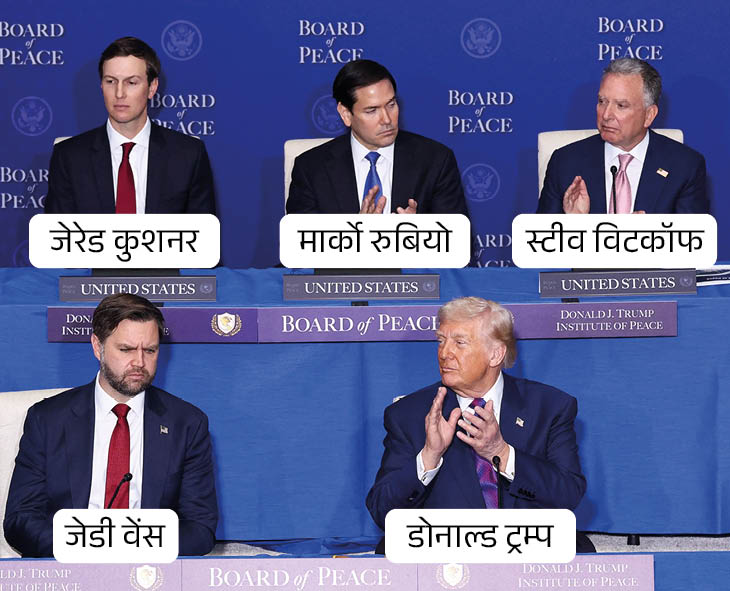
Vance’s stature growing in Trump administration
Information indicates that Vance, who has previously been against military intervention abroad, may now become the chief negotiator. This also shows that his influence in the government is increasing and Iran is seeing him as a different kind of representative of America.
Vance has previously been against American interference in the Middle East, but this time he has supported Trump. He said he was confident that Trump would take the right decision and that past mistakes would not be repeated.
The growing interest in Vance shows that he is now playing a bigger role in American foreign policy. If Trump puts him forward, it will be a big opportunity for him to prove himself as a successful dealmaker.
Ghalibaf can negotiate on behalf of Iran
Earlier on Monday, Trump had claimed that he was talking to the most respected person in Iran. He did not take anyone’s name. It was then believed that the person could be Ghalibaf.
However, Ghalibaf wrote on social media shortly afterwards that no talks have taken place with America. Such news is being spread to influence the financial and oil markets.
However, it is still believed that Parliament Speaker Mohammad Bagher Ghalibaf may join the talks from Iran’s side.
But just as America does not like Iran to choose its negotiators, similarly Iran is also cautious about its representative. Any talks would require the approval of Iran’s supreme leader.
Iran does not want an unconditional ceasefire or surrender. He wants to negotiate considering himself in a stronger position. He believes that he is ahead in creating pressure in the area.
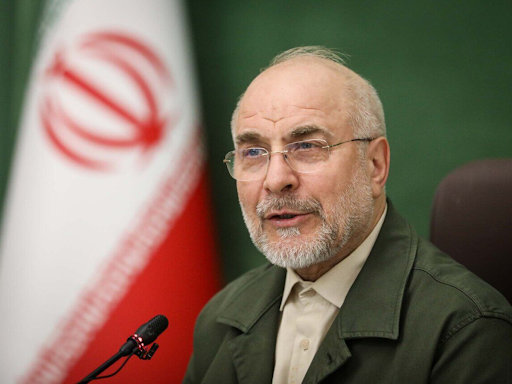
Ghalibaf has previously been a Revolutionary Guard pilot and is considered a leader with a strict stance.
Gulf countries distanced themselves from mediation
At present the situation is such that even before the talks begin, it has become difficult to decide who will sit at the table.
Meanwhile, Gulf countries have distanced themselves from mediation. Qatar said that if Iran does not stop attacks on Gulf countries, it will not help in negotiations. Iran did not accept this condition, after which these countries retreated.
On the other hand, Saudi Arabia and other Gulf countries also seem to be distancing themselves from this diplomatic process. There is a discussion in Washington whether these countries will cooperate in military action if the talks fail.
At present, talks are going on at the government level between America and Iran. Both sides are reviewing their respective demands and concessions on a 15-point plan. Names of countries like Türkiye and Pakistan have come forward for talks, but no formal meeting has been scheduled yet.

Iran attacked an oil base in Fujairah, UAE, causing huge damage there.
There were talks between Iran and America before the war
Before the war between America, Israel and Iran started on February 28, several rounds of peace talks were held between the two sides. This conversation took place not directly but indirectly.
In this, the representatives of both the countries did not sit face to face, but were conveying their views through a mediator. Oman played the role of mediator during this period. Oman’s Foreign Minister Sayyid Bader bin Hamad Al Busaidi was conveying messages between the two countries.
According to reports, at least 2 to 3 rounds of talks took place before the war:
First round- Happened on 6 February 2026 in Muscat, Oman
Second round- took place in Geneva in the last week of February
Apart from this, backchannel (confidential) talks took place between 26–27 February. Who were included:
America- Steve Witkoff, Jared Kushner
Iran- Abbas Araghchi (Foreign Minister)
Agenda for talks:
- Ban on Iran’s nuclear program
- Removal of sanctions imposed by America
- possible compromise to avoid war
outcome:
No final agreement could be reached due to lack of trust between the two countries and differences over terms. Meanwhile, on 28 February 2026, the situation worsened and the conflict started with US-Israeli military action.

Source link
[ad_3]

