
washington1 minute ago
- copy link
After launching, when Artemis II was revolving in the Earth’s orbit, the Earth appeared in the shape of a ‘crescent’ from a distance of about 25,000 miles.
Artemis-2 mission is now moving towards the moon. At 5:19 a.m. Friday, a day after launch, the Orion capsule fired its thrusters and left Earth’s orbit. Now it will travel in space for the next 4 days and reach a place where only 24 humans have been able to reach till date.
This process of firing the engine to leave the Earth’s orbit and go towards the Moon is called ‘translunar injection burn’. This was a maneuver of about 6 minutes, which increased the speed of the vehicle to 22,000 miles per hour i.e. about 34 thousand km/hour.
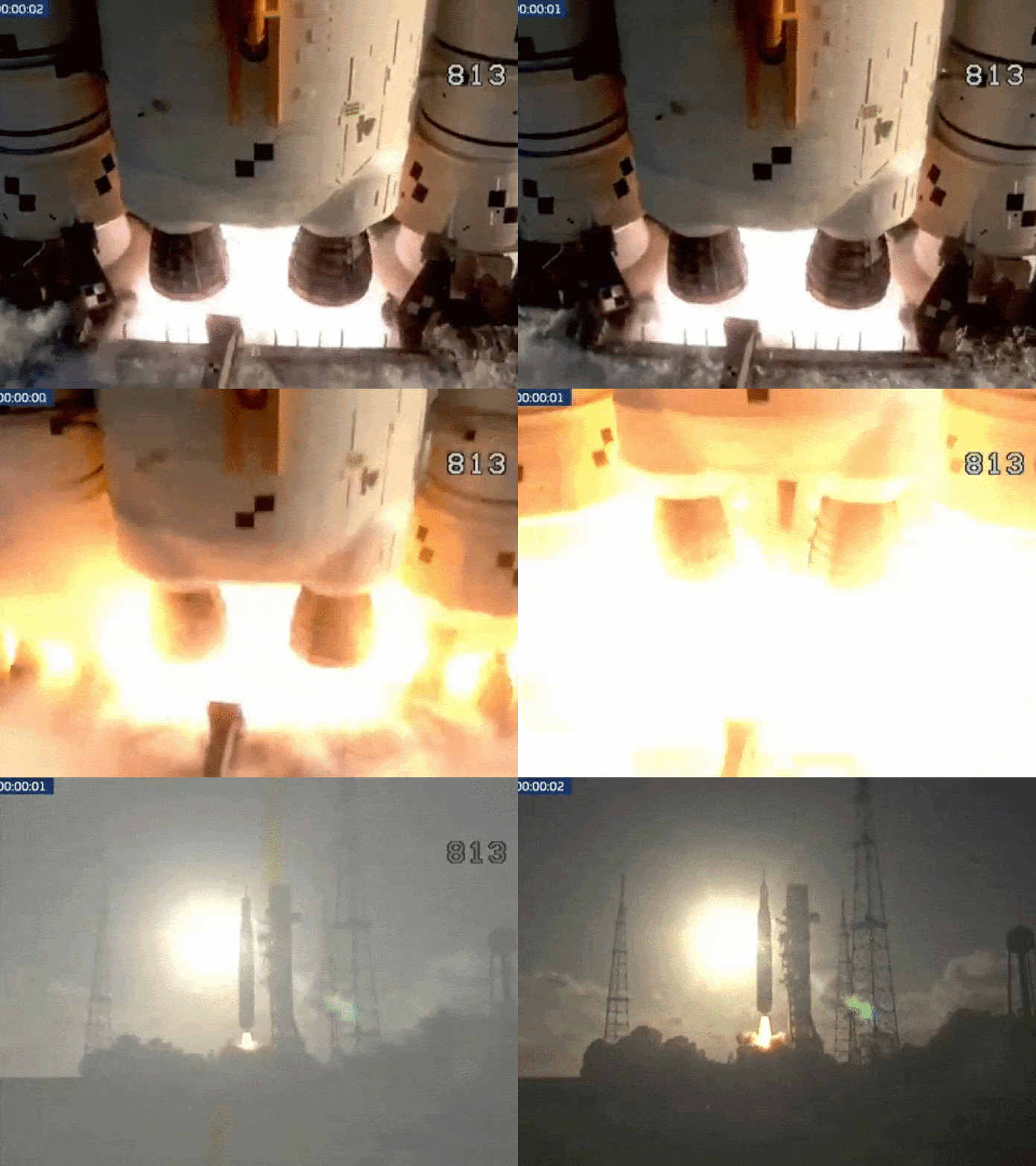
On April 1, at 4:05 am, the ‘Space Launch System’ (SLS) took off towards the Moon carrying 4 astronauts aboard the Orion spacecraft.
A slight mistake on the way could cause the spacecraft to collide with the moon.
Artemis-2 is now on ‘free-return trajectory’. That means the vehicle is now moving forward relying on Newton’s first law of motion – an object that is moving will keep moving. During the entire journey the engines will be fired only for minor repairs. This part is very sensitive. The slightest mistake on the way can cause the spacecraft to collide with the Moon or cause it to wander into infinite space.
Artemis II mission and astronauts’ experiences
NASA said- Astronaut is completely healthy
- Mission Status: Artemis Development Head Dr. Lori Glaze said the astronauts are completely healthy and the spacecraft is performing as expected.
- Learning Opportunity: Glaze stressed that this is a test flight, so the team is trying to gather as much information as possible about the spacecraft.
- Conversation with family: The astronauts have not yet spoken directly to their families, but NASA will find time for this soon.
Astronauts interact with zero gravity
- Space Plumber: Christina Koch has described herself as a “space plumber”. She has been busy fixing teething problems with the Orion capsule’s toilet.
- Sleeping Experience: Commander Reed Wiseman described sleeping in space as fun. He joked that Christina sleeps “hanging like a bat.”
- Amazing view: Thousands of miles away from Earth, when Wiseman saw the entire world from one pole to the other, the moment was so spectacular that all four astronauts kept looking at it.
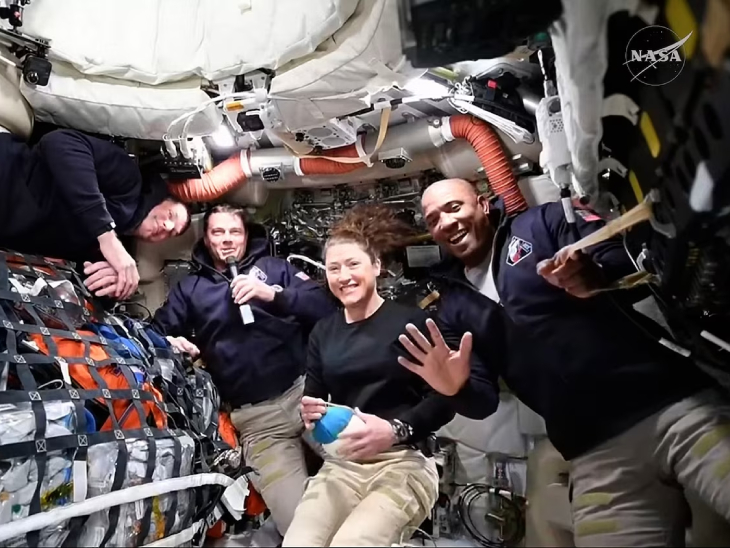
CSA astronaut Jeremy Hansen and NASA astronauts Reed Wiseman, Christina Koch and Victor Glover spoke from the NeoRian spacecraft.
Fifth day: Artemis-2 will enter Moon’s gravity
By April 5, the fifth day of the mission, the speed of the capsule will slow down due to the pull of Earth’s gravity. As soon as it enters the gravitational field of the Moon, its speed will start increasing again and it will start moving rapidly towards the Moon.
Day 6: Moon will appear as big as a basketball
On the sixth day, Orion will pass just 6,400 km above the moon’s surface. During this time, astronauts will be able to see with their own eyes that part of the moon which is never visible from the Earth. When seen from the window, the moon will appear so big, as if a basketball is held near the hand.
- Contact may be lost for 50 minutes: When Orion passes behind the Moon, its contact with the Earth may be completely cut off. There will be ‘communication blackout’ for about 50 minutes. Mission Control will not receive signals from the vehicle.
- Will reach this far from Earth for the first time: On this day, Apollo 13’s record of 400,171.18 km of maximum distance from Earth, set in 1970, may also be broken. Artemis II astronauts are expected to reach a distance of 402,336 km from Earth.
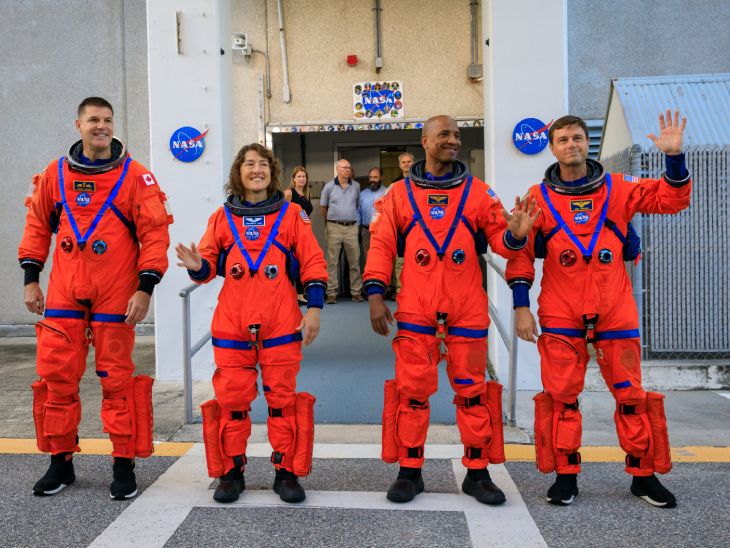
Astronauts (left to right) Jeremy Hanson, Christina Koch, Victor Glover and Reed Wiseman heading to the launch pad; Photo taken during launch day rehearsals at Kennedy Space Center.
Seventh day: The spacecraft will return to Earth due to the gravity of the moon.
On the seventh day, the spacecraft will exit the Moon’s gravitational field and start its journey back towards Earth. Artemis-2’s path is largely similar to that of the Apollo-13 mission of the 1970s.
It will use the Moon’s gravity as a ‘slingshot’, which will push the spacecraft back towards Earth. In the entire mission, the four astronauts will travel about 11.02 lakh km.
Tenth day: The vehicle will fall in the Pacific Ocean on April 10.
Orion will enter the Earth’s atmosphere on April 11 at 6:30 am Indian time. At 6:36 pm it will ‘splashdown’ in the Pacific Ocean near San Diego. After this there will be a press conference in Houston, in which information about the mission will be given.

————————————
Read this news also…
Humans will reach close to the Moon for the first time since 1972: 4 astronauts will return after circling the Moon in 10 days; NASA’s Artemis-II mission launched
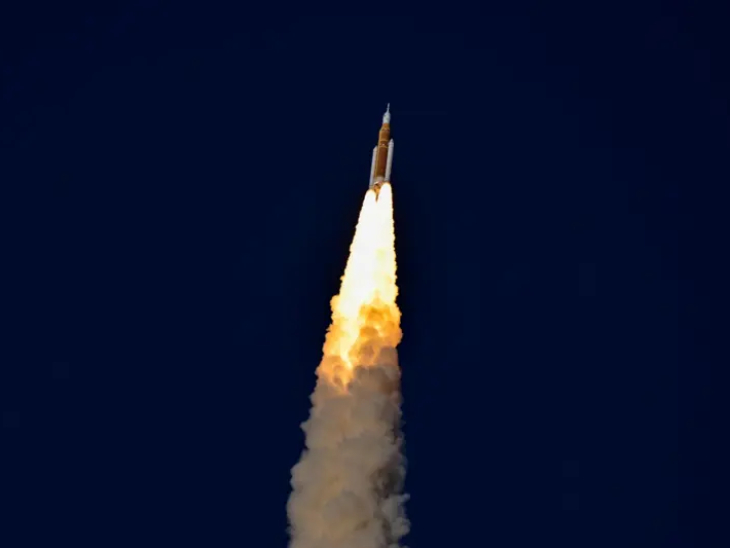
American space agency NASA launched the ‘Artemis-2’ mission today on April 2. At 4:05 am, the ‘Space Launch System’ (SLS) took off towards the Moon carrying 4 astronauts in the Orion spacecraft. This launch took place from Kennedy Space Center in Florida. Read the full news…

Source link
[ad_3]

