
New Delhi5 minutes ago
- copy link
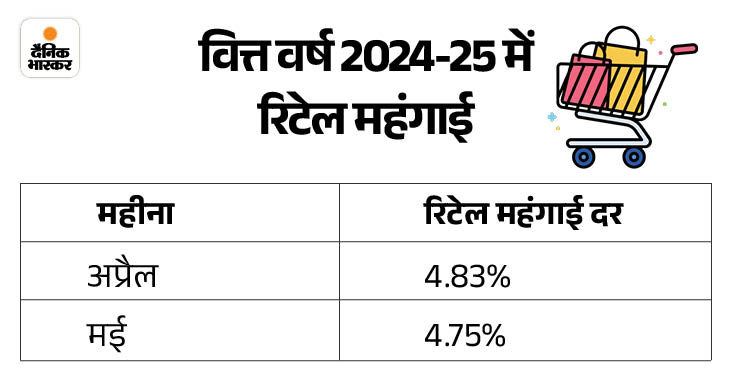
Retail inflation has come down to 5.08% in June. A month ago in May, inflation had come down to 4.75%. Then it was at the lowest level in 12 months. The National Statistical Office released these figures on Friday, 12 July.
Inflation has increased due to the cost of food items. Food inflation rate has increased from 8.69 to 9.36%.

How does inflation affect?
Inflation is directly related to purchasing power. For example, if the inflation rate is 6%, then the value of Rs 100 earned will be only Rs 94. Therefore, investment should be made keeping inflation in mind. Otherwise, the value of your money will decrease.
How does inflation increase or decrease?
The rise and fall of inflation depends on the demand and supply of the product. If people have more money, they will buy more things. Buying more things will increase the demand for things and if the supply is not according to the demand, the price of these things will increase.
In this way the market falls prey to inflation. In simple words, excessive flow of money in the market or shortage of things causes inflation. On the other hand, if the demand is less and the supply is more, then inflation will be less.
Inflation is determined by CPI
As a consumer, you and I buy goods from the retail market. The Consumer Price Index (CPI) shows the changes in the prices related to this. CPI measures the average price we pay for goods and services.
Apart from crude oil, commodity prices, manufactured cost, there are many other things which play an important role in determining the retail inflation rate. There are about 300 items on the basis of whose prices the retail inflation rate is decided.
Source link
[ad_3]

