
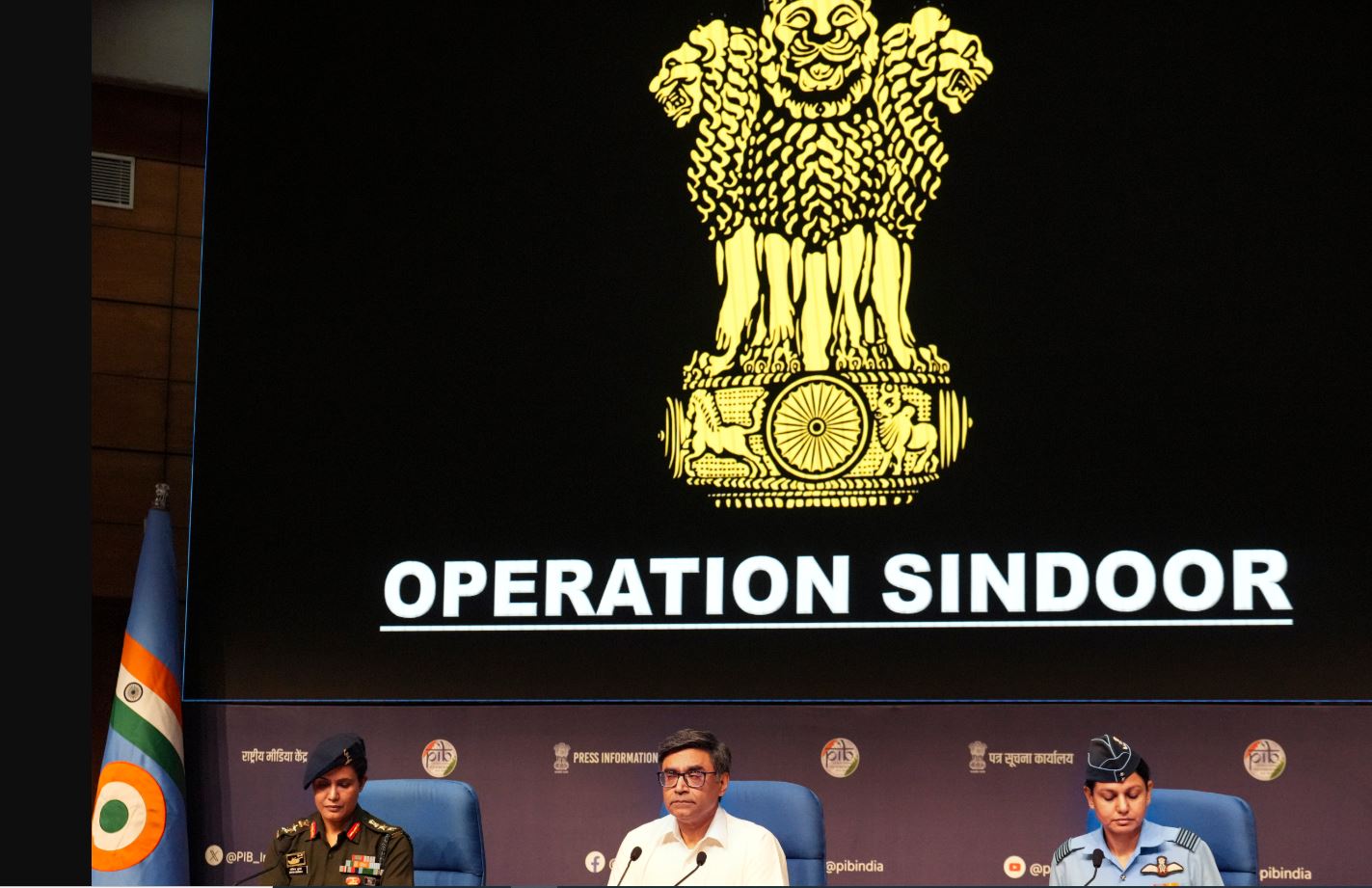
India has taken revenge for the terrorist attack in Pahalgam in Kashmir from Pakistan. On the intervening night of May 6 and 7, the three armies of India took major action against terror and ended 9 terrorist bases in Pakistan. This is being called the biggest strike ever, because it was not yet that India had made any attack directly on Punjab’s Punjab. There used to be stripes in PoK.
India used to say that he attacked the training camps of the terrorists. But this is the first time that India has strikes directly on the headquarters of Lashkar-e-Taiba and Jaish-e-Mohammed located in Punjab. In these strikes, two locations of Hizbul Mujahideen have also been attacked. The entire headquarters of the terrorists have been destroyed in these attacks. The biggest thing is that Indian Air Force aircraft have not crossed their air base for this attack.
Missiles were fired in India’s air base and the hideouts of the terrorists were destroyed. It is said that a list of 21 targets was given by RAW, out of which 9 have been a missile strike. It was already decided that this time the attack would be directly on the headquarters of terrorist organizations, so Lashkar’s headquarters Muridke and Jaish’s headquarters were targeted in Bahawalpur. It was planned in the meeting held on 3 May.
Senior defense expert Sandeep Unnithan has described the biggest attack ever since the 1971 war. He said, “This is India’s biggest attack on Pakistan since 1971, in which geographical expansion of targets, number of attacks and headquarters of major Pakistani terrorist groups Jaish-e-Mohammed and Lashkar-e-Taiba have been targeted. These organizations have launched many major terrorist attacks on India in the last two decades.”
Let us understand how this is the biggest attack on Pakistan so far …
1. For the first time, Pakistan’s Punjab targeted
For the first time after the 1971 war, India has launched a big attack in the Punjab province of Pakistan. Punjab province is considered very important in view of political and army. Earlier in 2016, Uri and in the terrorist attacks in Pulwama in 2016, the Indian Army targeted terrorist camps in Pakistan-occupied Kashmir and adjacent to it. Operation was attacked in 9 places in Sindoor, four of which were in Bahawalpur, Sialkot and Sheikhpura districts of Punjab.
These terrorist camps were targeted: Marakaj Subhan Allah Camp (Bahawalpur), Markaj Taiba Camp (Sheikhpura), Mahmuna Zoya Camp (Sialkot) and Sarajal Camp (Sialkot)
Both Pakistan-based terrorist organizations Jaish-e-Mohammed and Lashkar-e-Taiba operate from Punjab province. Markaz Subhan Allah Camp in Bahawalpur is 100 km from the India-Pakistan International Border. Bahawalpur, which is the stronghold of Masood Azhar, a terrorist of Jaish-e-Mohammed, is also a Regimental Center of the Pakistani Army.
2. Headquarters of geographically spread terrorist organizations destroyed
Under Operation Sindoor, the Indian Army destroyed the terrorist structure in a huge geographical area. It targeted 9 places in parts of Pakistan and Jammu and Kashmir, which Islamabad has illegally occupied. These places include Bahawalpur in South Punjab, Muridke of Sheikhpura district on the northern outskirts of Lahore, Muzaffarabad and Kotli in PoK, where Jaish-e-Mohammed, Lashkar-e-Taiba and Hizbul Mujahideen are the headquarters.
In this attack, terrorist camps used to plot and carry out terrorist incidents against India were also targeted. In this, Syedna Bilal Camp of Muzaffarabad was working as a major transit hub of Jaish-e-Mohammed to send terrorists to Jammu and Kashmir. Murid’s Center, spread over 200 acres of Lashkar-e-Taiba, is the main training center. Terrorists are trained in weapons here. Religious speeches are given to make them staunch.
About one thousand students are recruited annually here. Osama bin Laden had provided financial assistance in the construction of a mosque and guesthouse here. The 26/11 Mumbai attackers were trained here. It also included Ajmal Kasab. Along with this, other bases have also been used for terrorist attacks all over India including Jammu and Kashmir. In such a situation, destroying them together shows the unprecedented scale and accuracy of operation vermilion.
3. Attack continuously for 25 minutes 970 km from the border
Attack on 9 terrorist bases in a short period of 25 minutes, Operation Sindoor gives a distinct identity in Indian military operations. In this operation, the Indian Army destroyed Bahawalpur (Headquarters of Jaish-e-Mohammed), Muridke (headquarters of Lashkar-e-Taiba), Sialkot (terrorist base) and Chak Amaru (terrorist camp). Terrorist camps destroyed inside PoK include Lashkar-e-Taiba and Jaish-e-Mohammed camps in Muzaffarabad, Kotli, Bhimbar, Bagh and Gulpur terrorist hideouts from where Hizbul is active.
Many terrorist bases were attacked in this operation, including coordination of all three branches of the Indian Armed Forces. This was the most widespread attack on Pakistani terrorism since the 2019 Balakot air strikes. According to Foreign Secretary Vikram Misri, these terrorist bases were selected on the basis of reliable intelligence, so that the terrorist structure could be destroyed without targeting the Pakistani army. The Indian Army has used advanced weapons such as Scalp cruise missiles and hammer smart bombs.
4. Notice of 80 terrorists killed in Operation Sindoor
There are reports of 80 terrorists being killed in Operation Sindoor. This is a major setback for those terrorist organizations, who continue to attack terrorist attacks against India. According to a BBC Urdu report, 10 members of the family of Jaish-e-Mohammed chief Masood Azhar and four of his associates were also killed in Indian attacks in Bahawalpur. Syedna Bilal Camp was destroyed in PoK’s Muzaffarabad. It had a terrorist of Jaish-e-Mohammed, who along with Lashkar-e-Taiba’s operatives planned an attack in Pahalgam.
5. Terrorist organizations that spread terror in India targeted
Unlike the previous army operations, Operation Sindoor not only avenged the Pahalgam massacre but also targeted the camps of several terrorist organizations responsible for many terrorist attacks on India. The attacks carried out by the Indian Armed Forces targeted the terrorist camps of Jaish-e-Mohammed’s Bahawalpur headquarters, Lashkar-e-Taiba and Hizbul Mujahideen’s terrorist camps. He has been involved in the 2008 Mumbai attacks and the 2019 Pulwama attacks.
166 people were killed and more than 300 injured in the 2008 Mumbai attacks. 40 Central Reserve Police Force (CRPF) personnel were killed in the 2019 Pulwama attack. India has given a big message against terrorism, targeting Pakistan -based terrorist groups. This has caused a strategic shock to Pakistan’s pseudo -war strategy. Wounds from Operation Sindoor are going to give long -term pain to terrorist organizations in Pakistan.
Source link
[ad_3]

