
- Hindi News
- National
- Supreme Court Hearing Update; Sabarimala Women Entry | Dawoodi Bohra Khatna, Parsi Women Rights
New Delhi17 minutes ago
- copy link
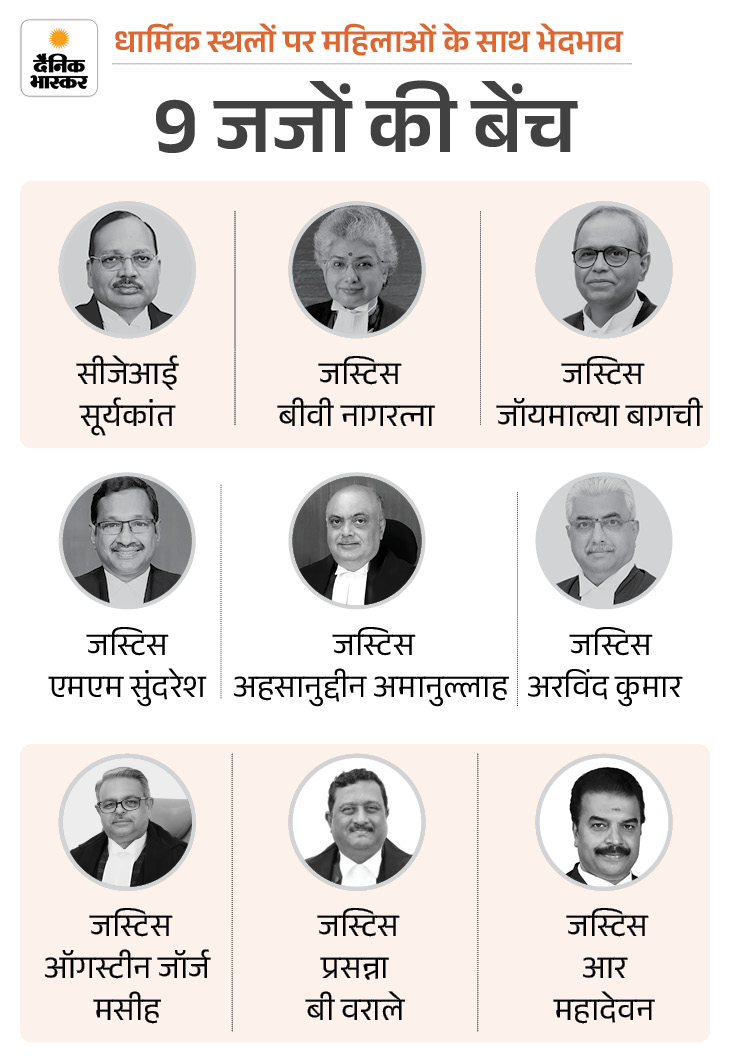
The case of discrimination against women at religious places has been in the courts of the country for the last 26 years. The Constitution Bench of 9 judges of the Supreme Court will hold the final hearing on more than 50 pending petitions from today till April 22.
Among the issues that will be heard, the ban on women’s entry into Sabarimala temple in Kerala is important. Apart from this, cases of ban on entry of women in mosques, female circumcision in Dawoodi Bohra Muslim community and banning of Parsi women from entering religious places if they marry non-Parsi men will also be heard.
The Supreme Court order states that the hearing of the Sabarimala review case will begin at 10.30 am on April 7. The hearing of the review petitioners and those supporting them will be held from April 7 to April 9. Those opposing the review will be heard from April 14 to April 16.
Females aged between 10 to 50 years are not allowed entry in Sabarimala, whole issue in 5 points
- Entry of females between 10 to 50 years of age is banned in Sabarimala temple. The reason for this is menstruation, because women are considered impure during periods. They are prevented from participating in religious rituals. According to the mythological belief of Sabarimala temple, Lord Ayyappa is a celibate who has taken a vow of celibacy, and hence women of a certain age group were not allowed to enter the temple. There is controversy on this.
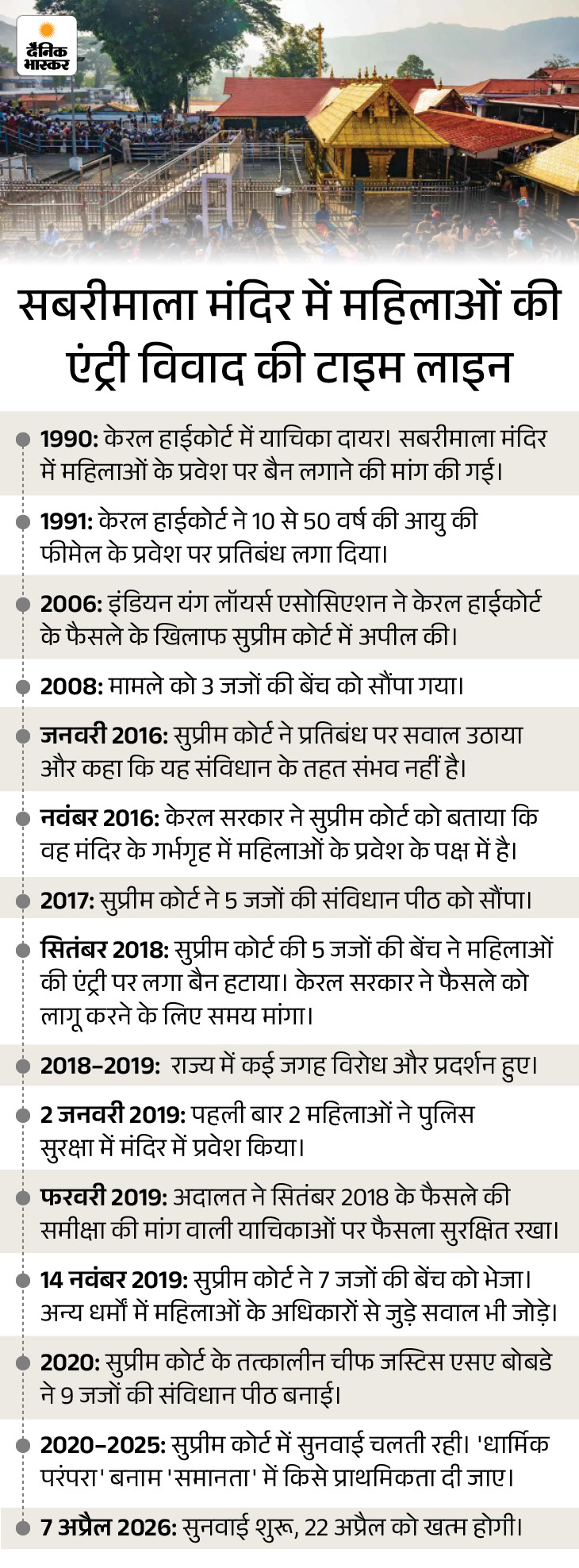
- In 1990, controversy arose over women’s entry into the temple. With time, the case went on in the local court and later reached the Supreme Court. In 2006, the Supreme Court had issued notices to the parties concerned. The case was assigned to a bench of 3 judges in 2008.
- The hearing took place after 7 years in 2016. After this, in 2017, the three judge bench of the then CJI handed over the case to the Constitution bench of five judges. In 2018, the Constitution Bench ruled by a majority of 4-1 that women of all age groups should be allowed entry into Sabarimala. The ban is unconstitutional. After this, amidst huge opposition, 2 women Bindu Kanakadurga and Bindu Ammini entered the temple.
- After this, in 2019, the bench of 7 judges sent this issue to a larger bench of 9 judges. Then cases related to women of other religions were also added to it.
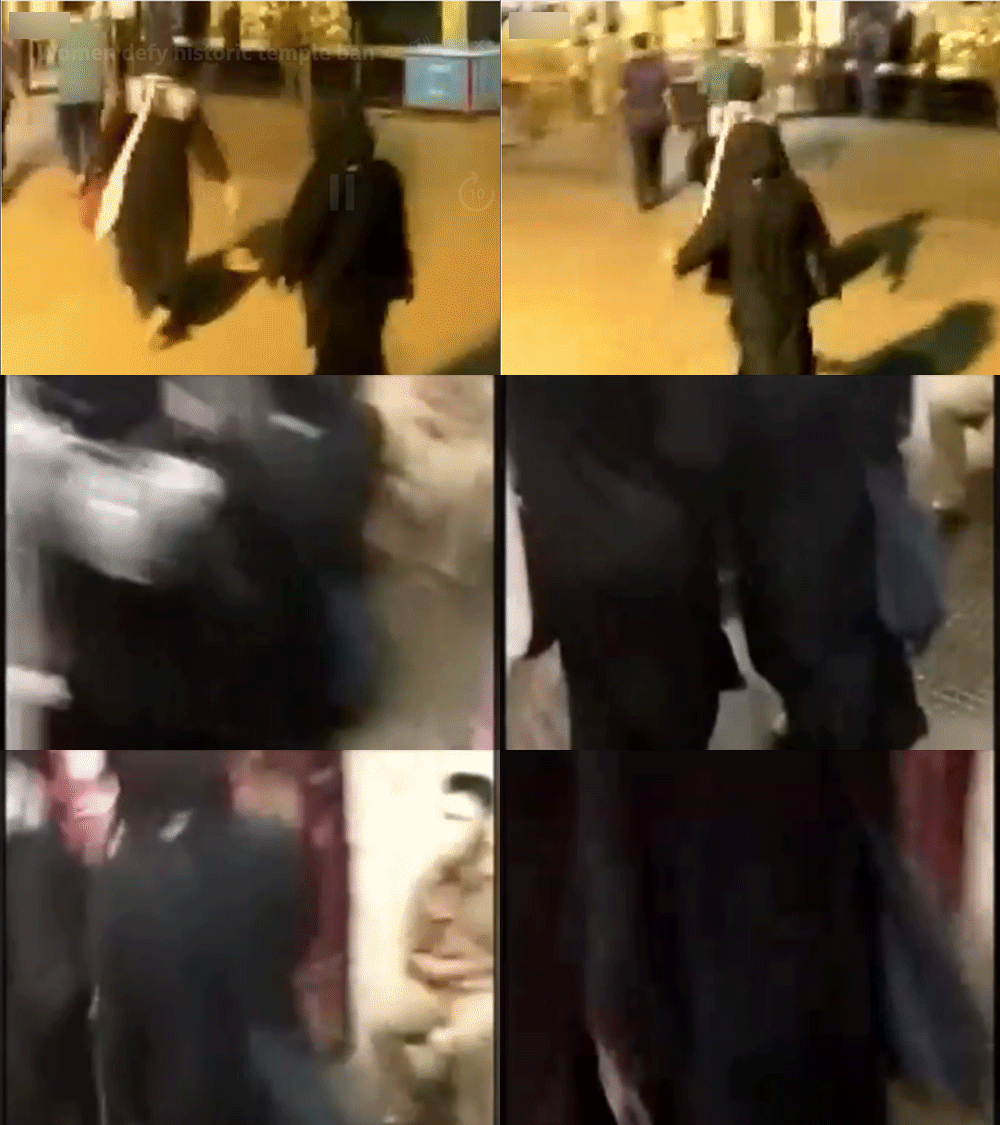
Bindu Kanakadurga (45) and Bindu Ammini (46) entered the Sabarimala temple under police escort on January 2, 2019, following the Supreme Court order. She was the first women to do so. Both of them wore traditional black clothes to visit the temple.
Bench of 9 judges will hear 5 issues
1. Women’s entry into Sabarimala temple: Do women of all ages have the right of entry? The bench will decide whether the High Court’s decision in the Indian Young Lawyers Association Vs State of Kerala case in 2018 was correct or not.
2. Entry of women into mosques: Can Muslim women be stopped from offering namaz in the mosque? In 2016, a woman named Yasmin Zubair Ahmed Peerzada raised the issue of Muslim women entering mosques and filed a petition in the Supreme Court.
3. Female circumcision in the Dawoodi Bohra community: Is this practice a violation of fundamental rights? In 2012, Parsi woman Gulrukh M Gupta married a Hindu man. They were stopped from entering Parsi religious places. She filed a petition against this in the Bombay High Court regarding the religious rights of Parsi women. Later the matter reached the Supreme Court.
4. Entry of Parsi women into Agni Mandir: Can a Parsi woman married to a non-Parsi be barred from entering the Agni Mandir? Ed in 2017. Sunita Tiwari raised the issue of female circumcision in the Dawoodi Bohra community and filed a petition in the Supreme Court.
5. Questions of gender discrimination related to Muslim personal law: Can personal laws be tested on the criteria of fundamental rights?
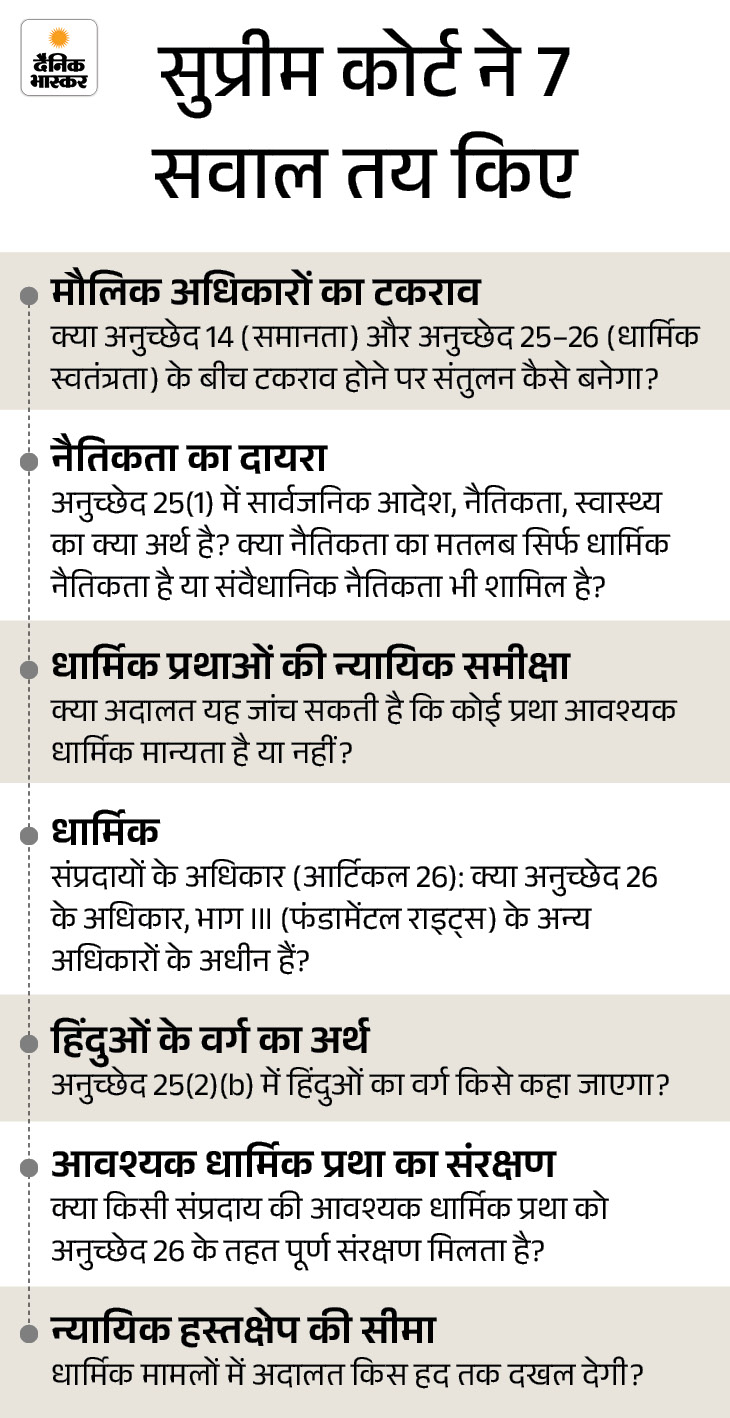
Supreme Court decided 7 questions
On January 13, 2020, the Supreme Court made it clear that it would not consider review petitions directly, but would consider principles such as the balance between Article 25 (religious freedom) and Article 14 (equality) and essential religious practices. In the hearing held between 14 and 23 January, the petitioners described the exclusion of women as unconstitutional, while the religious side, citing freedom of faith and Article 26, demanded limited judicial intervention. During this time, the Court raised questions on essential religious practices and the limits of judicial review.
The debate continued from 3 to 7 February, where issues of equality versus religious freedom and judicial limits were discussed. But the hearing was stopped due to Covid-19.
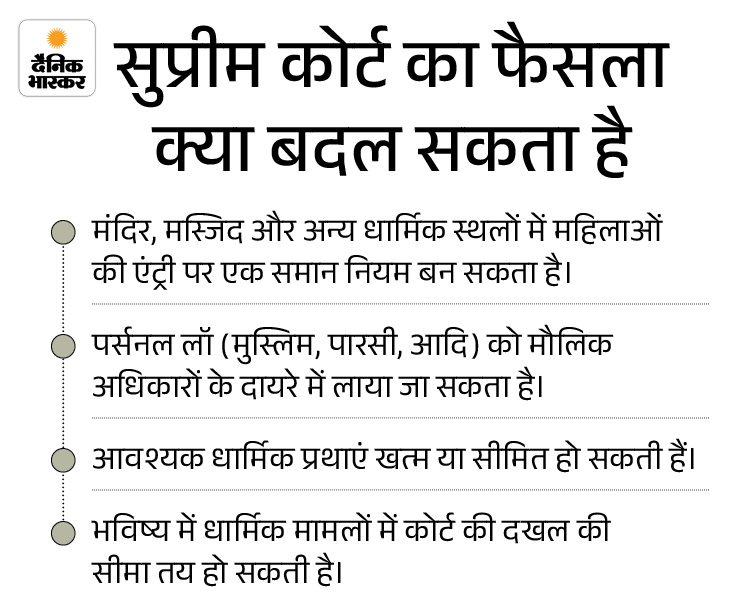
What will change if the Supreme Court maintains its own decision?
If the 9-judge bench of the Supreme Court upholds the decision of the Kerala High Court and the 5-judge Constitution bench of the Supreme Court, then the limits of the court’s interference in religious matters may be fixed in future.
Central government’s stand, who said what on Sabarimala issue
Center changed its stance: The Central Government had supported the decision of the Supreme Court in 2018-2019. It was said that women should enter the temple, there should not be any practice against gender equality. However, later during the review stage 2019–2020, the Center took a more balanced stand and said that the matter relates to broader constitutional questions (religion vs equality) and it should be decided by the Constitution Bench.
All India Saint Committee: In a 2019 petition, the committee said courts should interfere in religious matters only when they are against public order, morality or health. Article 14 should not be used to remove the rights of Article 25.
Kerala Government: Before making changes in old religious traditions, advice from religious scholars and social reformers is necessary. The court should not look at the rationality of the practices, but whether people sincerely believe in them as part of the religion.
All India Muslim Personal Law Board: Courts should avoid determining ‘essential religious practice’, as this may interfere with the religious freedom guaranteed under Articles 25-26. Identifying the ‘core’ of a religion is dependent on personal belief.
Jain Community: The right to decide the practices of any religion belongs to the people of that religion. The government or the court should not decide what is religious and what is not.
What happened in the courts in 26 years, complete timeline…
Protests took place at the entry of 2 women in Sabarimala…Photos
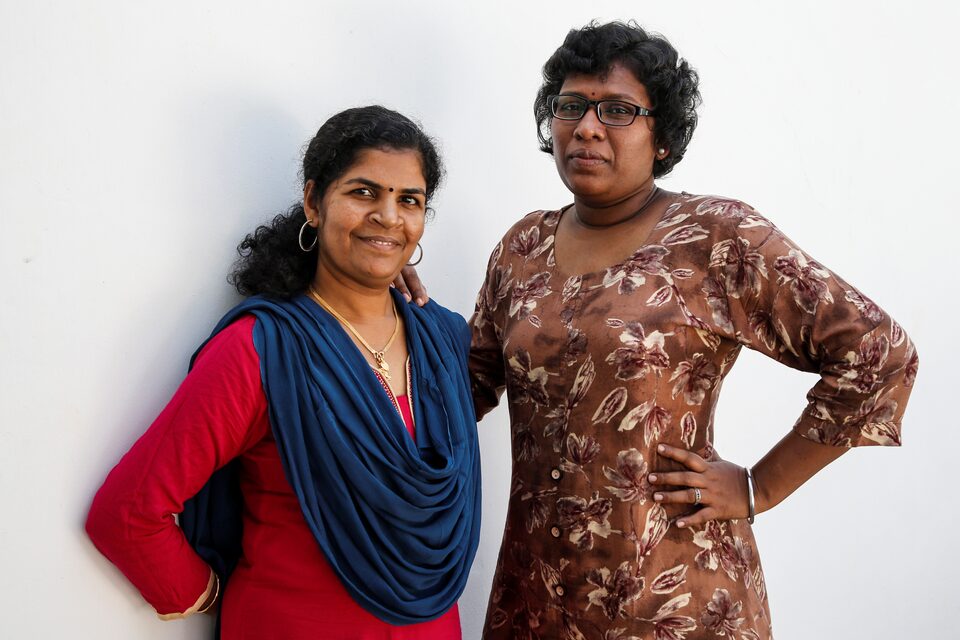
Bindu Kanakadurga (45) and Bindu Ammini (46) entered Sabarimala temple for the first time.
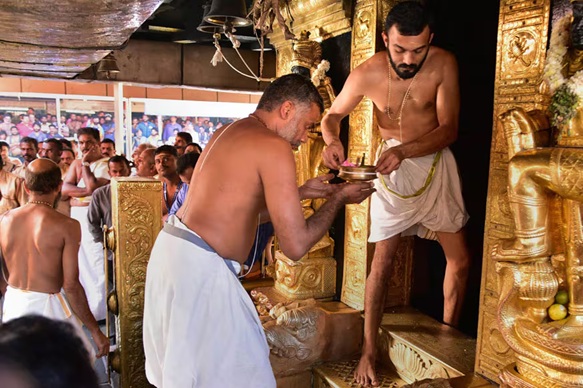
When Bindu Kanakadurga and Bindu Ammini returned after having darshan of Lord Ayyappa, the temple was purified as soon as they left. Darshan was stopped in the temple for 1 hour.
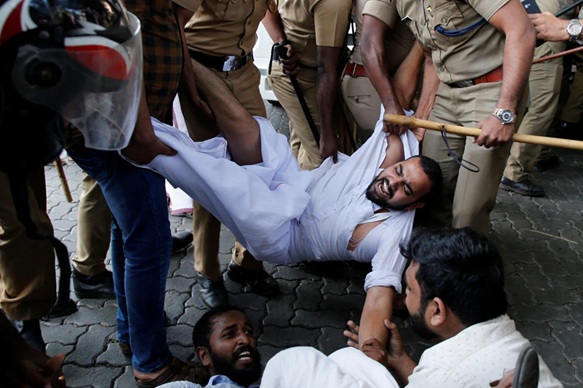
There was strong opposition to women entering the temple. People demonstrated in Kochi on 2 January.
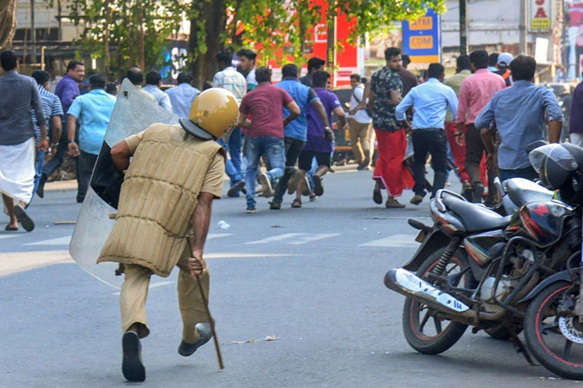
On January 3 also, protests took place at many places in Kerala. The police had dispersed the crowd.
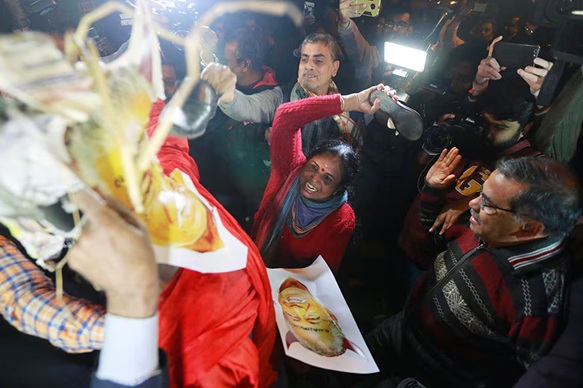
Woman slapping a poster of Kerala CM Pinarayi Vijayan during a protest.
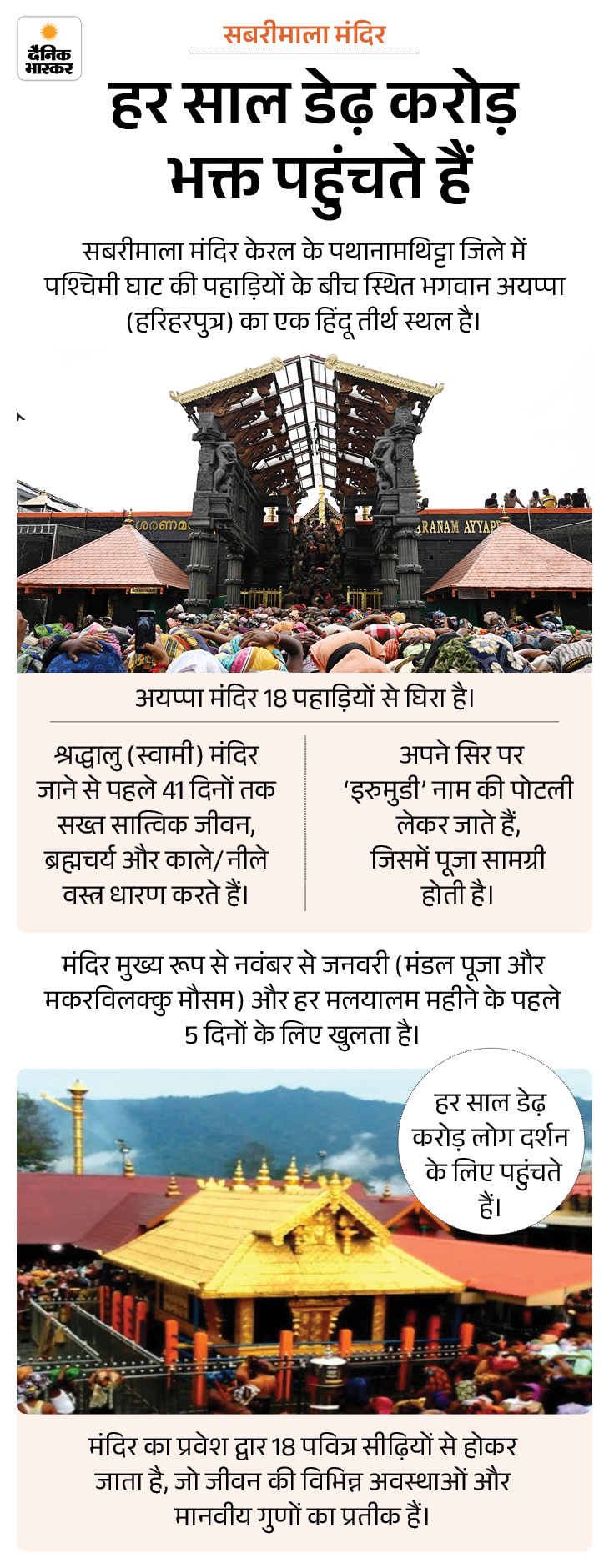
Know about Sabarimala temple…

Source link
[ad_3]

